
Heat waves, art x science x mini resin boats, and much-needed evening beach cool offs
Sometimes, all I think about is you
Late nights in the middle of June
Heat waves been fakin' me out
Can't make you happier now
You can't fight it, you can't breathe…
Whose listening lately, late nights in the middle of June?! I can’t think of a more appropriate soundtrack for the past weeks in Brittany, and unfortunately it seems we have our third heatwave approaching.
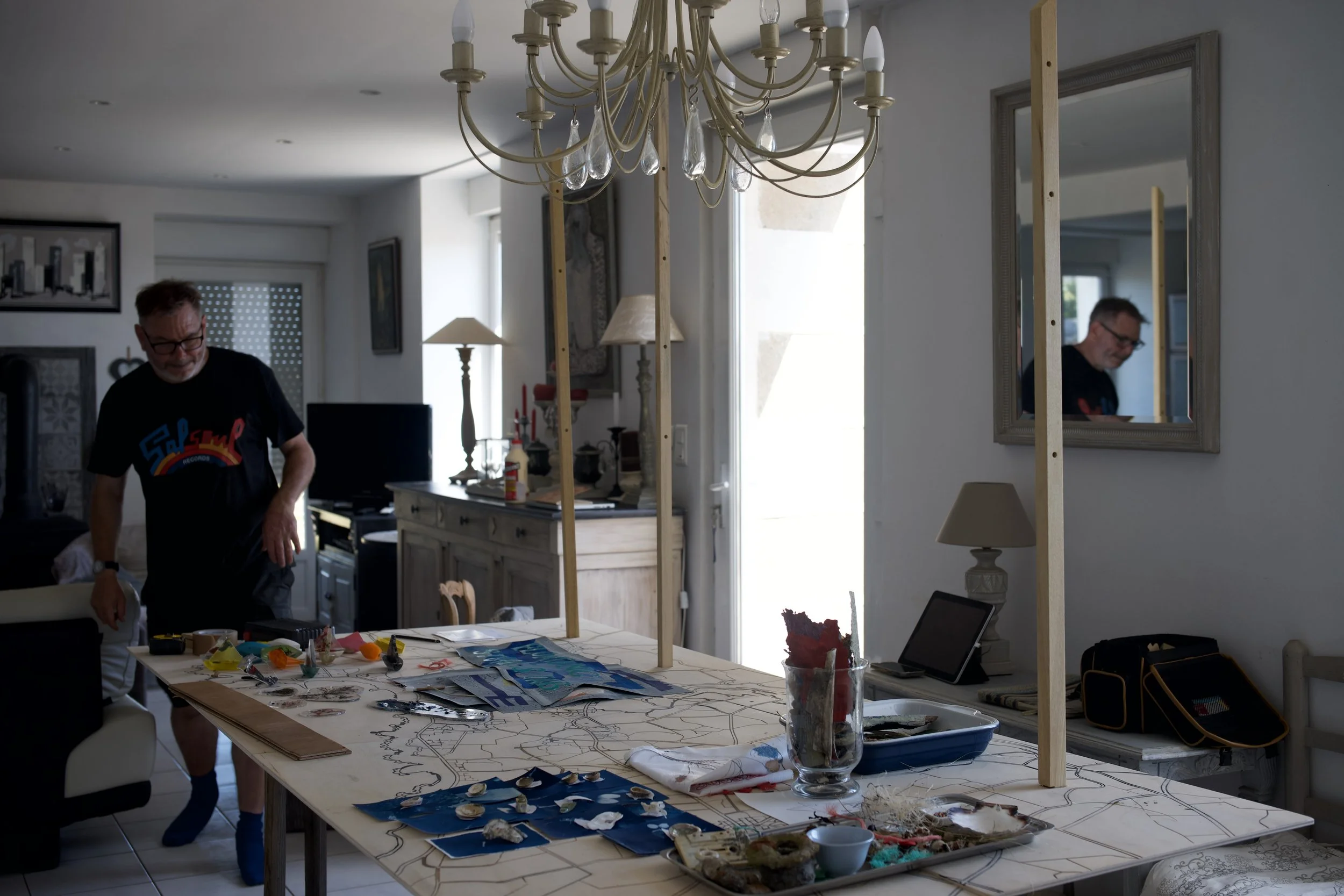
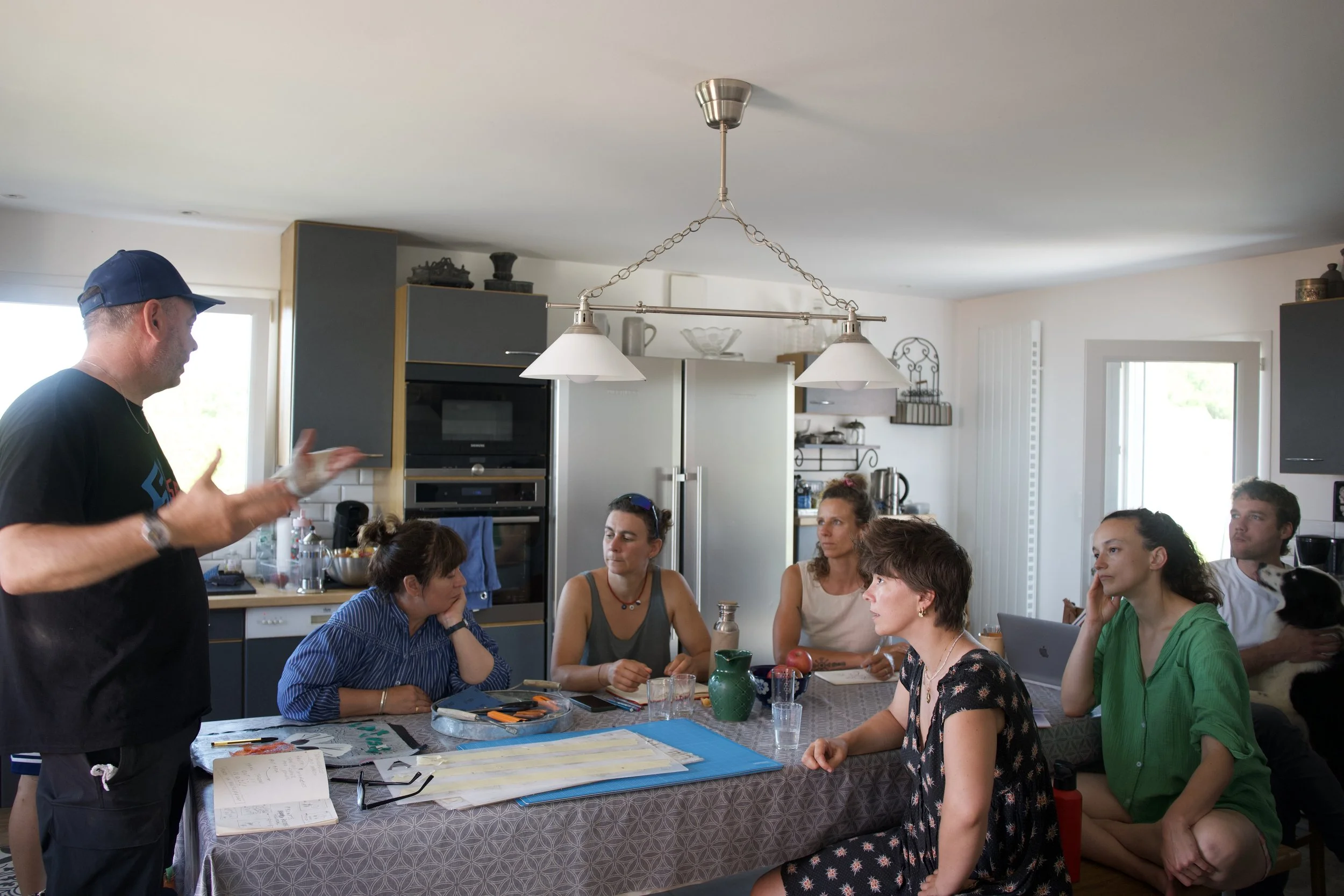
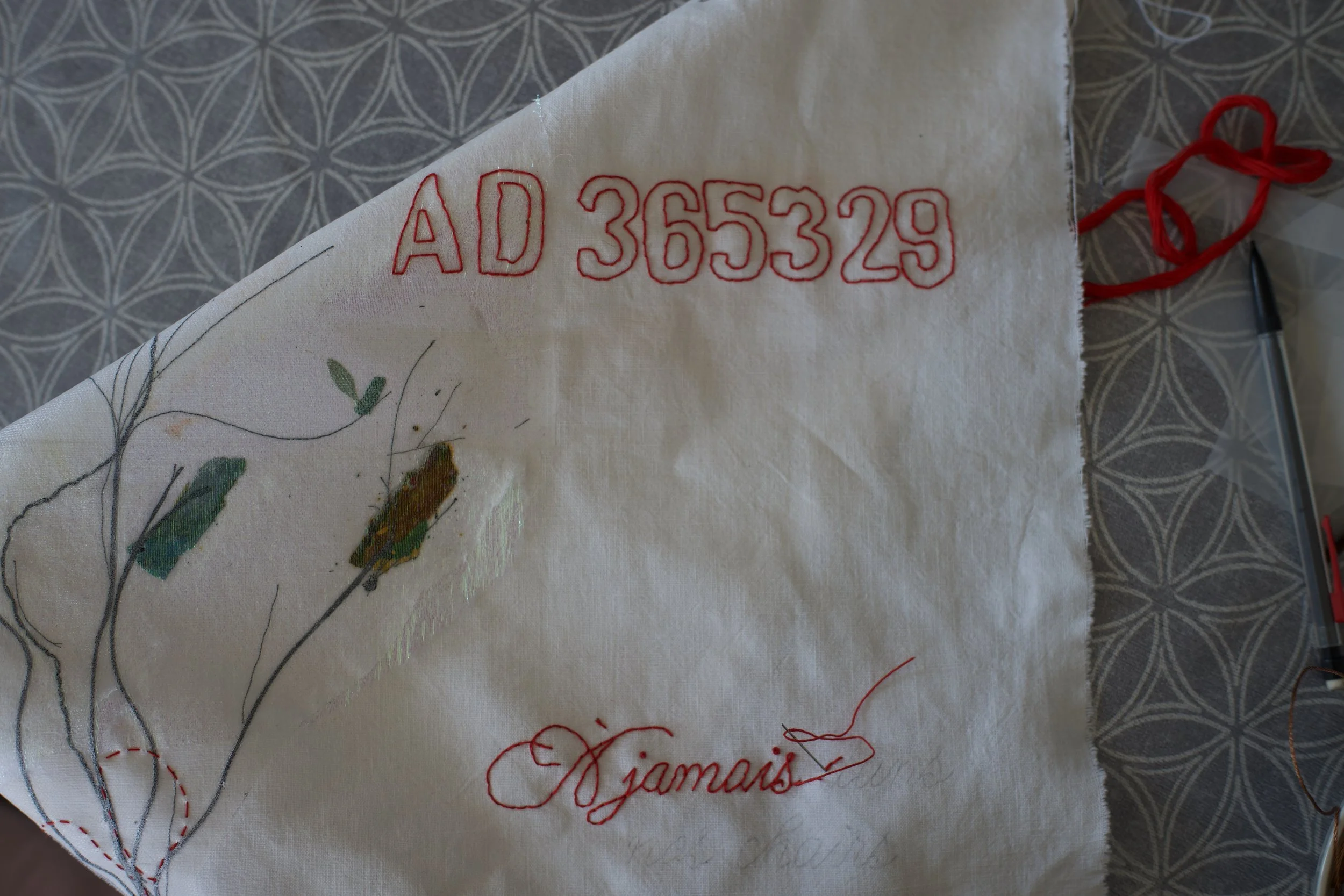
Braving putrid temperatures and a two-day black out were a group of talented artists and academics who joined us in Finistere for the 2026 FSL ReTISS Citizen Science Creative Residency. No joke guys, it was a bloody hot week. Between field trip visits to the local Boat Cemetery, kayaking up the Goyen River to view these sites of decay from the water looking back, and debris collecting, the team worked together during creative interpretation sessions to co-create the Table of Curiosity, which FSL will begin touring next month to festivals, events and conferences across Brittany. I am truly in awe at the artifacts created entangled in disciplines and mediums, and back-dropped by sleepless nights and mosquito invasions.
This was a residency to remember.
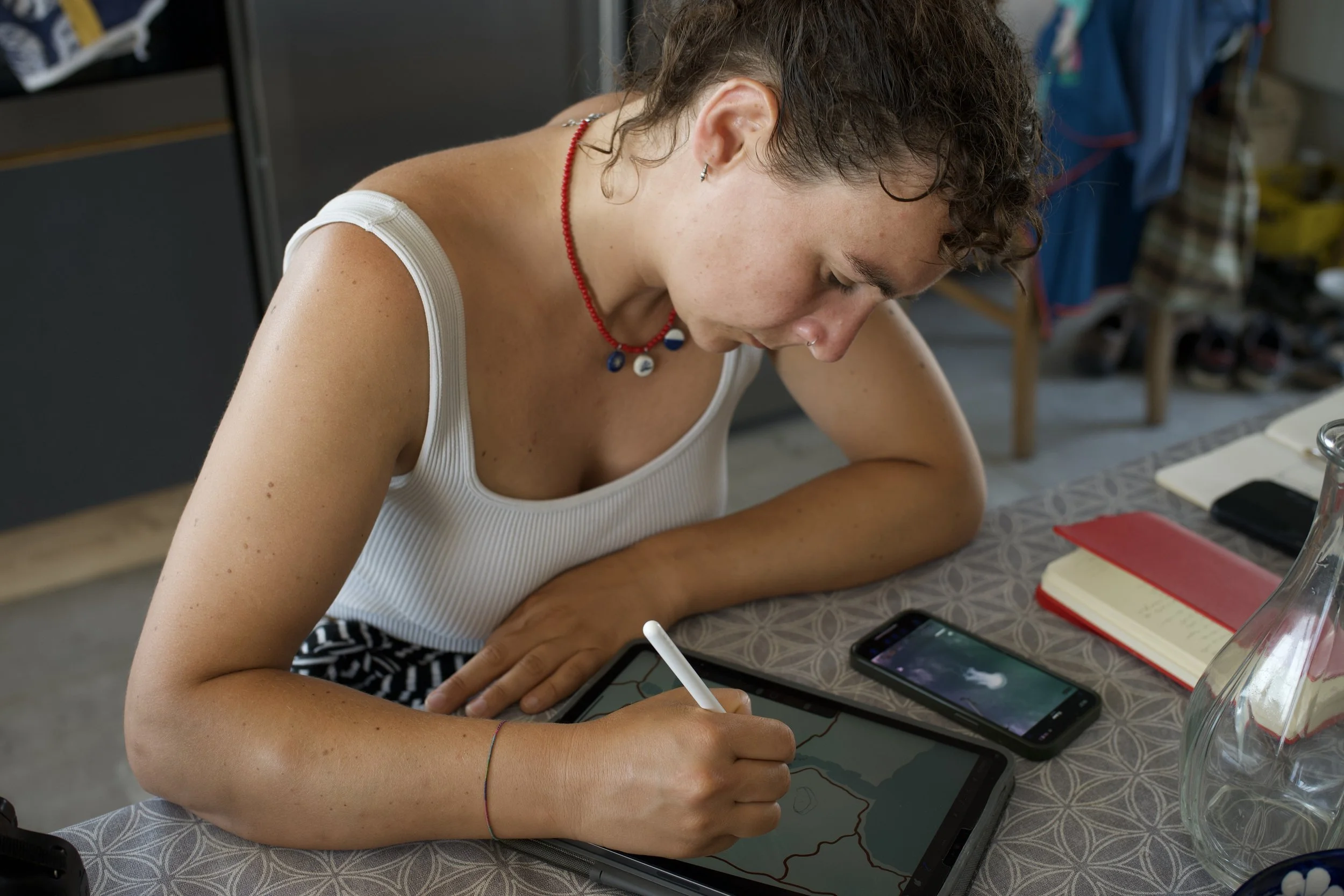
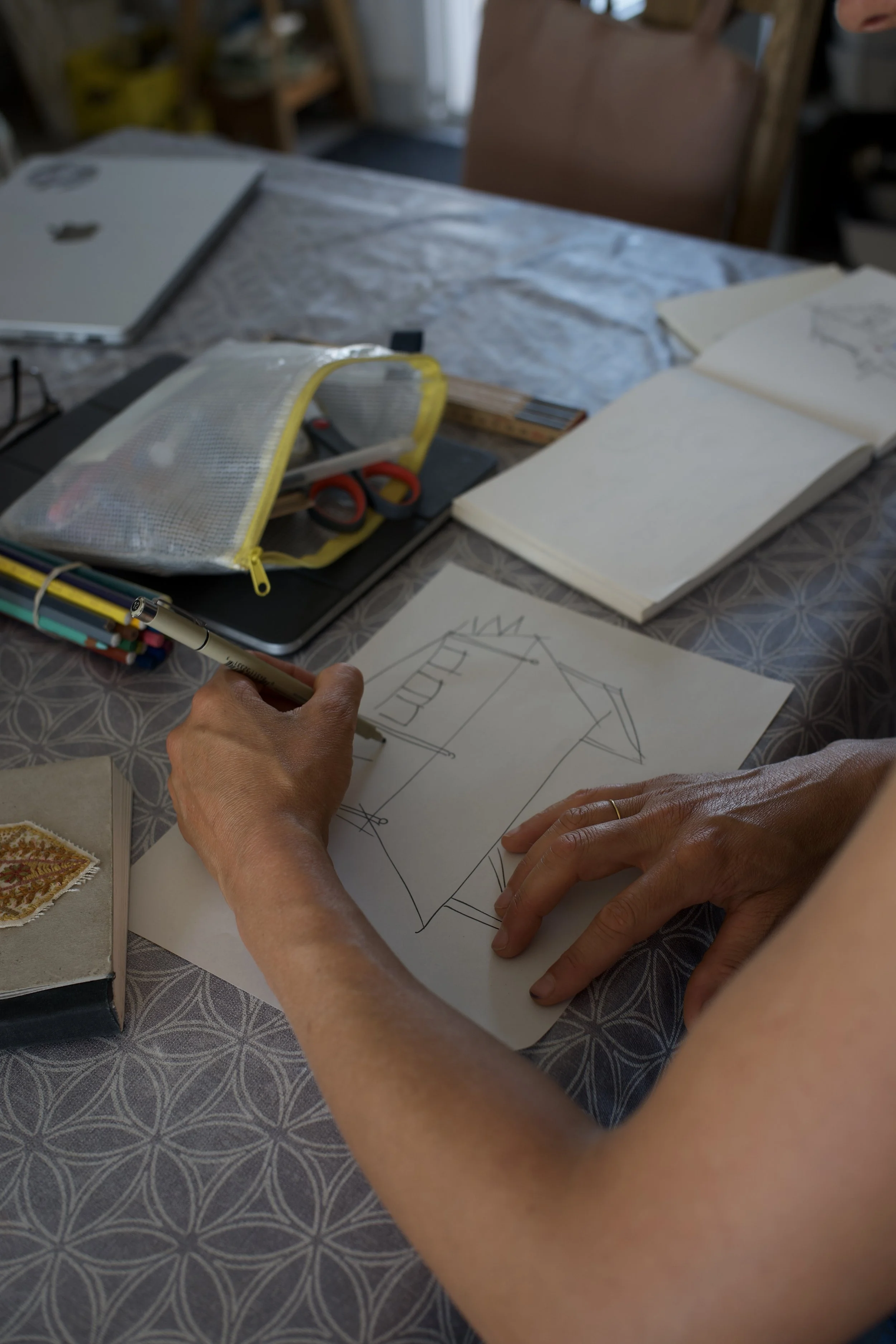

With the heatwave keeping us out of the boat yard for a week, we were able to dedicate all of our time to the residency participants and even sneak in evening hours at the beach with our visitors and the kids — a nice break, to be honest, from six solid months of intense physical labor in the boat yard, though always with the pressing to-do list from the boat build at the back of our minds.
We thus skipped a Sunday episode of our Weekly Digest video series, choosing instead to pack two weeks in one last night with an overview of work we’d got done on the build the week before, and what’s left in the prep phase before assembly.
Table of Curiosity
The ‘Table of Curiosity’ is a travelling exhibition booth built from the body of the Goyen River. Its base is recycled wooden pallets; its surface is four pieces of plywood, 3D-cut into the river’s shape and its estuary in Finistère, Brittany, then painted, sanded, and oiled by hand. This is the site where our citizen science initiative, Regenerative Tides: Sailing for Solutions (ReTISS), has mapped abandoned fibreglass (GRP) boats and their slow decay into coastal waters — the table reproduces that geography at a scale visitors can stand around and touch.
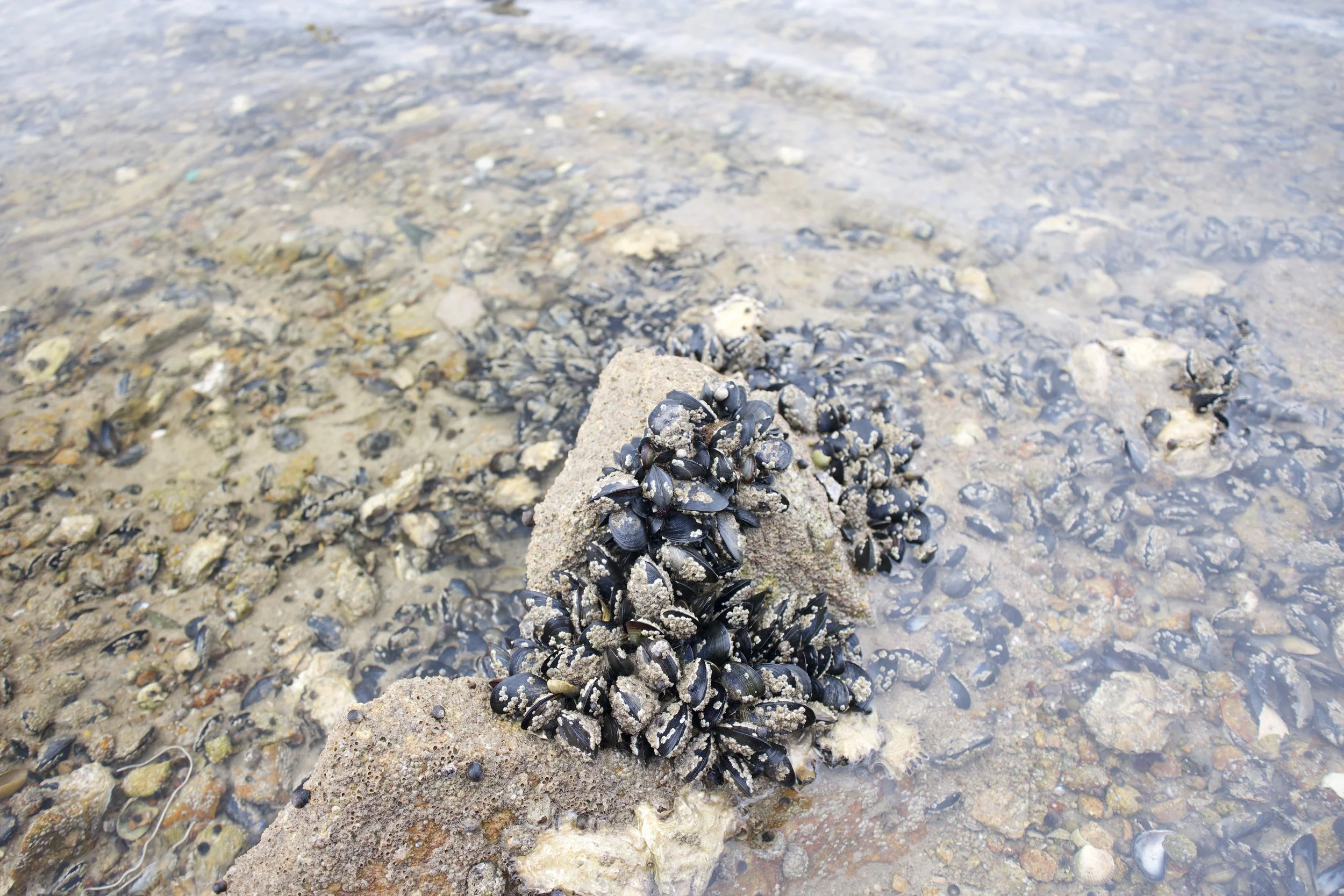
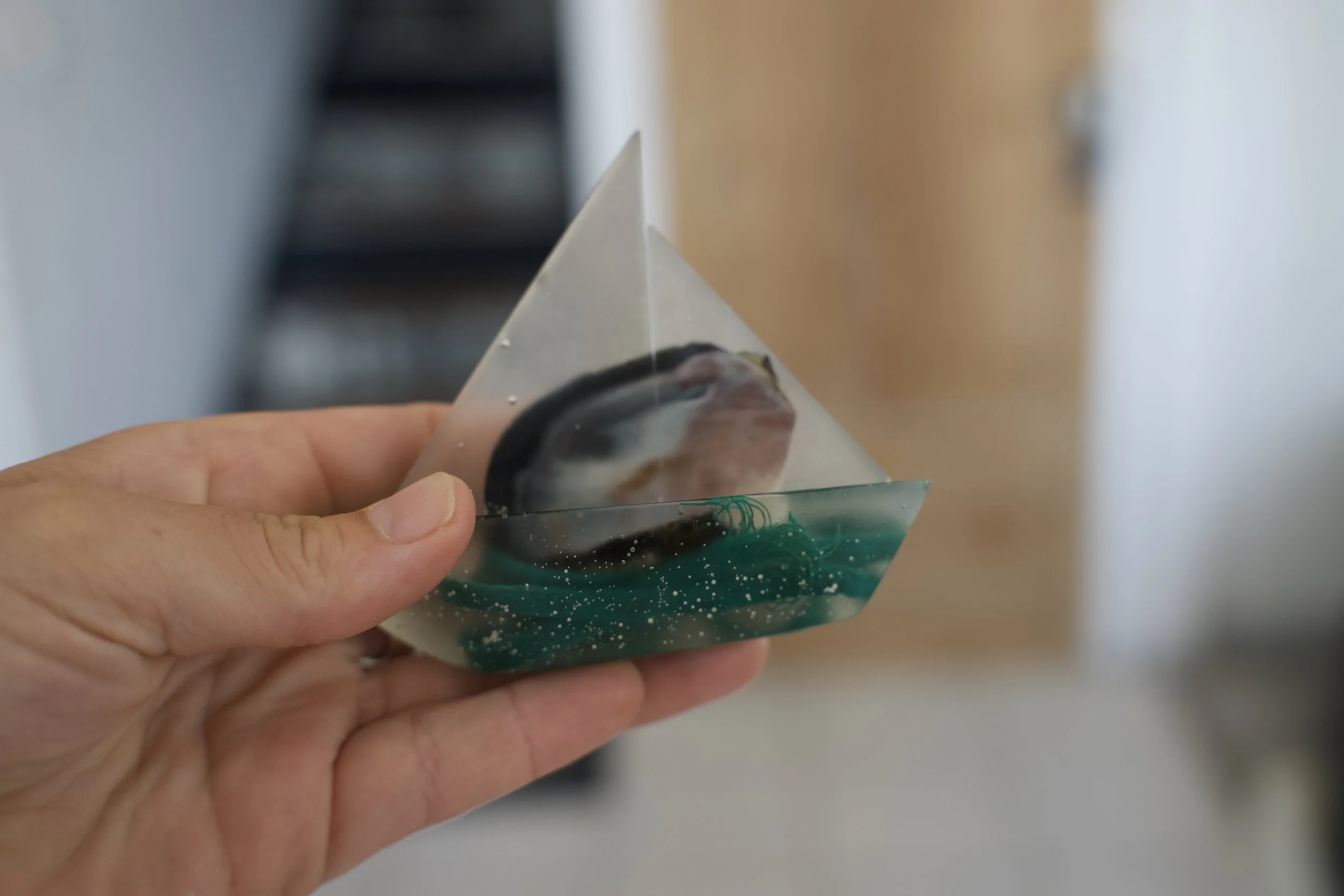
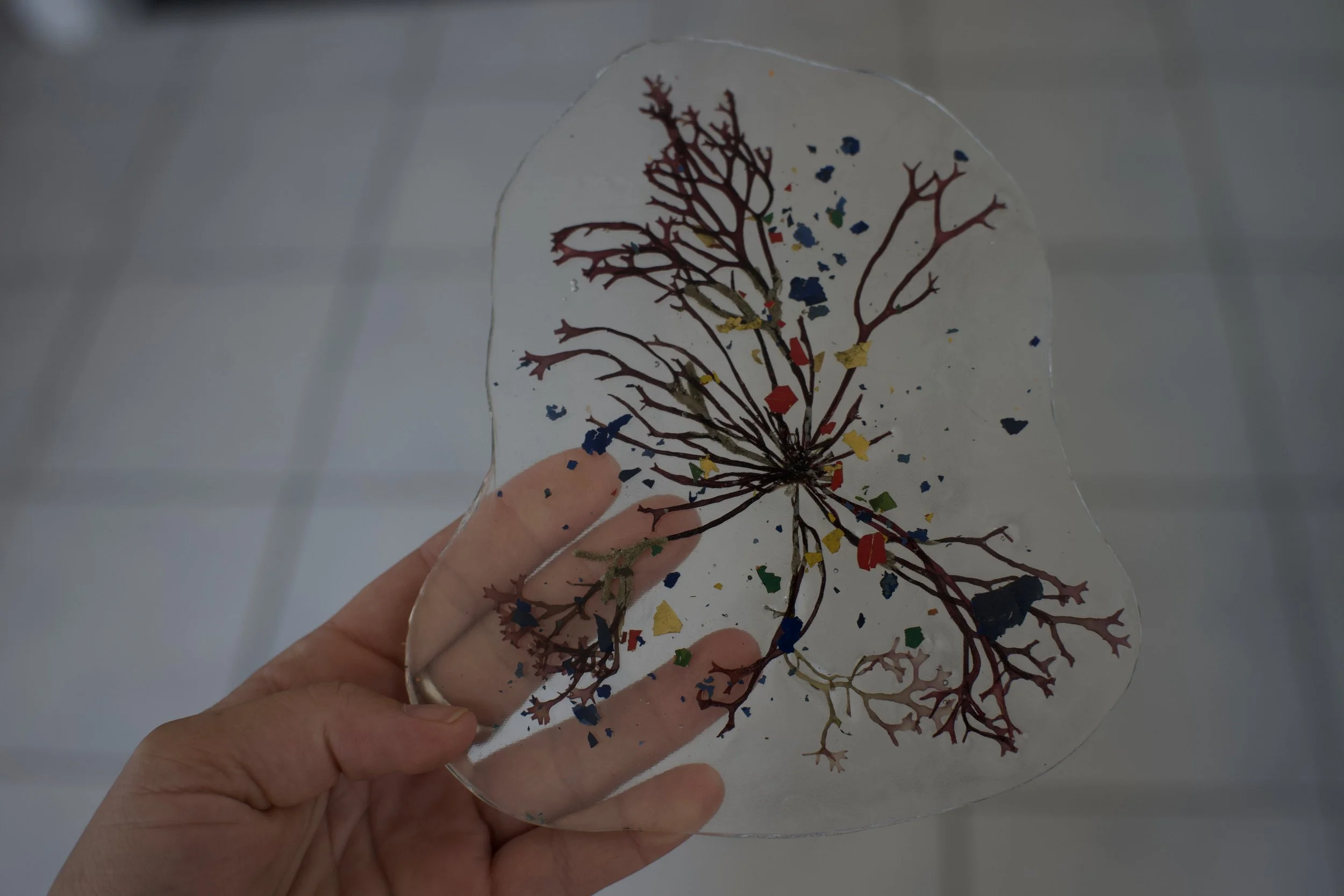
Set into the river’s surface, and cast into resin boat-hull moulds beside it, are fragments collected during fieldwork at the Boat Cemetery on the Goyen’s banks: paint flakes from end-of-life vessels, shards of GRP debris, corroded electrical and mechanical components, and discarded shells from the wild oyster and mussel reefs that inhabit this same stretch of water. Suspending this material evidence in resin lets us hold it still, caught mid-decay, rather than restoring or explaining it away. The table doesn’t depict the Boat Cemetery — it contains it.
Rising above the table is a mast, a nod to the wooden catamaran our association is building and to the sailing culture this coast has always lived by. From it hang collage posters made from recycled plastic, printed on a small hand press the residency artists operated together. Each poster also triggers an augmented-reality overlay when viewed through a tablet — 3D scans of the derelict boats, layered with footage of the surrounding ecosystem, so the static collage briefly opens onto the living site it was made from.
Alongside these lie cyanotype postcards in a different register: an imagined conversation between the rotting boats and the mussels living on their hulls, who are slowly ingesting them. We wrote these exchanges after days watching exactly that — bivalves feeding on the same fiberglass that fragments into their own tissue. Cyanotype, a process dependent on water and sunlight, felt like an honest medium for a dialogue between two things made and unmade by the same river.
Beside the table sits a scrapbook of fieldwork photographs — hands holding shellfish and buoys, students working the mudflats at low tide, microscope sessions in a school laboratory — alongside the Bad Boat Mapping field guide we use to train citizen scientists.
We built the ‘Table of Curiosity’ collectively — researchers, illustrators, designers, photographers, and citizen scientists working side by side during the residency — because no single discipline can hold what an abandoned boat asks: what happens to material that never fully biodegrades, and what does a community owe the water in return. It is the same question driving FSL’s wooden catamaran build, designed for collective use and with a death plan in mind — built to be repaired, repurposed, and eventually disposed of responsibly, rather than abandoned.
Artist Collective
Marta Musso - Marine Biologist and Illustrator
Angela Wicki - Designer and Art Educator
Letty Bidivanu - Journalist and Documentary Filmmaker
Maud Plantec - Visual and Material Artist, Researcher
Marjolaine Abaléa - Visual Artist
Nicholas Gant - Award winning social and sustainable designer and published academic | University of Brighton
Tanya Dean - Senior Lecturer, School of Art and Media | University of Brighton
Dr. Corina Ciocan - Marine Biologist and Eco-Toxicologist | University of Brighton
Angie Richard - Award winning producer, writer and creative practice researcher | Co-founder and President of the Floating Stories Lab
Upcoming Events
Wharram Hui, Audierne, France: July 18-19
https://www.floatingstorieslab.org/wharram-hui-audierne-2026
The Ocean Race, featuring FSL’s ‘Table of Curiosity’ at the Ocean Literacy Hub, Park City, Lorient, France: September 10-13
https://www.theoceanrace.com/fr/atlantic/2026
ICES Annual Science Conference 2026, Brest, France, featuring a presentation of ReTISS by Angie and the ‘Table of Curiosity’ : 15–18 September 2026
Participating Session: https://www.ices.dk/events/asc/2026/Pages/Enganging_citizens_in_marine_biodiversity_monitoring.aspx
As always, thanks for being here. Learn more about becoming a member of FSL for future residency opportunities, or volunteering on our boat build and citizen science initiative.
