
The Floating Stories Lab and University of Brighton presents…
CITIZEN SCIENCE CREATIVE RESIDENCY
2026 Edition
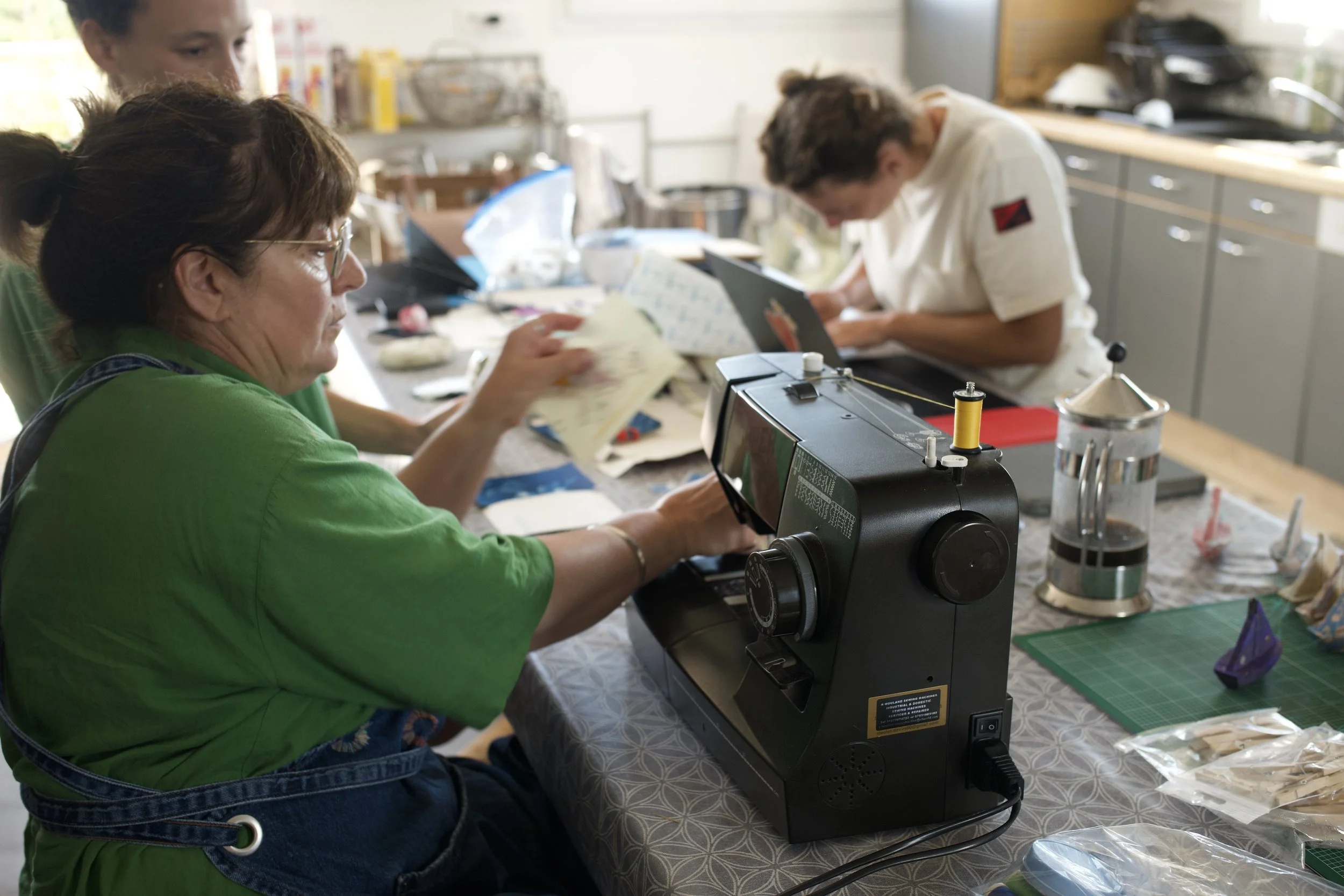
Our 2026 residency welcomed five creative practitioners based in Bretagne and across France for a week-long coastal residency in Plouhinec (29), exploring abandoned boats as sites of ecological, cultural, and material inquiry through collaborative creative–scientific practice.
The residency was co-hosted by the University of Brighton, and mentored by Nick Gant, Tanya Dean, and Dr. Corina Ciocan.
Our co-created ‘Table of Curiosity’ is now available for events, conferences and festival bookings. Email admin (@) floatingstorieslab.org to inquire.
Collective Bio
The Floating Stories Lab Association (FSL) is a non-profit collective in Finistère, Brittany, working at the intersection of marine science, citizen science, and creative practice. Centred around the build of a wooden catamaran and the UN Ocean Decade endorsed citizen science initiative Regenerative Tides: Sailing for Solutions (ReTISS), FSL brings together scientists, students, sailors, boatbuilders, and artists around a shared concern: the slow, invisible pollution caused by abandoned fibreglass (GRP) boats along our coastlines.
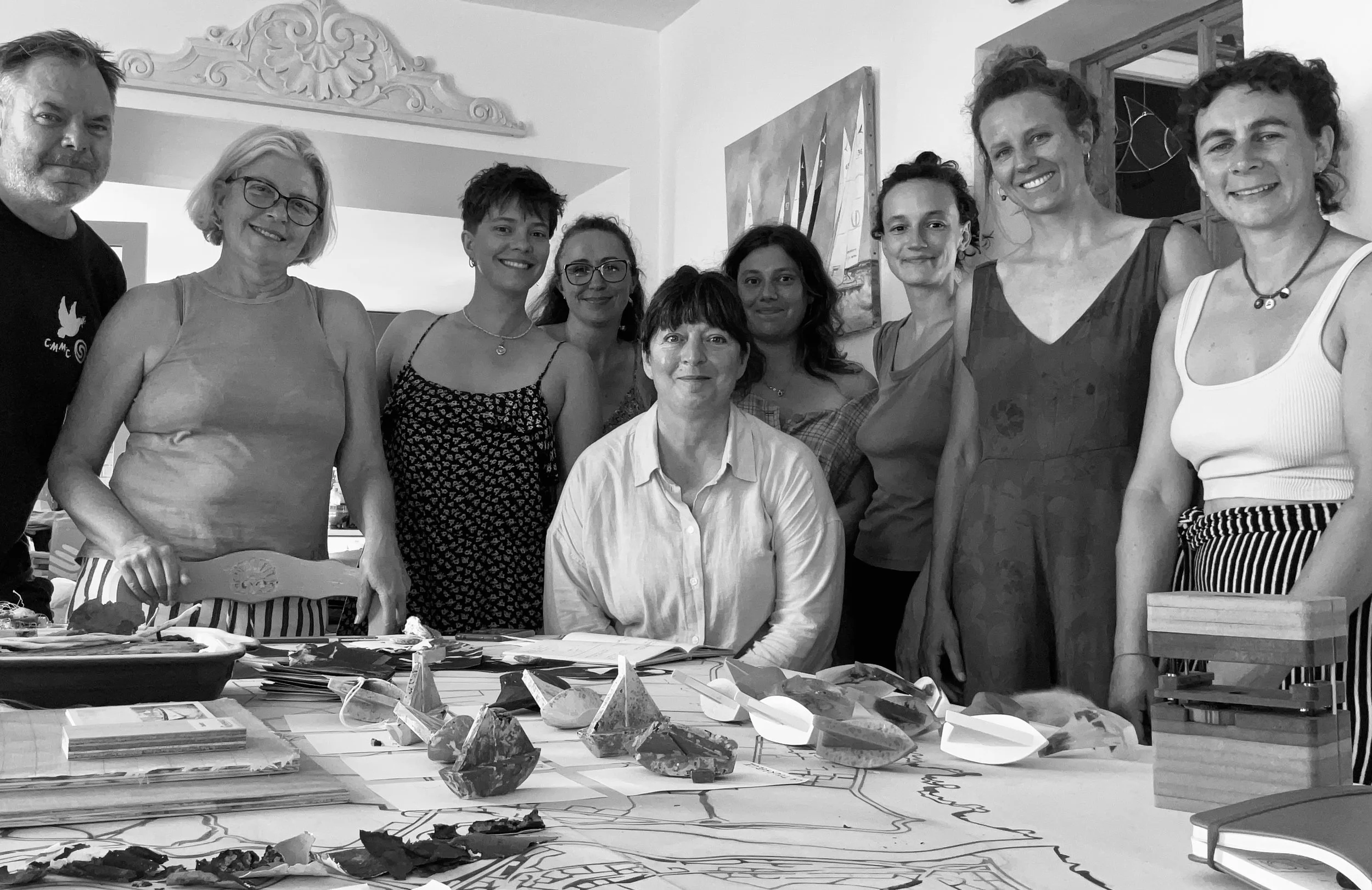
This creative output is an interdisciplinary collaboration between FSL, the University of Brighton, and creative practitioners from FSL's Citizen Science Creative Residency in Finistère, Brittany. The collective behind the 'Table of Curiosity' comprises Marta Musso, Angela Wicki, Letty Bidivanu, Maud Plantec, Marjolaine Abaléa, Dr. Nicholas Gant, Tanya Dean, Dr. Corina Ciocan, and Angie Richard — spanning illustration, photography, textile art, biopolymer objects, marine biology, and citizen science coordination.
Dr. Corina Ciocan, marine biologist at the University of Brighton, anchors the work scientifically, having researched fibreglass ingestion in marine bivalves and its pathway through coastal food chains. Angie Richard, FSL's co-founder, leads the citizen science mapping methodology and the wooden boat build underpinning the project's parallel inquiry into designing boats for collective use — research, storytelling, and citizen science, with a death plan in mind.
Rather than treating art and data as separate outputs, the collective treats fieldwork, specimen-gathering, and storytelling as one continuous practice, alongside GIS mapping and lab analysis. The 'Table of Curiosity' is the group's first major touring object, developed during the residency and now travelling to events across France through summer 2026.
Table of Curiosity
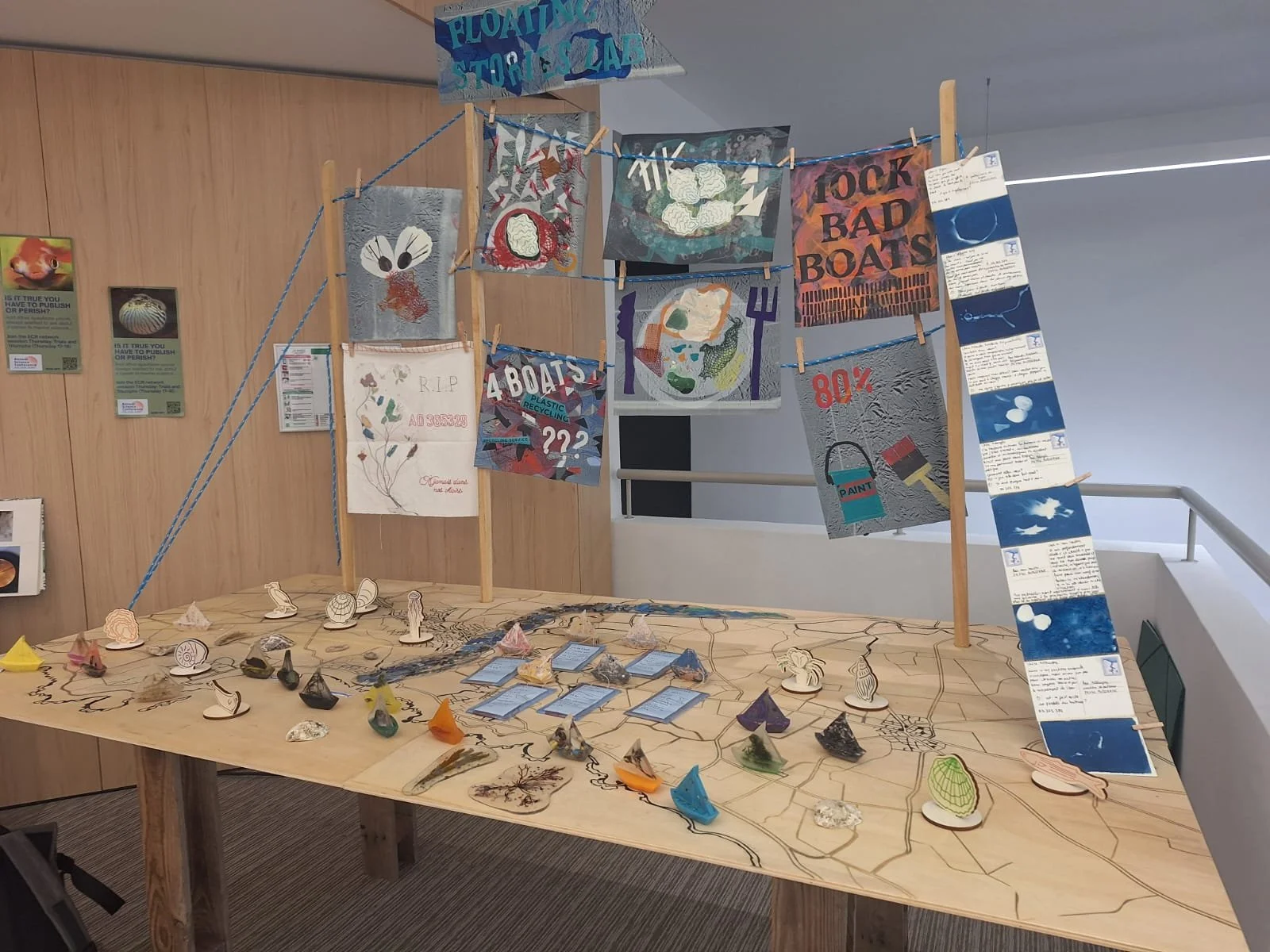
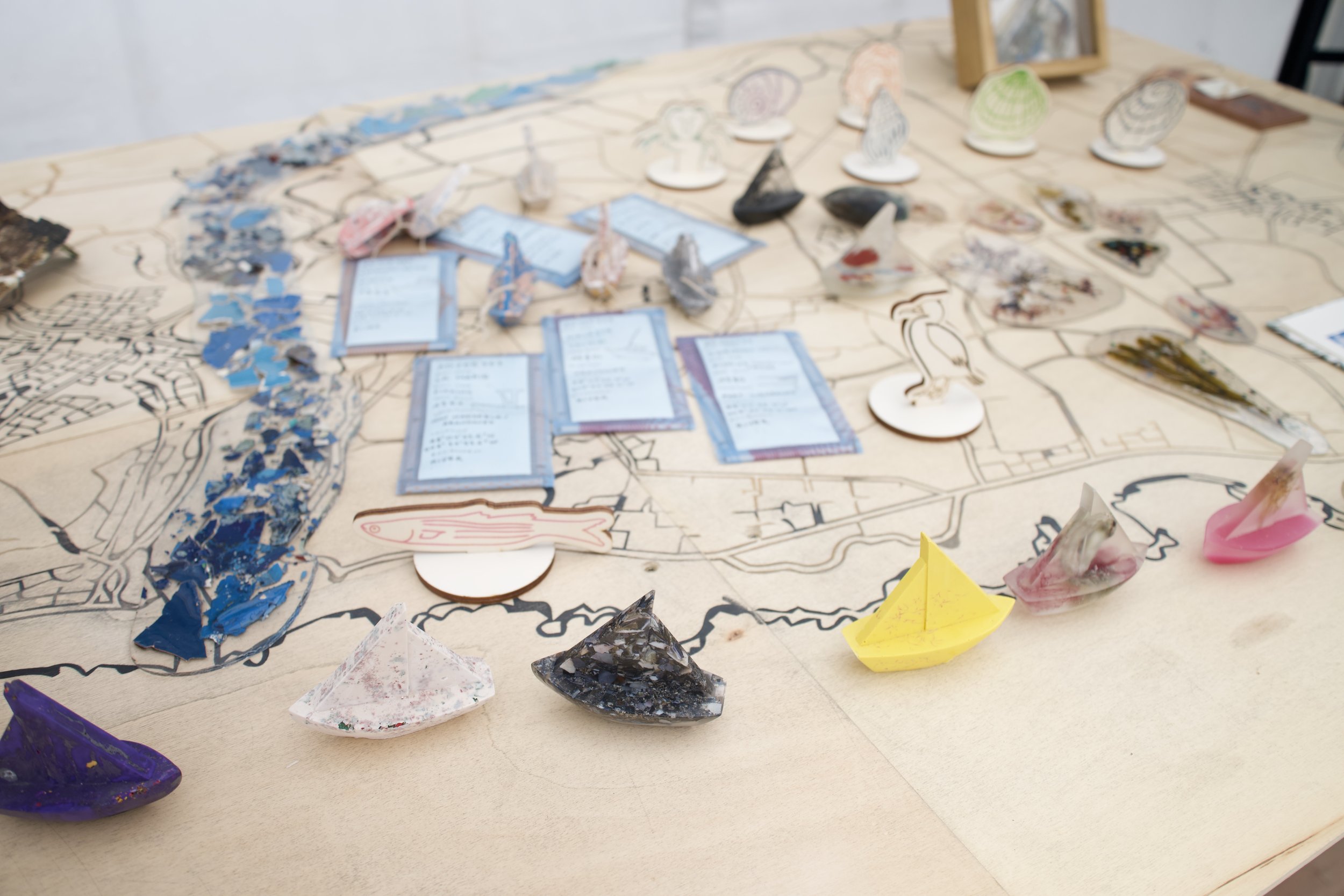
The 'Table of Curiosity' is a travelling exhibition built from the body of the Goyen River. This is the site where our citizen science initiative, Regenerative Tides: Sailing for Solutions (ReTISS), has mapped abandoned fibreglass (GRP) boats and their slow decay into coastal waters — the table reproduces that geography at a scale visitors can stand around and touch.
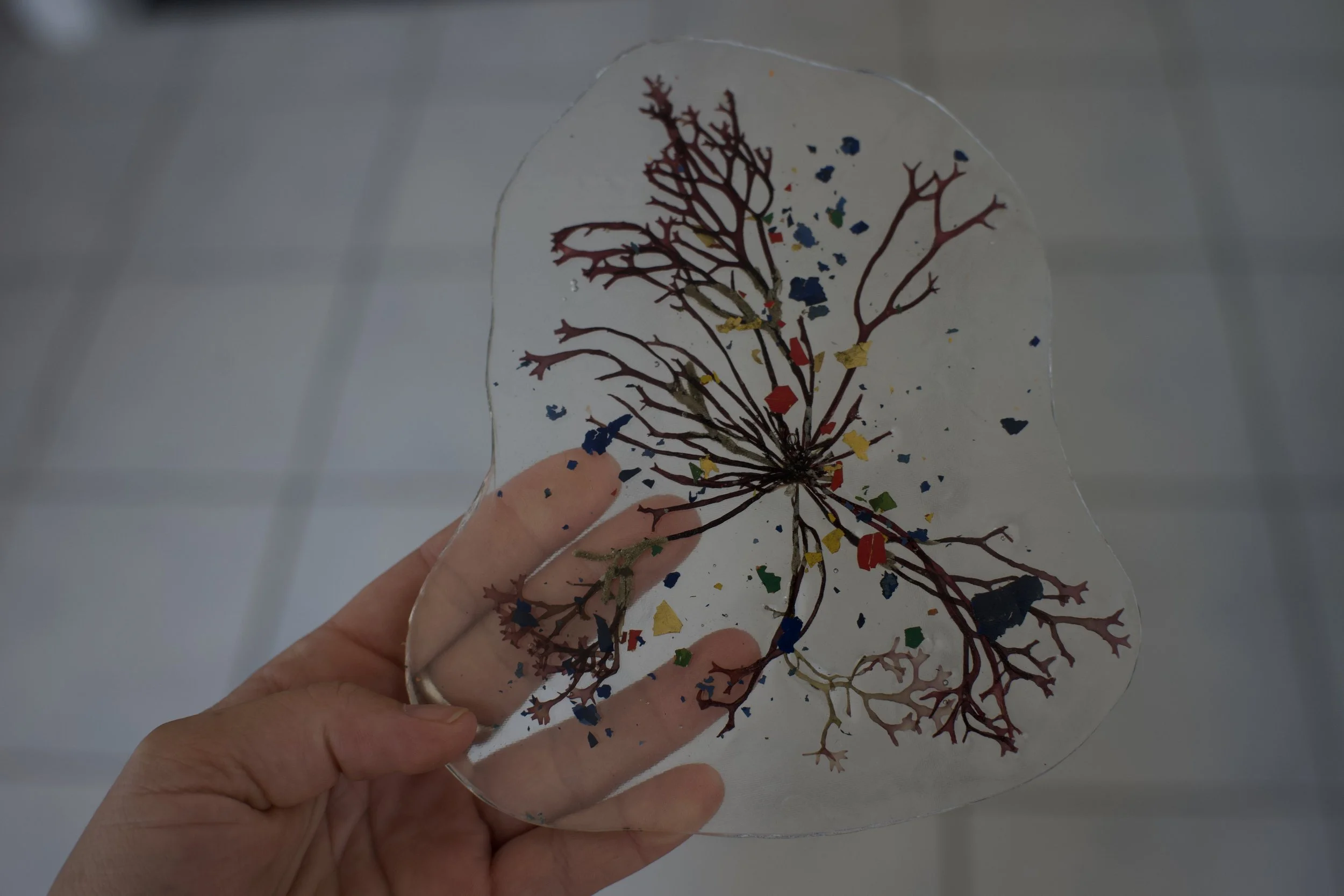
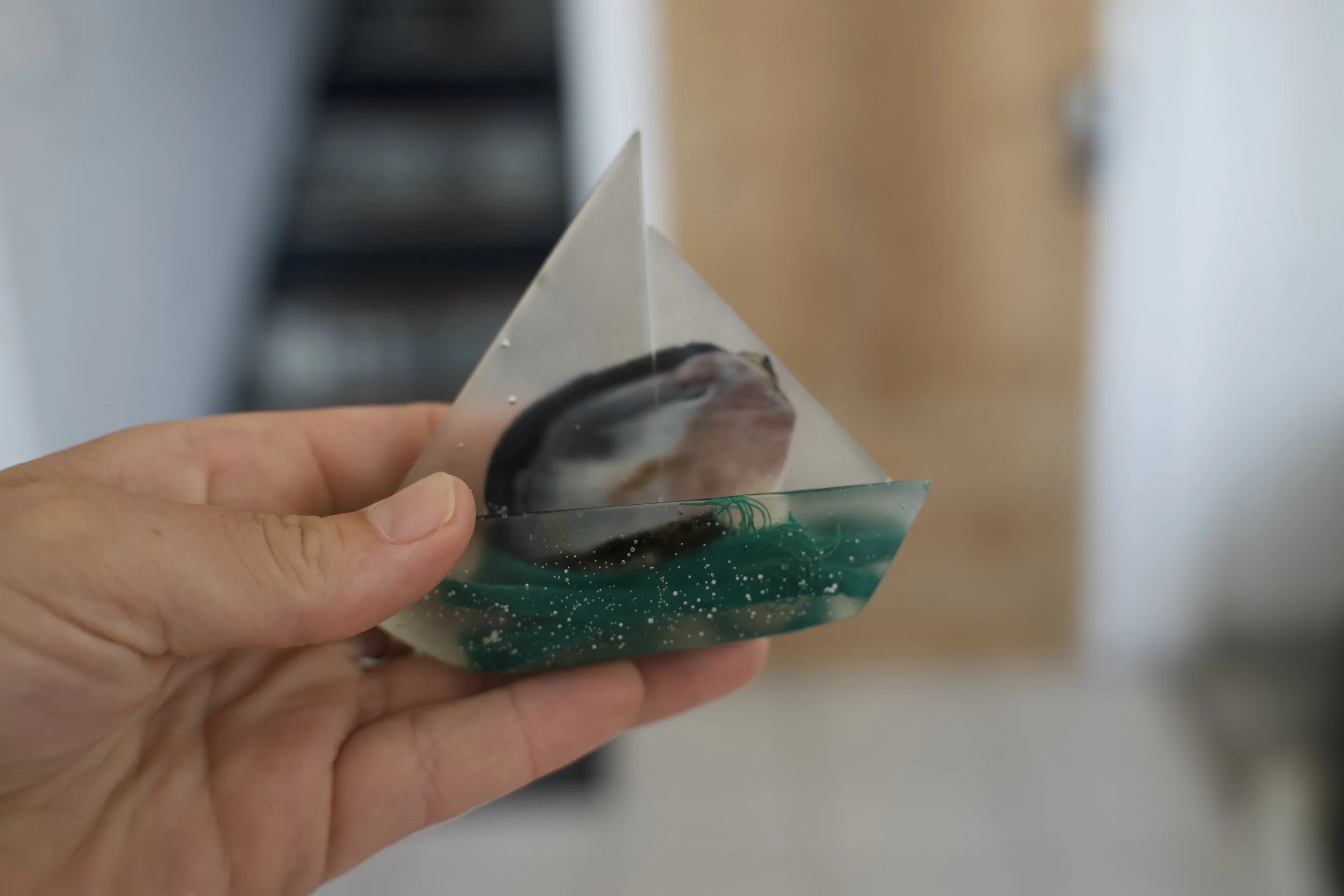
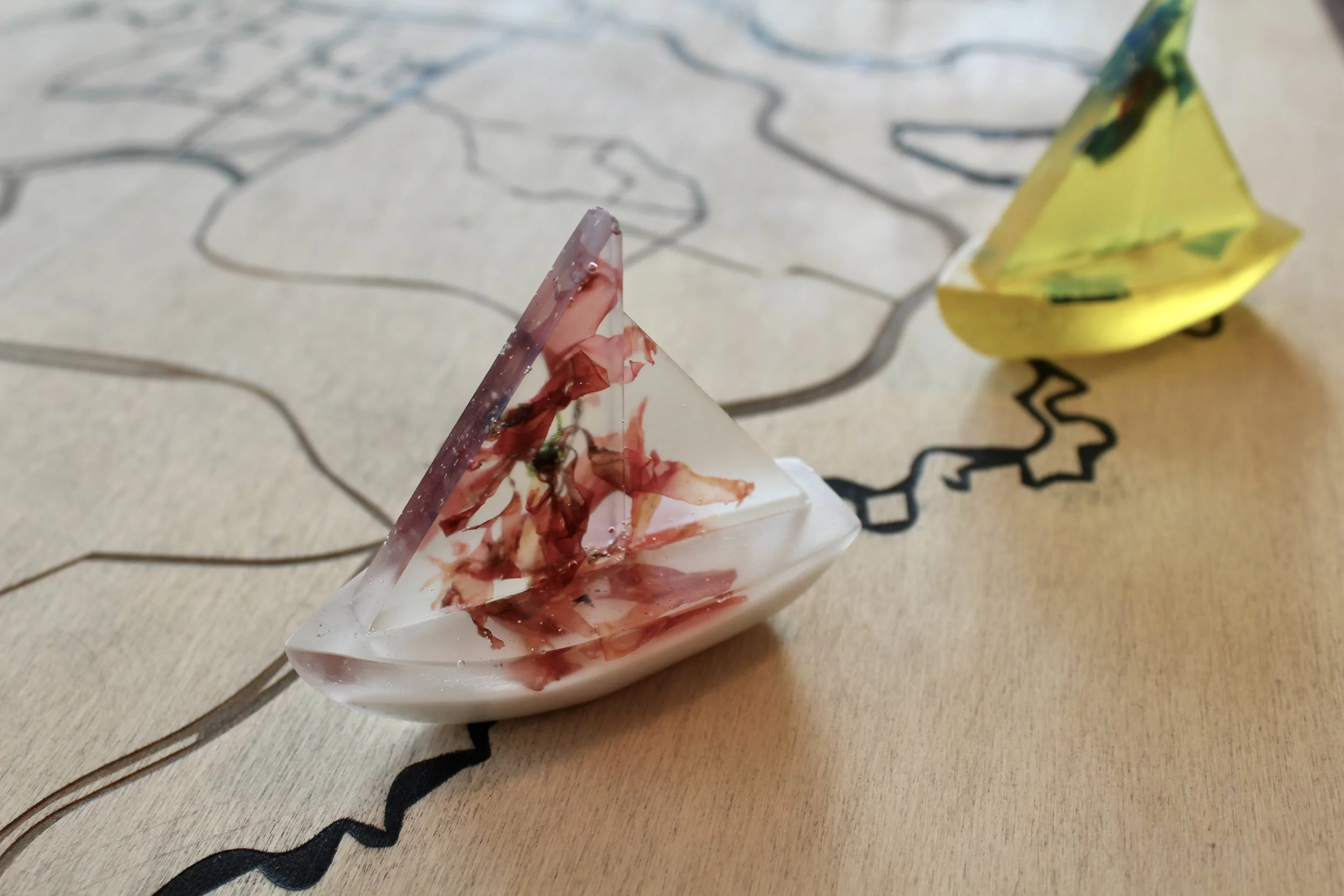
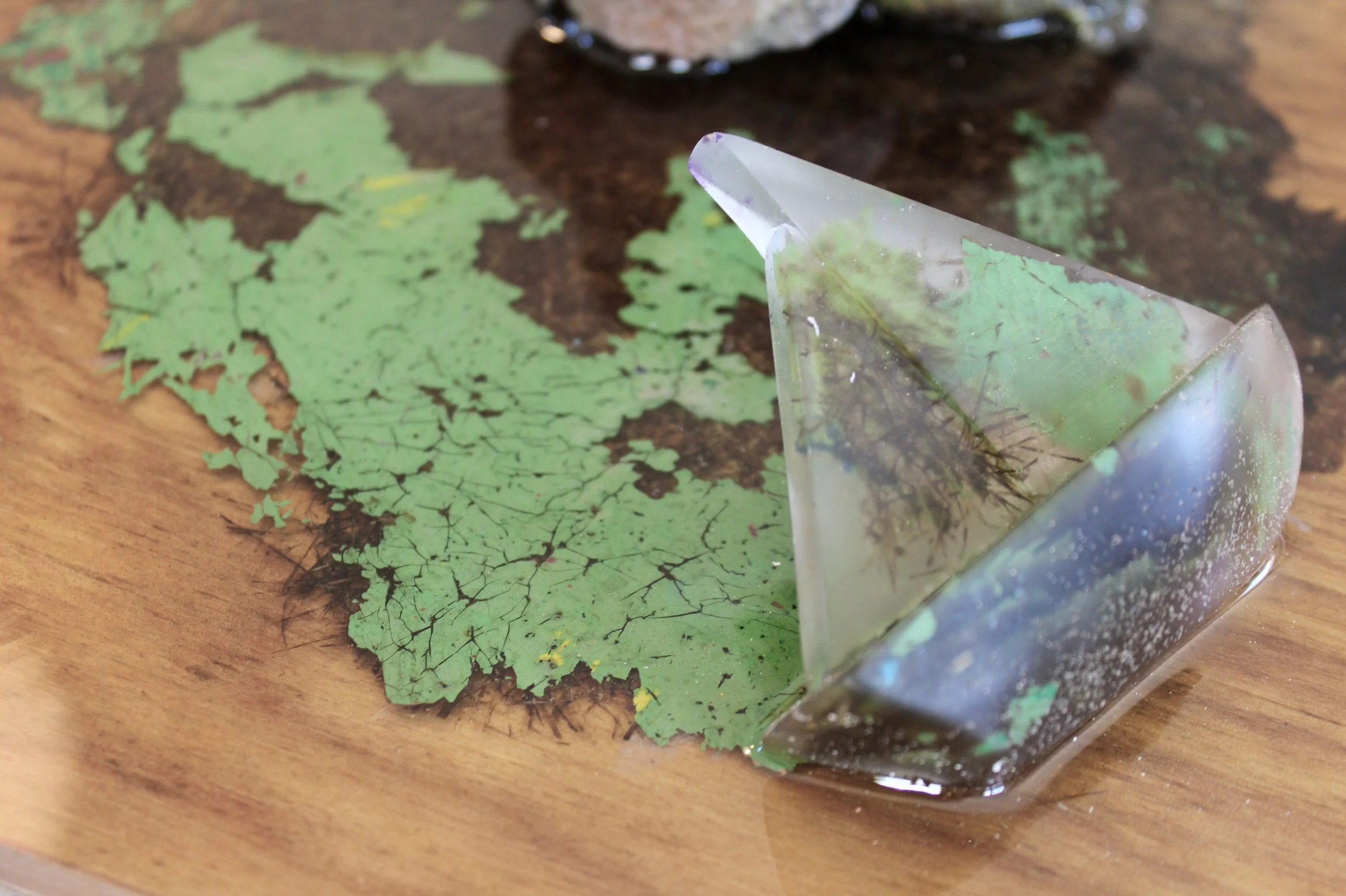
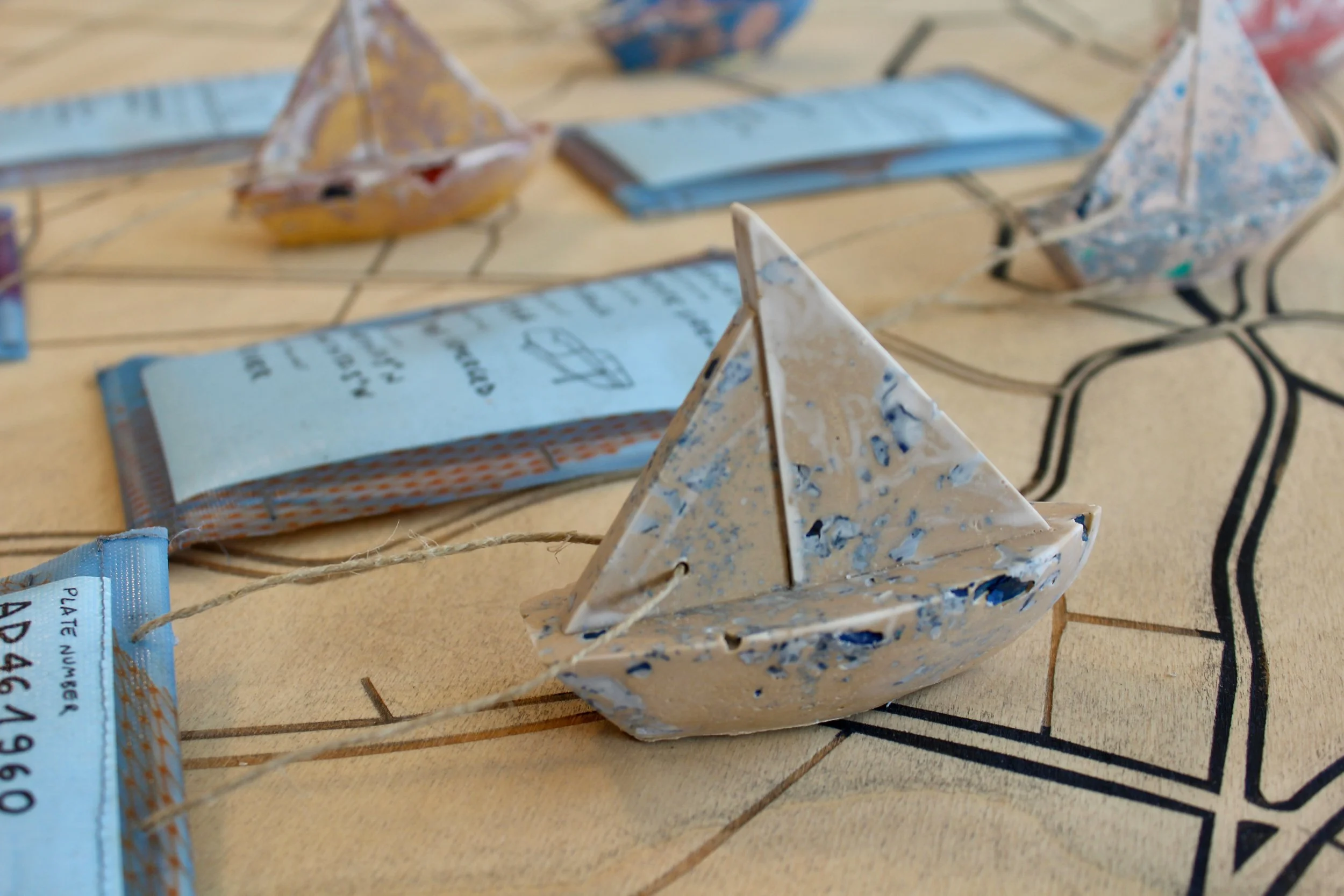
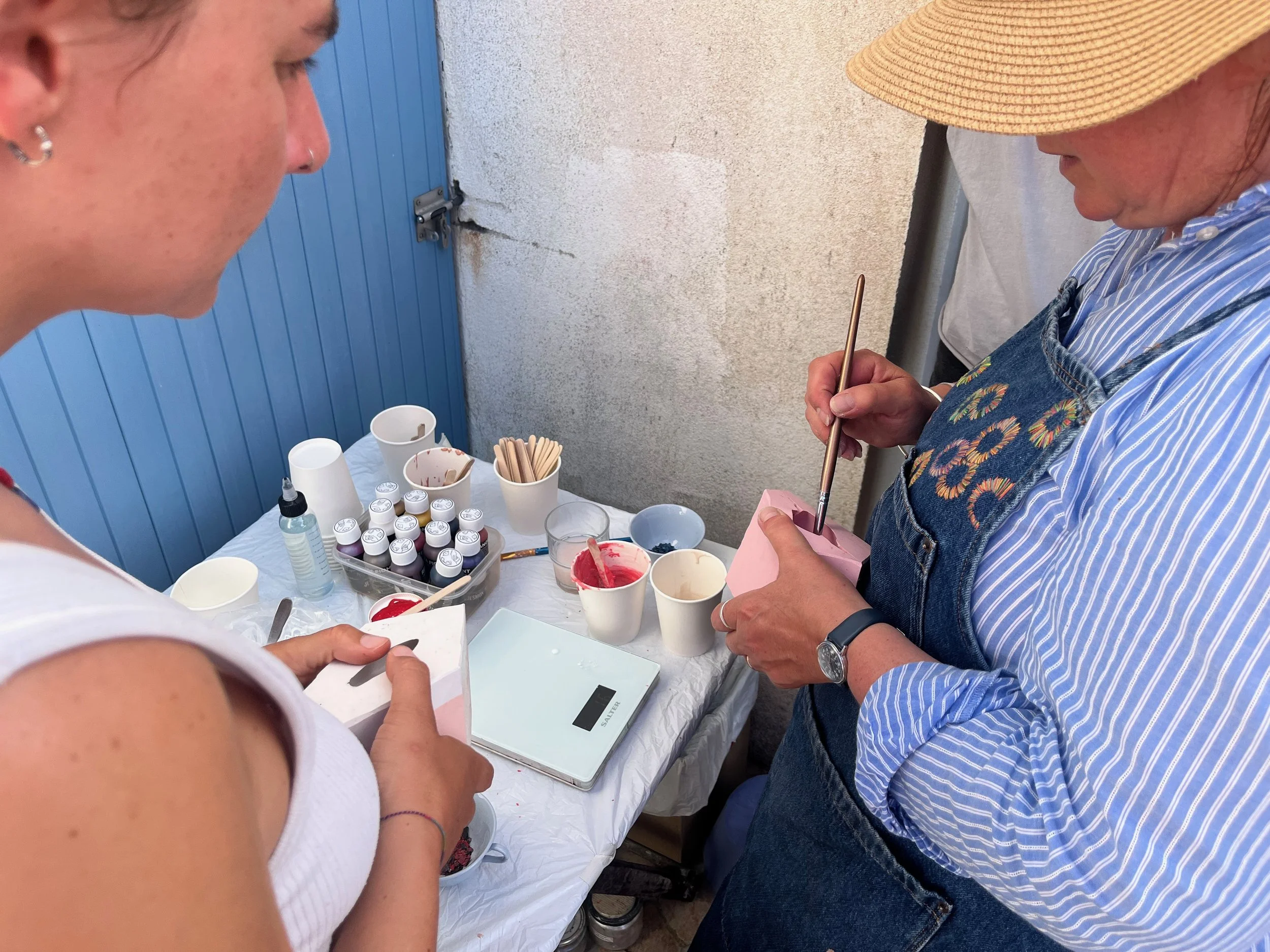
Made from recycled materials it presents a laser etched map of the river's shape and its estuary in Finistère, Brittany. Set into the river's surface, and cast into bio-resin boat-hull moulds beside it, are fragments collected during fieldwork at the Boat Cemetery on the Goyen's banks: paint flakes from end-of-life vessels, shards of GRP debris, corroded electrical and mechanical components, and discarded shells from the wild oyster and mussel reefs that inhabit this same stretch of water. Suspending this material evidence in resin lets us hold it still, caught mid-decay, rather than restoring or explaining it away. The table doesn't depict the Boat Cemetery — it contains it.
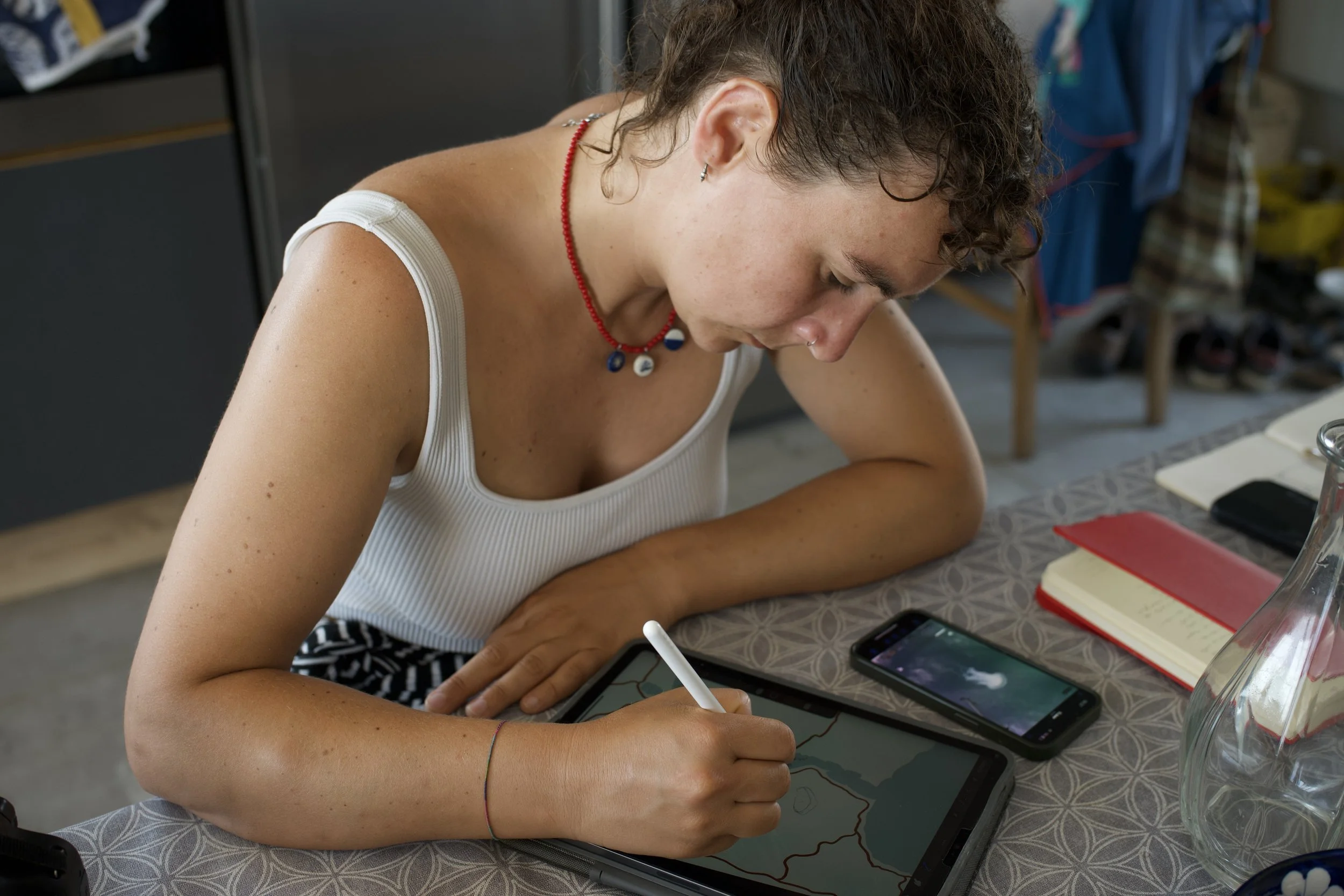
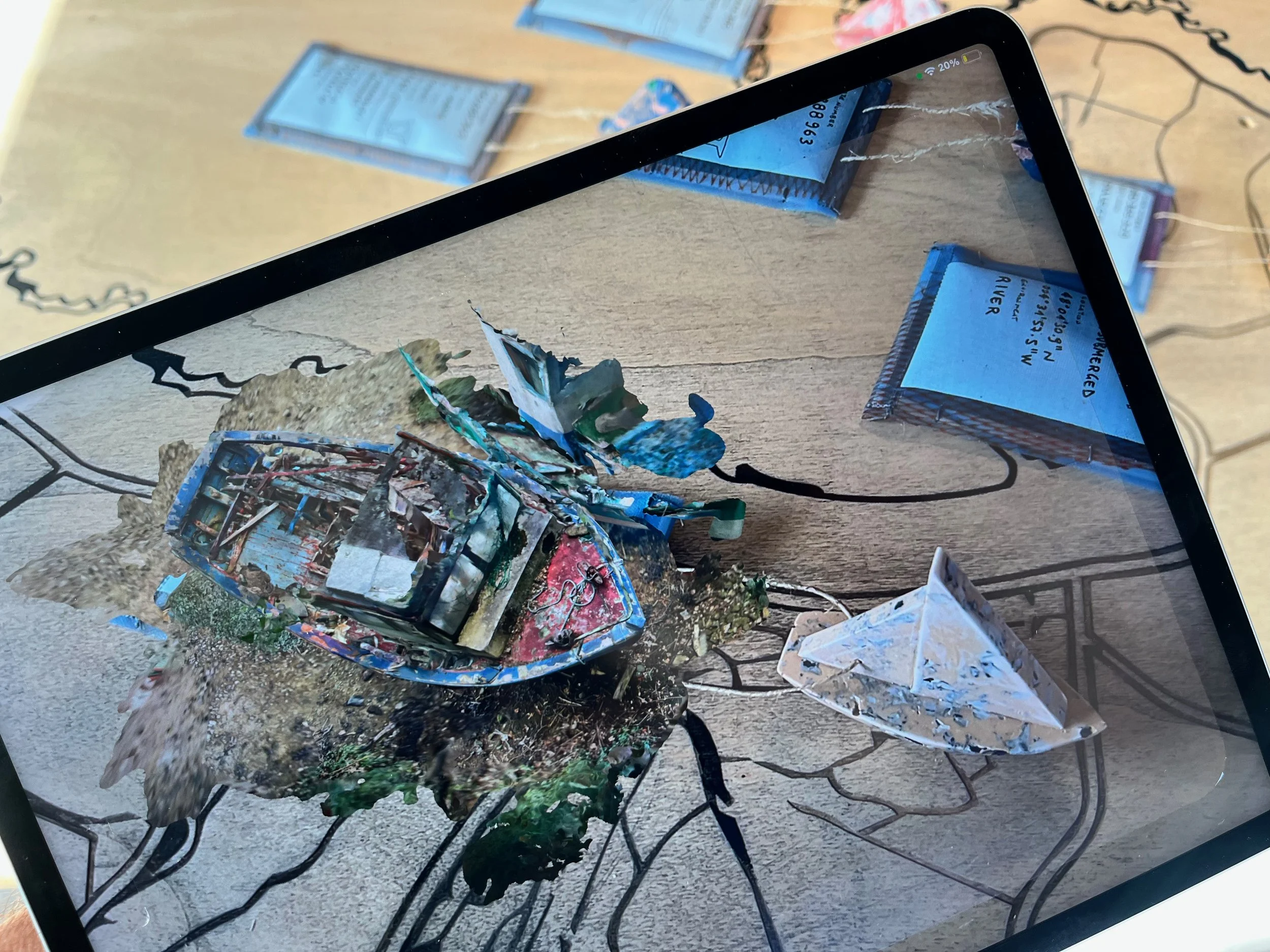
Rising above the table is a mast, a nod to the wooden catamaran our association is building and to the sailing culture this coast has always lived by. From it hang collage posters made from recycled plastic, printed on a small hand press the residency artists operated together. Each poster also triggers an augmented-reality overlay when viewed through a tablet. 3D scans of the derelict boats, layered with footage of the surrounding ecosystem, so the static collage briefly opens onto the living site it was made from.
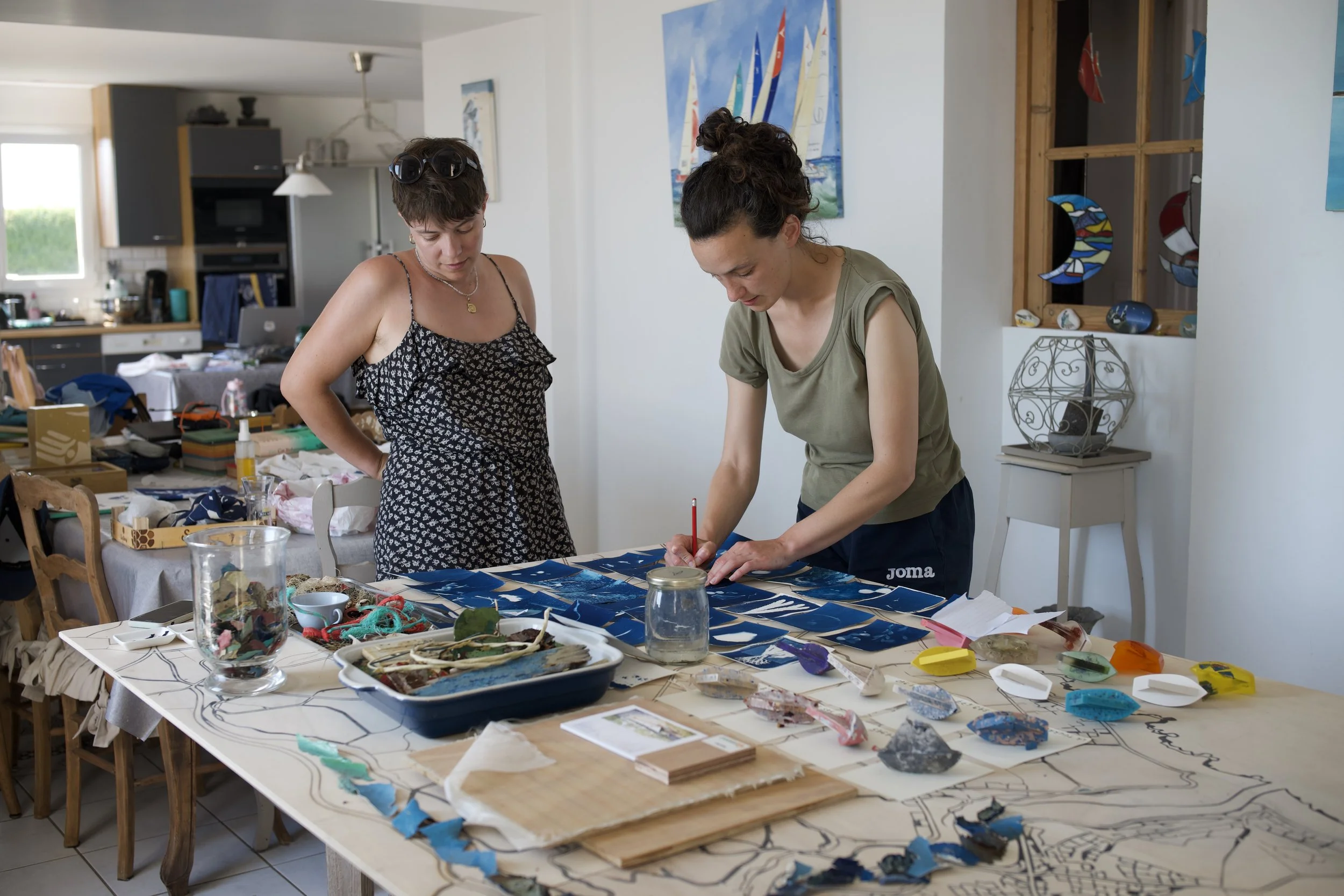
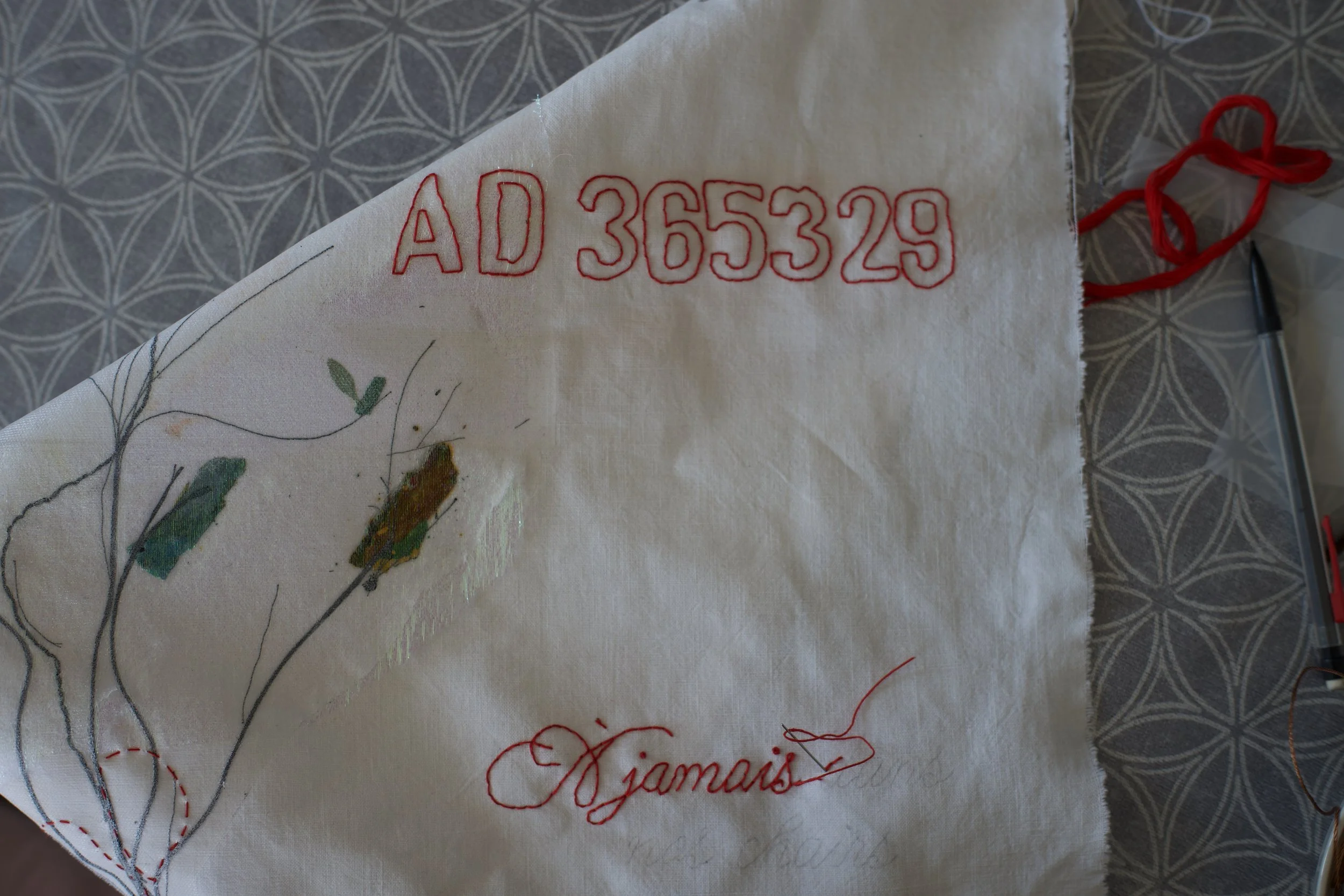
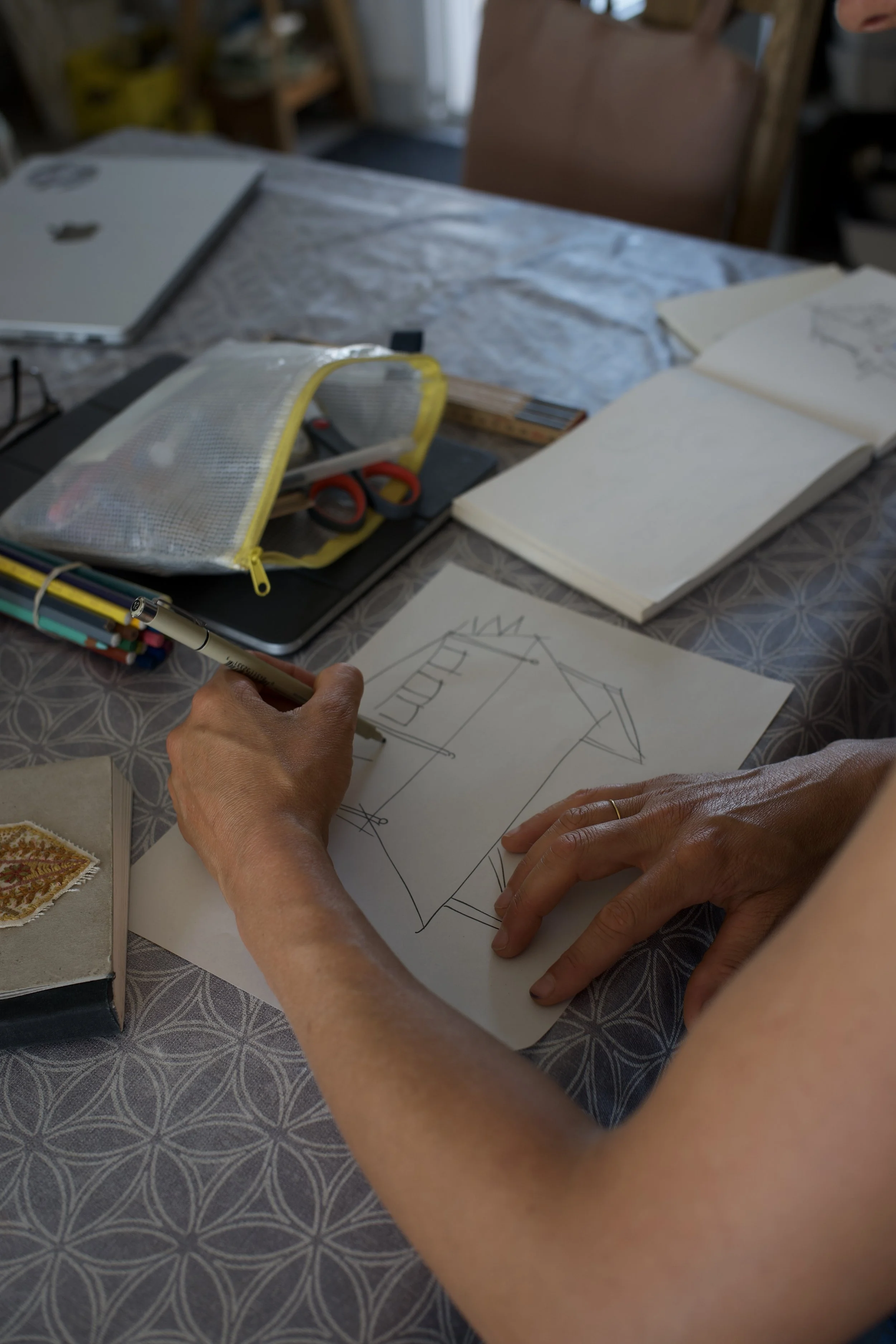
Alongside these lie cyanotype postcards in a different register: an imagined conversation between the rotting boats and the mussels living on their hulls, who are slowly ingesting them. We wrote these exchanges after days watching exactly that — bivalves feeding on the same fibreglass that fragments into their own tissue. Cyanotype, a process dependent on water and sunlight, felt like an honest medium for a dialogue between two things made and unmade by the same river.
Beside the table sits a scrapbook of fieldwork photographs — hands holding shellfish and buoys, students working the mudflats at low tide, microscope sessions in a school laboratory — alongside the Bad Boat Mapping field guide we use to train citizen scientists.
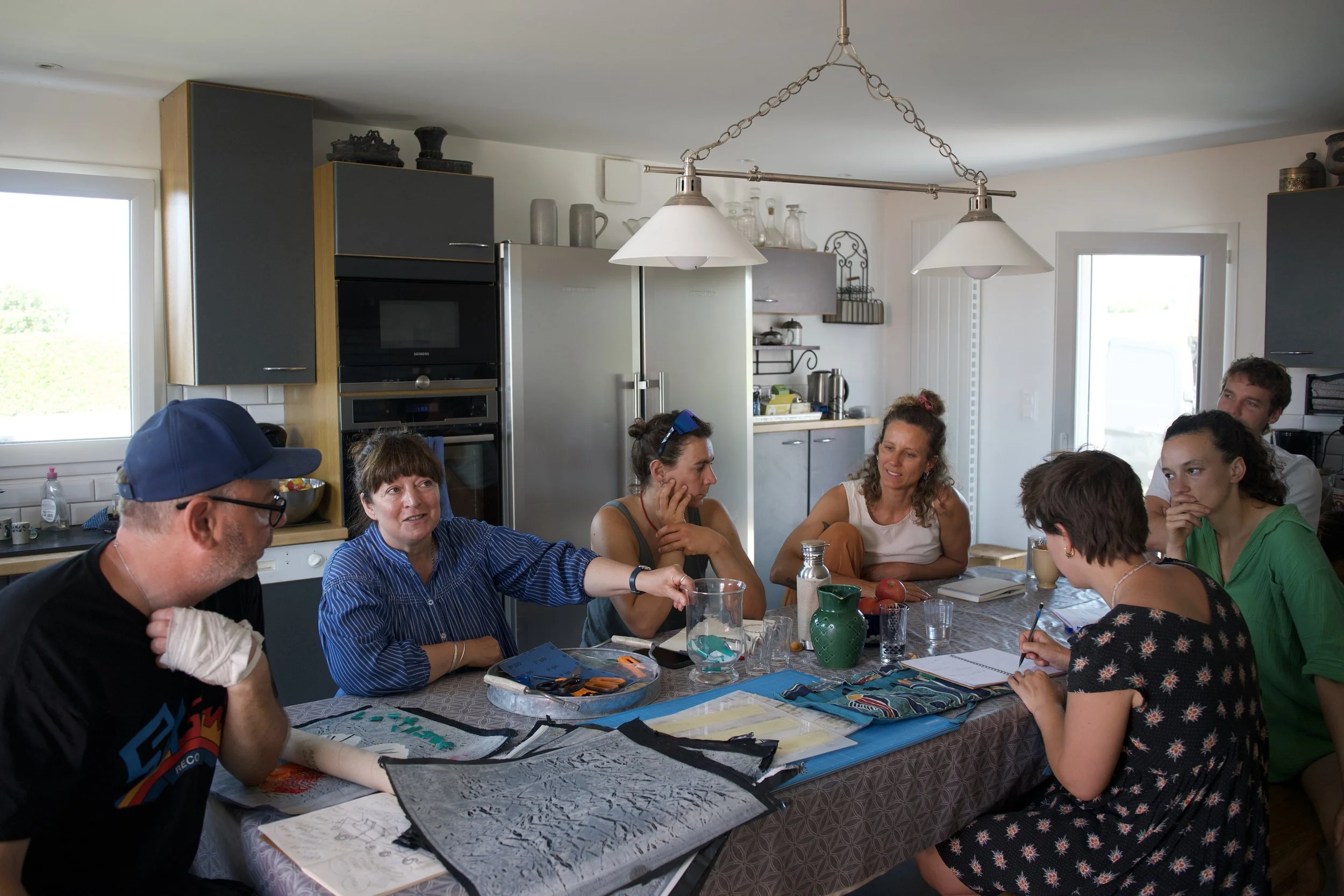
We built the 'Table of Curiosity' collectively — researchers, illustrators, designers, photographers, and citizen scientists working side by side during the residency — because no single discipline can hold what an abandoned boat asks: what happens to material that never fully biodegrades, and what does a community owe the water in return. It is the same question driving FSL's wooden catamaran build, designed for collective use and with a death plan in mind — built to be repaired, repurposed, and eventually disposed of responsibly, rather than abandoned.
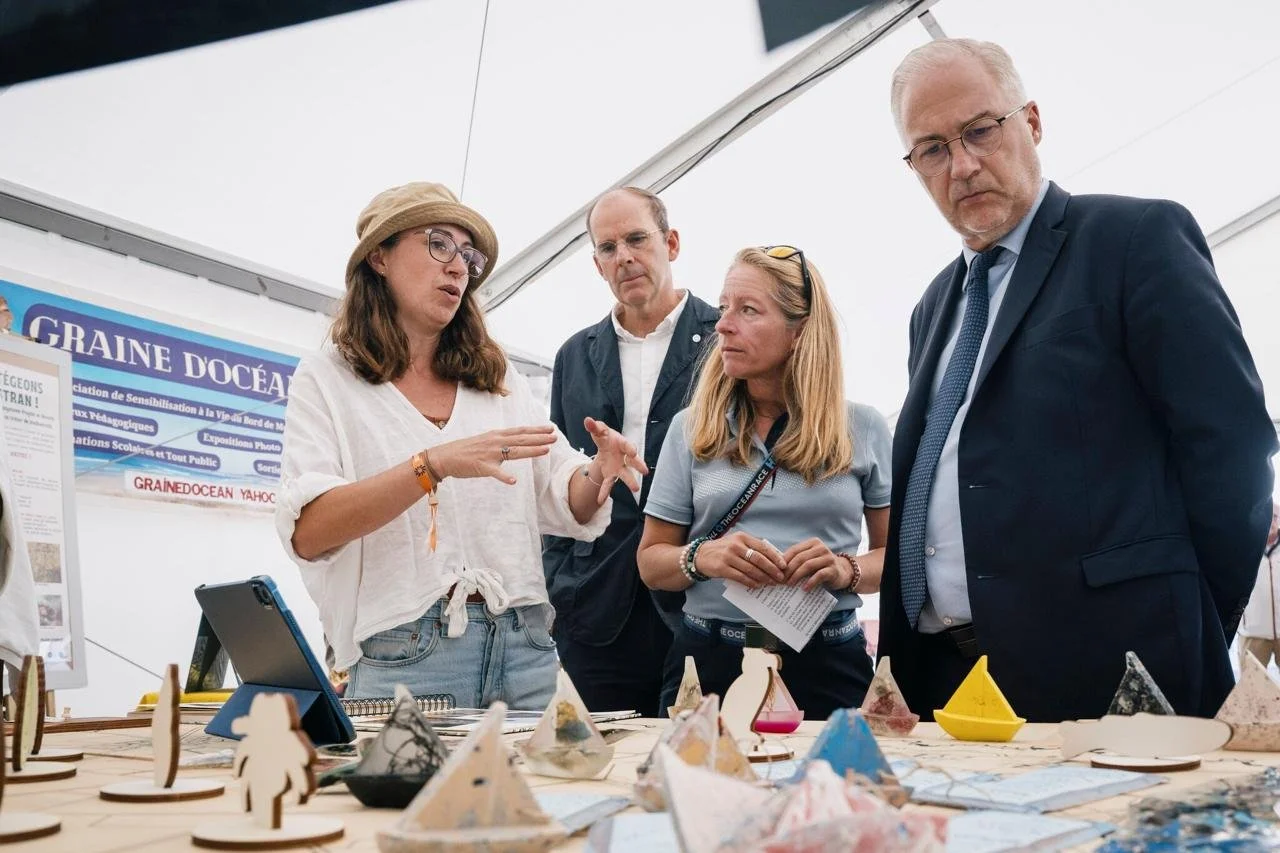
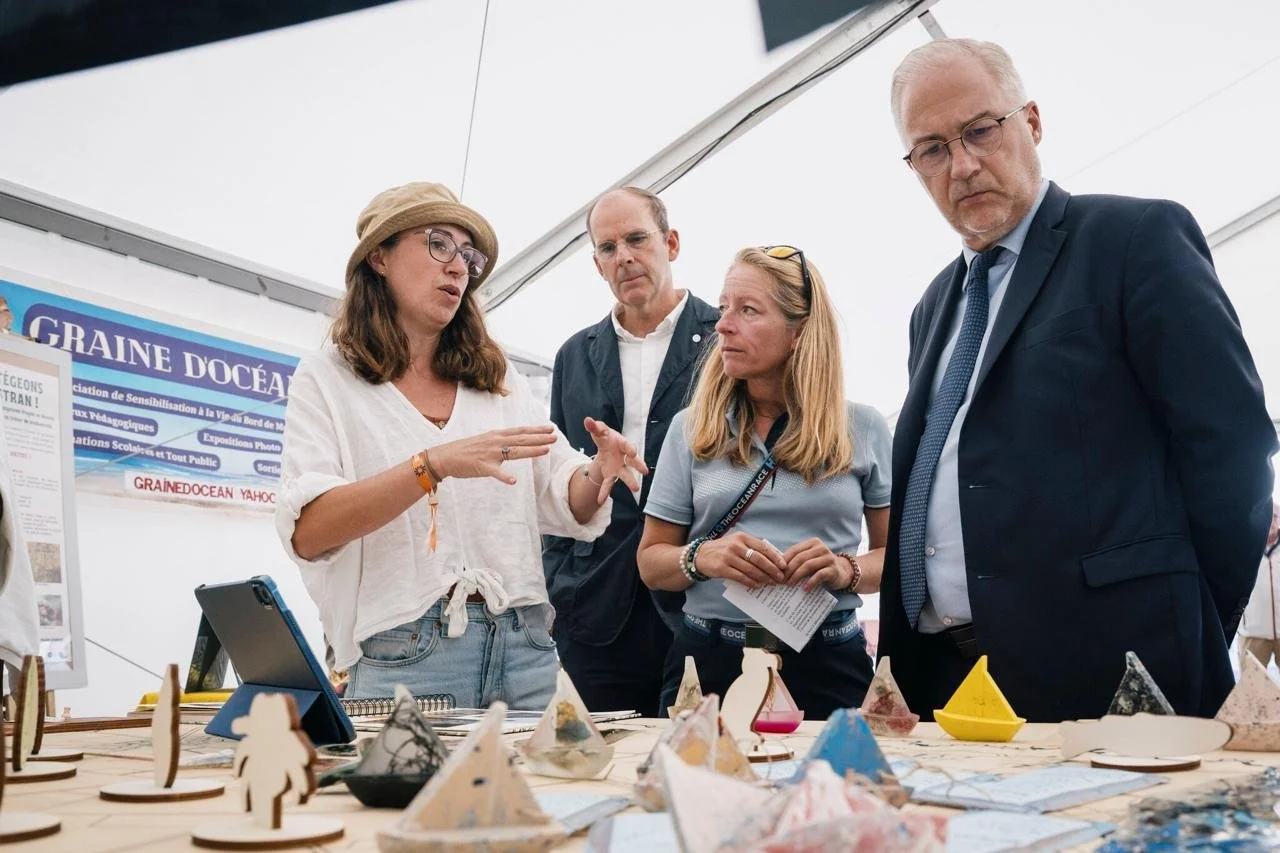
FSL co-founder Angie Richard presenting the ‘Table of Curiosity’ to the Mayor of Lorient, at The Ocean Race Atlantic. Copyright: The Ocean Race
Meet the mentors
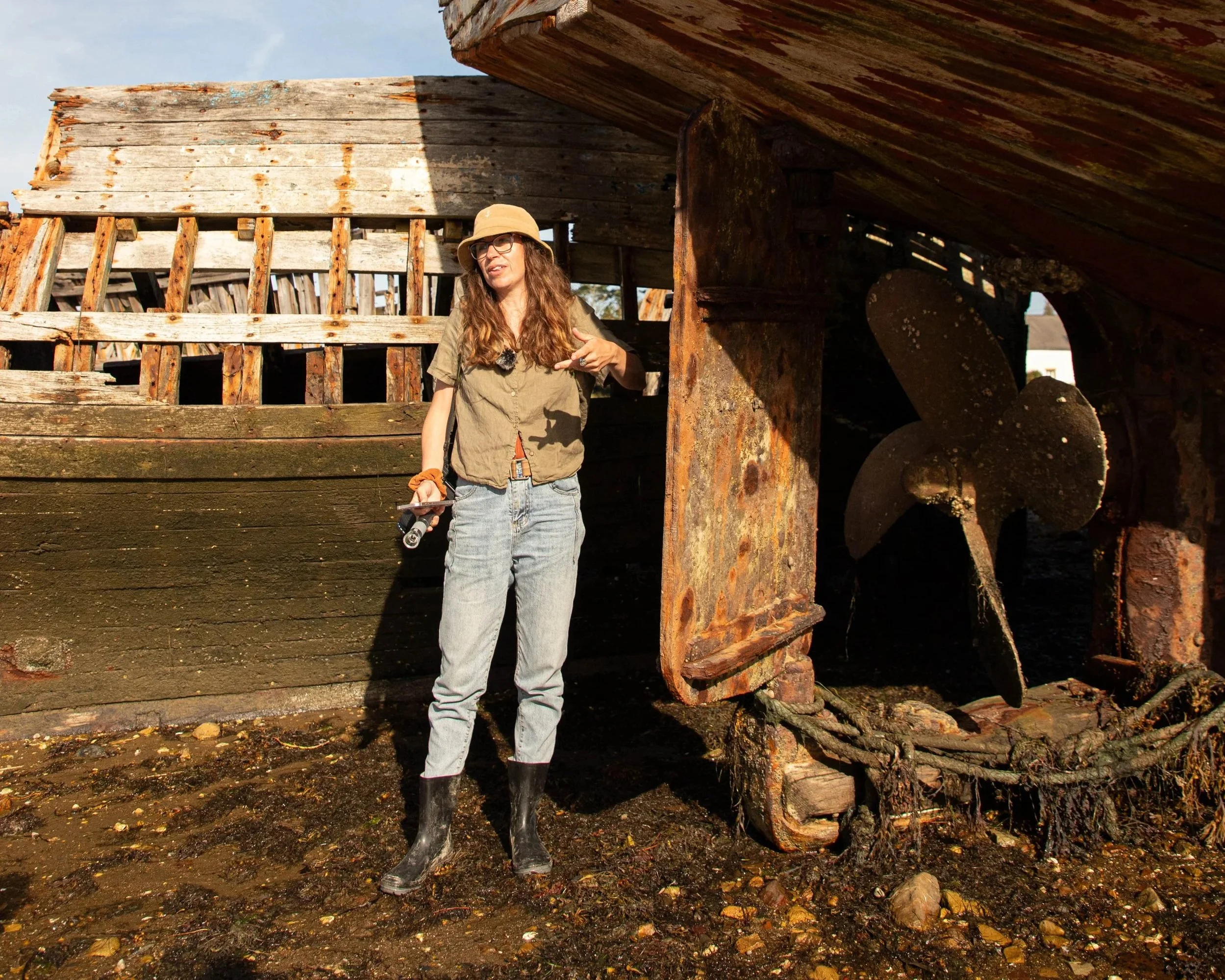
Angie Richard
Angie is a researcher, award-winning documentary filmmaker, and writer with over two decades of experience in eco-adventure storytelling, creative practice research, and citizen science. Her work focuses on how creative storytelling can actively contribute to regenerative futures, bridging science, media, and community engagement.
Angie is a producer of award-winning documentary films including Women & the Wind, Ecosphere, UN VR’s Sea of Islands, and The Laps: Tasmania.
She leads FSL’s citizen science initiatives and is an external research member of University of Brighton’s Center for Environment and Society.
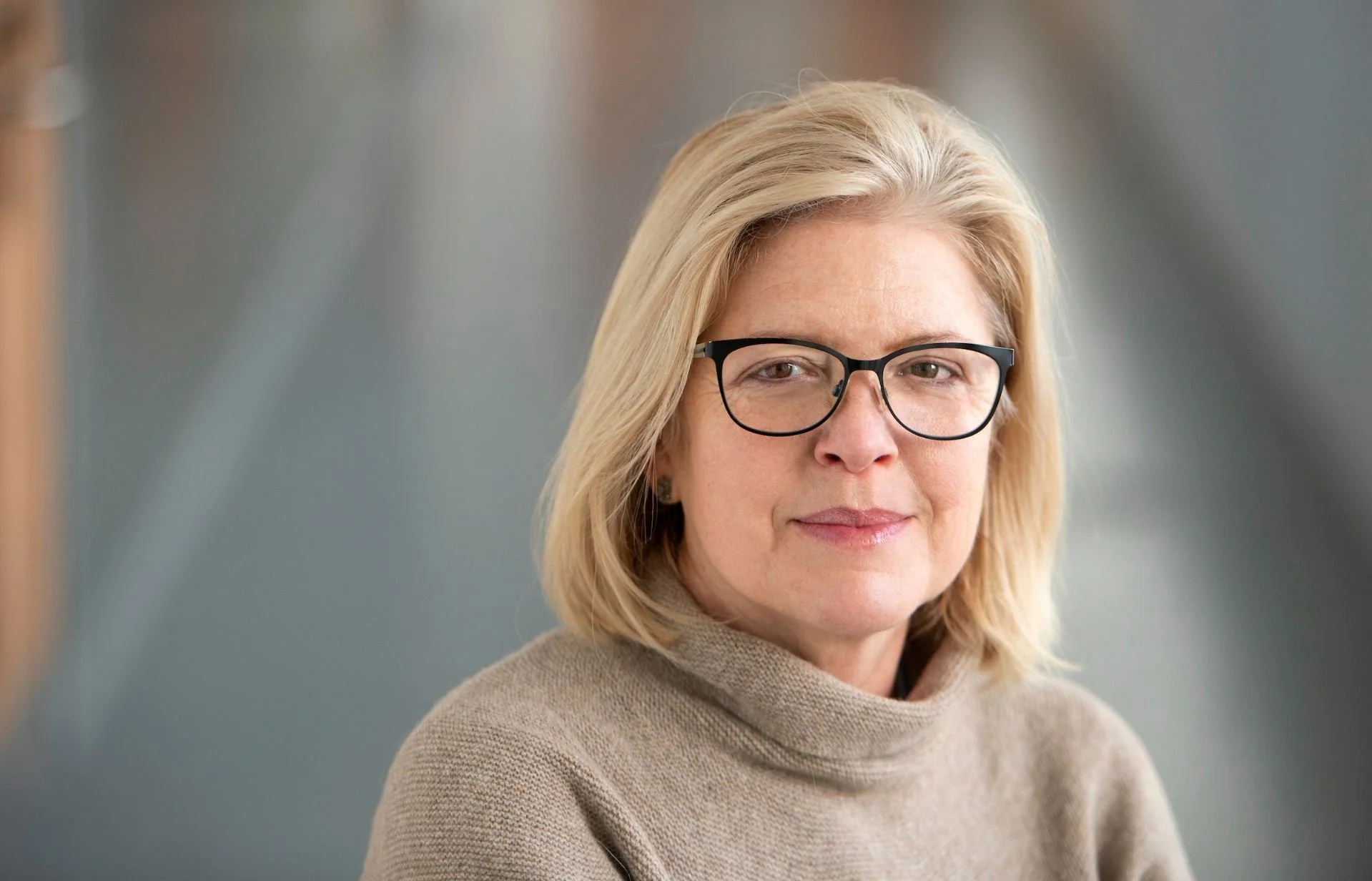
Corina Ciocan
A Marine Biologist, Corina’s work focuses on the biological responses of aquatic organisms to environmental stressors. Prior to working at the University of Brighton, UK, Corina was a full-time Researcher at the University of Sussex, UK after starting as a Research Assistant for the Romanian National Marine Institute. She was involved in a wide range of international research programmes (International Mussel Watch, EU Interreg Channel), investigating the pollution induced genetic damage impairment of reproduction mechanisms in bivalves and fish. Recently, Corina has developed a strong interest in the marine microplastics pollution and the potential input from boating activities.
Corina has published her research in high impact scientific journals, written book chapters and has appeared in TV and radio programs centred around her research into the contamination of the aquatic environment. Corina teaches Marine Biology at the University of Brighton UK and she brings a lot of her personal experience into the class room, encouraging students to participate in laboratory research and coastal surveys.
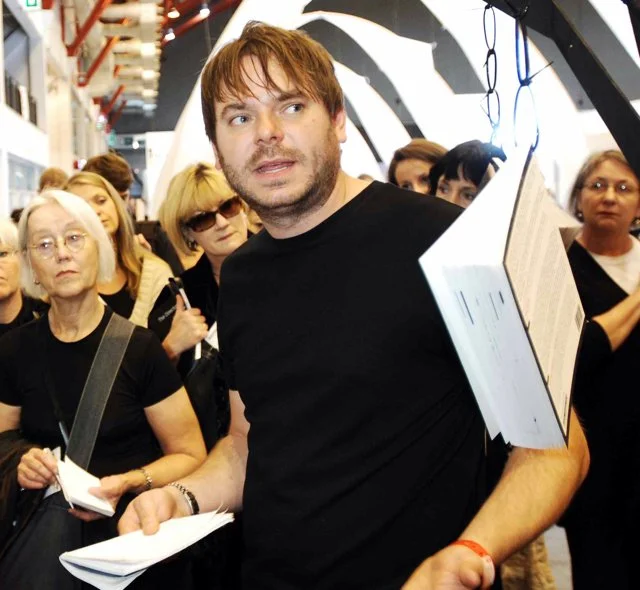
Nicholas Gant
Nick is an award winning social and sustainable designer and published academic whose research and design consultancy impacts on global, industrial companies, international NGOs as well as governing bodies and civic communities in the UK and overseas.
He has helped over 50 organisations develop their sustainability and social agendas through design research embodied within tangible and acclaimed products and platforms, spaces and places. He routinely delivers workshops and presentations of research internationally and has been invited to present research findings to The Department of Communities and Local Government, The Cabinet Office, The House of Lords, The Rural Commission, The European Institutes of Culture, The Department of Energy and Climate Change, The British Council, The World Crafts Council and UNESCO.
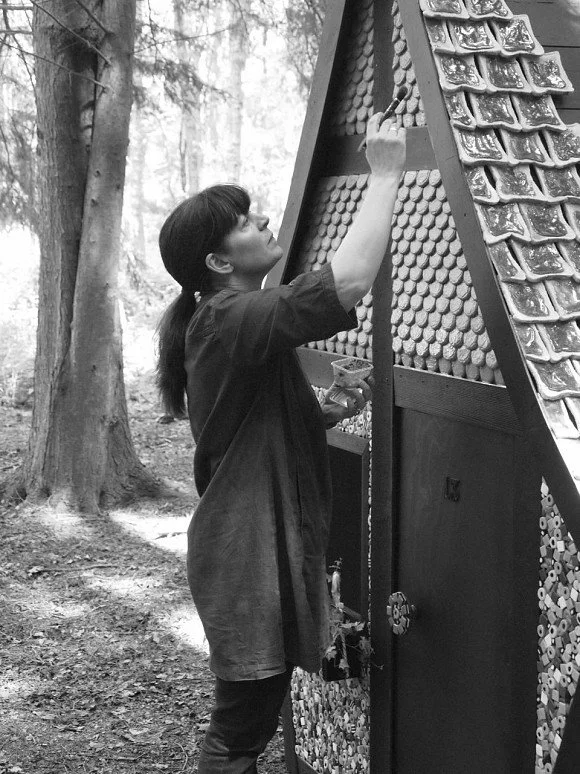
Tanya Dean
Tanya is a materials expert and leads the Polymers and Composites department at The University of Brighton. Nick and Tanya have worked together for over 20 years including projects relating to the social value of materials, valorising waste in the Wiki-Waste-Workshop in South Africa and Indonesia, plastics alternatives and 'Sole Searching'.
Tanya has developed products that consider the social, cultural and industrial value of materials and new opportunities for circular and efficient systems for over 20 years.