
Naomi Lechongoro is Africa’s first female elephant keeper, mother to orphaned elephants at Reteti Elephant Sanctuary in northern Kenya. A Samburu tribe woman, mother, and community-led conservation advocate, Naomi is passionate about her culture, community, and living in harmony with nature. In Letters From Naomi, she shares stories from her community and her life as a mother to her children - human and elephant babies.

Photo ©Ami Vitale, courtesy of Reteti Elephant Sanctuary
Dear friends,
Today I bring you good news and some bad news. First, the good news. My favourite elephant baby Nadosoit has been released back into the wild. Nadosoit was flown to us by helicopter after she was found injured from falling into a well. We named her after the area she was found. She was only one month old when she was brought to us, making her the smallest orphan baby when she arrived. Shaba, an older elephant baby, adapted her as a surrogate mother. Nadosoit was very social to everyone. Rewilding her was so painful – these elephants become our children – but we can never deny an elephant’s right to join others in the wild.

Photo © courtesy of Reteti Elephant Sanctuary
Now for the bad news, sadly our goats were attacked by wild dogs. Almost 40 goats were eaten, we lost almost everything. Goats (and our other livestock) are highly valued in our community for meat and milk. Also, when someone is sick, we can offer soups and the fat to help them heal. We can also sell goats to generate monetary income to buy clothing, food and pay for education. We are also now mixing goat’s milk with the baby elephant’s formula. So the community benefits greatly from our goats.

Photo © Naomi Lechongoro
In Samburu culture, we don't own the land but instead we preserve it for future generations. We never settle in one area forever, and we move after every season so our livestock can get water and good pastures. We are nomadic, and are free to move around except conservation areas, we never settle around conservation areas.
Our livestock are a major source of our income, but we are living together with wild animals, including predators to our domestic animals. Before conservation began here, there was more human-wildlife conflict whenever the wildlife attacked or destroyed the people’s cattle or property, but now we manage good ways of mitigating conflict, such as beating iron sheets to scare wildlife away and introducing beehives in our gardens as the wild animals are scared of bees.
Our grazing lands are limited, but we are benefiting from both conserving wildlife and raising our livestock, and if there is an incident when wild animals kill our kept animals or destroy property, the Kenyan Wildlife Service are informed with detailed information and are required to compensate us. We have reported this recent loss to the Kenya Wildlife Service, who are required to compensate us as part of the way we manage conservation, but this will take time.
Unfortunately, the impacts of climate change are making things harder in terms of living, for our people, our livestock, and the wildlife. Prolonged droughts mean both the people and the wild animals struggle with water scarcity. The animals come looking for well water, especially at night during the dry season, and as our people also source water from wells, this can lead to incidents where wildlife kill our livestock. Sometimes the wildlife become naughty and refuse to go away despite our mitigation attempts, and they start fighting with people.
But our priority is to live harmoniously with wildlife. Our people also benefit from community wildlife conservation, with jobs such as mine as an elephant keeper at Reteti Elephant Sanctuary, an elephant conservation program where we rehabilitate orphaned baby elephants until they are ready to be carefully released back into the wild.
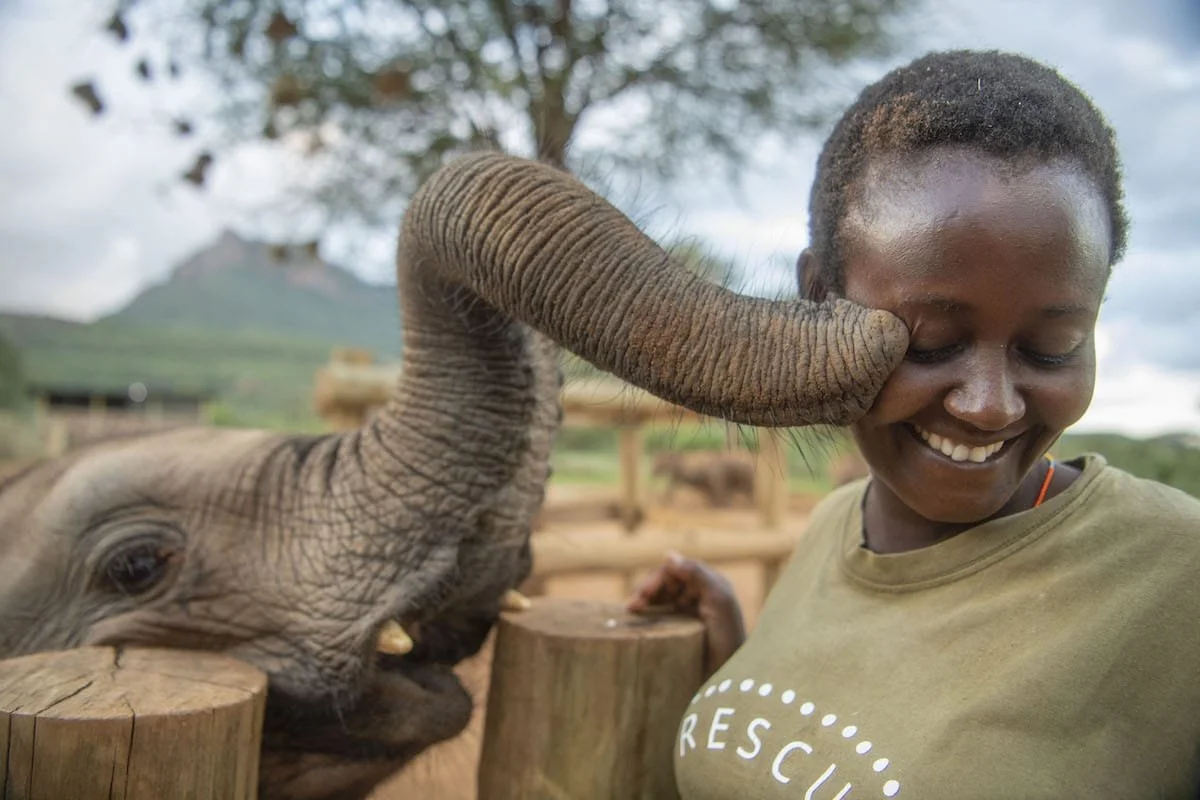
Photo © courtesy of Reteti Elephant Sanctuary

Collecting green branches for goat’s kids, this time of year is very dry and there is not much for the animals to browse. Photo © Naomi Lechongoro
In our culture, every special occasion or ceremony integrates a connection with wildlife. For example, we source male ostrich feathers for boys to wear on their heads during circumcision. Morans – boys during their coming-of-age period who are the protectors of the community – blow a great Kudu’s horn to send information or alert people of danger. Giraffe tail hairs are used for making bracelets, and giraffe skin is used to treat yellow fever. Teenage elephants’ dung is used to make the first fire in the bride and groom’s house when they are married. Small baby dung represents purity. Many of these special items are passed down through generations (except the fresh dung, of course!).
Our people, our livestock and the wild animals are dependent on the rains for survival. Climate change is worsening, and we are all impacted greatly by prolonged drought. Our people do not contribute greatly to climate change, yet we suffer the consequences. It is our hope that the international community can do more to help our people and the wildlife, through direct support and by cutting emissions to minimize the impacts of climate change.
Thank you,
Naomi
If you are interested in supporting Naomi, her family and community, please contact us to learn how best to do so.
In the mountains of northern Kenya, a Samburu community is doing something that has never been done before, building a sanctuary for orphaned elephants to rehabilitate them back to the wild.
