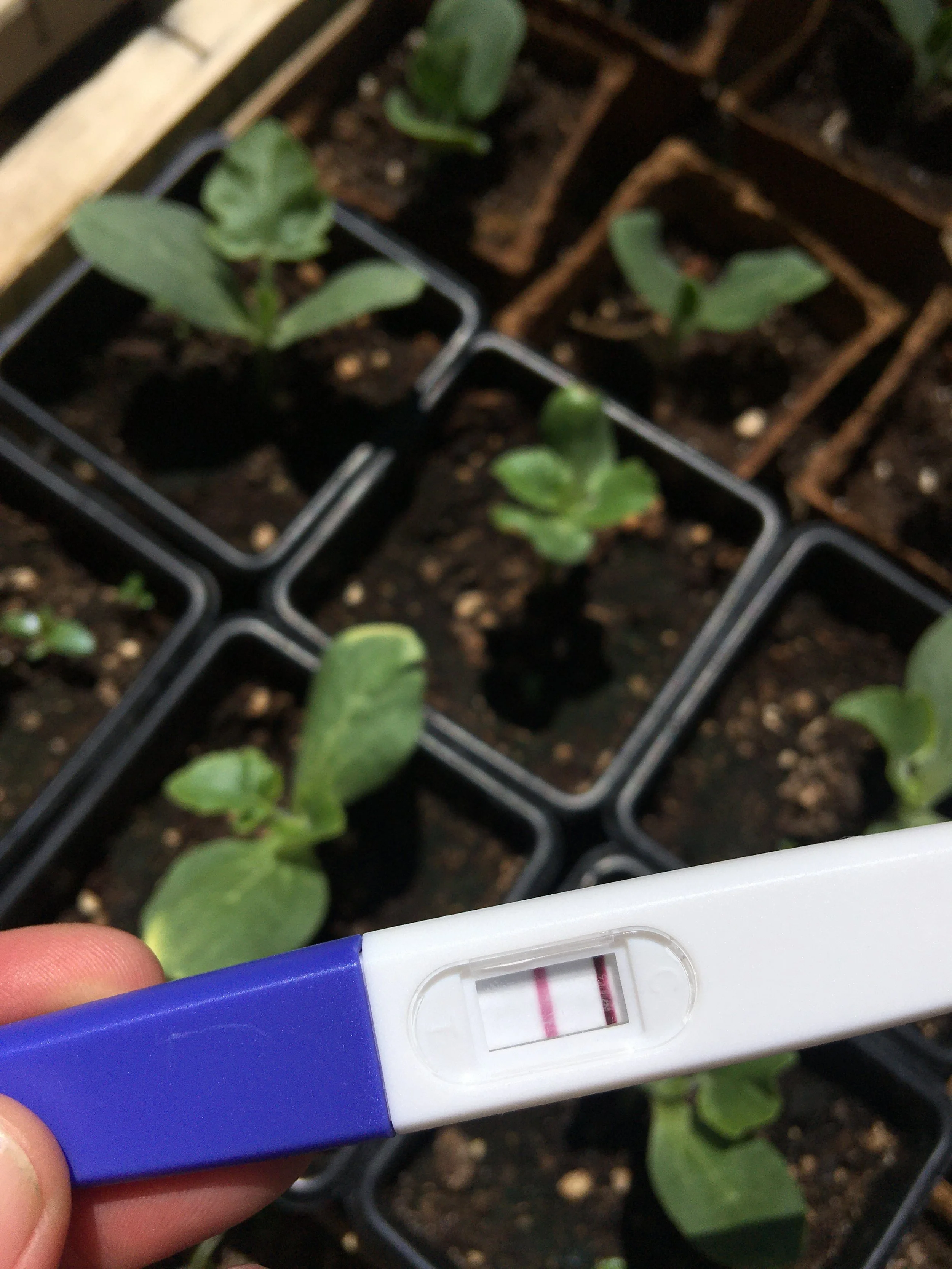
A positive test at the same gestation as the watermelon seedlings.
The second loss came as a shock. I had ALL the pregnancy symptoms for weeks, laid up on the couch eating cubed cheese and boiled eggs and little else. All smells made me want to puke and I was constantly fatigued. I went to the local medical clinic and had to see a different doctor than usual whom I insisted upon booking me in for an early scan, but as we didn’t have an Obstetrician yet, I had to visit a radiology clinic in Hossegor. Remy and I waited over an hour amongst broken arms, legs and hyperactive kids who would’ve behaved much better had the clinic had a little kids’ corner in their waiting room.
I was finally called in and Remy was allowed to accompany me. We were met by a male radiologist who performed both an ultrasound externally and an intravaginal scan. The radiologist wasn’t very friendly, and refused to let me see the screen or let me know what he was seeing. I began to feel that something was off. He then announced that I must have my dates wrong and that it was probably too early to see much because he could see the yolk sac but not yet the fetus nor could he detect a heartbeat. I left feeling weird. Ok, there was something happening in there, at least we had a sac this time and I could see something growing next to do when I was finally able to download the scan photos hours later, but my period is as regular as anything, and I know my dates were not out. He should have seen a developing fetus. I became paranoid of miscarrying again, but my belly kept growing and my body developed even heavier nausea. I took those to be good signs and hoped for the best.
In France, you can’t book in to see an OB until you are 12 weeks. At 10 weeks, we called the Belhara Clinic in Bayonne where I was intending to birth (due to their natural facilities). I had been recommended an OB during my first pregnancy by our family doctor and we specifically asked for her. However, she was booked solid for months. Remy explained about the previous miscarriage and the clinic was kind enough to speak to the OB and she called back saying she could slip me in that week.
Excited to see the baby and heartbeat this time, we were absolutely gutted when the OB didn’t seem to be able to get any clear vision of the baby during the external ultrasound and asked me if it was ok to conduct an intravaginal. I instantly knew it was going to be bad news. Having had two babies before, I know what we should see at 10 weeks, and what I could see myself on the screen looked more like ‘mush’ than a developing baby.
Once inside, we could see the sac which was quite big, the yolk sac was also there, but just as I had observed from the external scan, where the fetus was meant to be was a clump of ‘mush.’ The OB declared the pregnancy had not evolved and I had the choice between having a curette or taking Misoprostol medication at home to induce the miscarriage and clean out naturally over time. I chose to take Misoprostol at home. She prescribed me a cocktail of painkillers and warned that the medical-induced miscarriage would be no joke. I needed to get another shot of Rhophylac within 24-48 hours, but a nurse could administer this at home.
Misoprostol is a heavy drug that came into effect within 30 minutes of taking the pills. I managed the pain with the prescribed painkillers, and bleeding started later that day. It was nothing like my first experience, which was mostly spotting and debris. This time around, I passed huge lumps including the sac which was seemed like the size of a tennis ball and clearly identifiable. When I went back for a check-up a week later, my uterus was still in the process of cleaning out. I had been bleeding and passing cloths the whole time, but my OB said that can happen and gave me another few weeks before another follow-up. The bleeding continued.
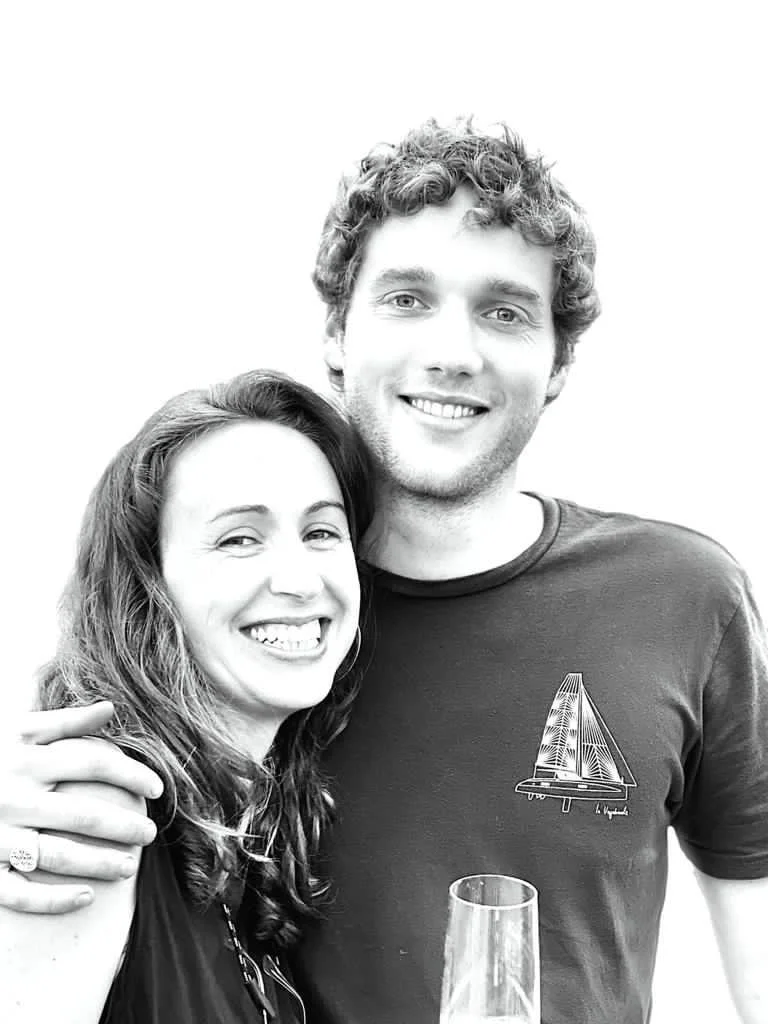
We snuck in our wedding between the miscarriage and my surgery.
At my follow-up scan – a month since the miscarriage – the OB was visibly concerned. She predicted that some pregnancy tissue had attached to an artery in my uterus and was causing the excessive bleeding. I was referred to a radiological surgeon – a surfing, sailing surgeon - who specializes in gynecological issues (AND fixes backs with cement!) Absolutely horrified of the likelihood of requiring a surgical intervention, I was shaking when we first met the surgeon. He conducted another scan and confirmed the OB’s diagnosis (my arteries were indeed having a party that I hadn’t approved) and I was booked in for what’s called in French ‘Uterine Embolization’ surgery, a very delicate procedure that’s only been around for a handful of years. My surgeon was one of only three – and the best – in the entire south of France performing this intervention.
We went home with the surgery booked for a week later. It would fall two days after our marriage celebration; we married on July 31st at the local city hall and had planned an at-home small party with close friends and family. The morning after our wedding party, I woke up with a tweaked back that became progressingly worse over the course of the day. By the time my surgery came around, I’d had both a masseuse and an Osteopath come to the house to try and fix my back, but I still couldn’t stand straight. Remy was not allowed past the elevator at the hospital, and I was terrified when I was walked straight into the pre-surgery waiting area, dressed in scrubs and in absolute agony lying on the bed waiting for my turn in theatre. I’d never had surgery before and had birthed both my children naturally. I have a phobia of hospitals and I felt completely isolated with the language barrier. I understand some French, but not medical speak, and the nurses – bar the surgeon and anesthetist - could not speak a word of English.
Sensing I was having a mild panic attack as I was wheeled into the very high-tech looking radiology surgery room, the anesthetist placed fitted me with an Oxygen mask and the medical team were able to help me become somewhat more comfortable with my back pain by placing a pillow under my neck and knees. They assured me the team would take extra care not to jolt me when they moved me later to recovery whilst I was under anesthesia. I later learned it took two and a half doses of the anesthesia to knock me out, I was THAT wound up with anxiety.
I woke up in the post-op recovery room off my head on drugs and without back pain for the first time in days. I chewed the ear off some poor bloke lying next to me in my broken French, I’m sure he was relieved when they wheeled me off to my room to begin my night and a day recovery period. Attached to an IV of fluids and painkillers, I gave Remy a call and we both broke down in tears. By the time Remy got to the hospital about an hour later, I was in extreme pain again, both from my back and my uterus. I was sporting large suction caps over the pin-prick area where the surgeon had made tiny incisions to embolize my problem arteries, and the nurse was coming in regularly to top up the suctions with air.
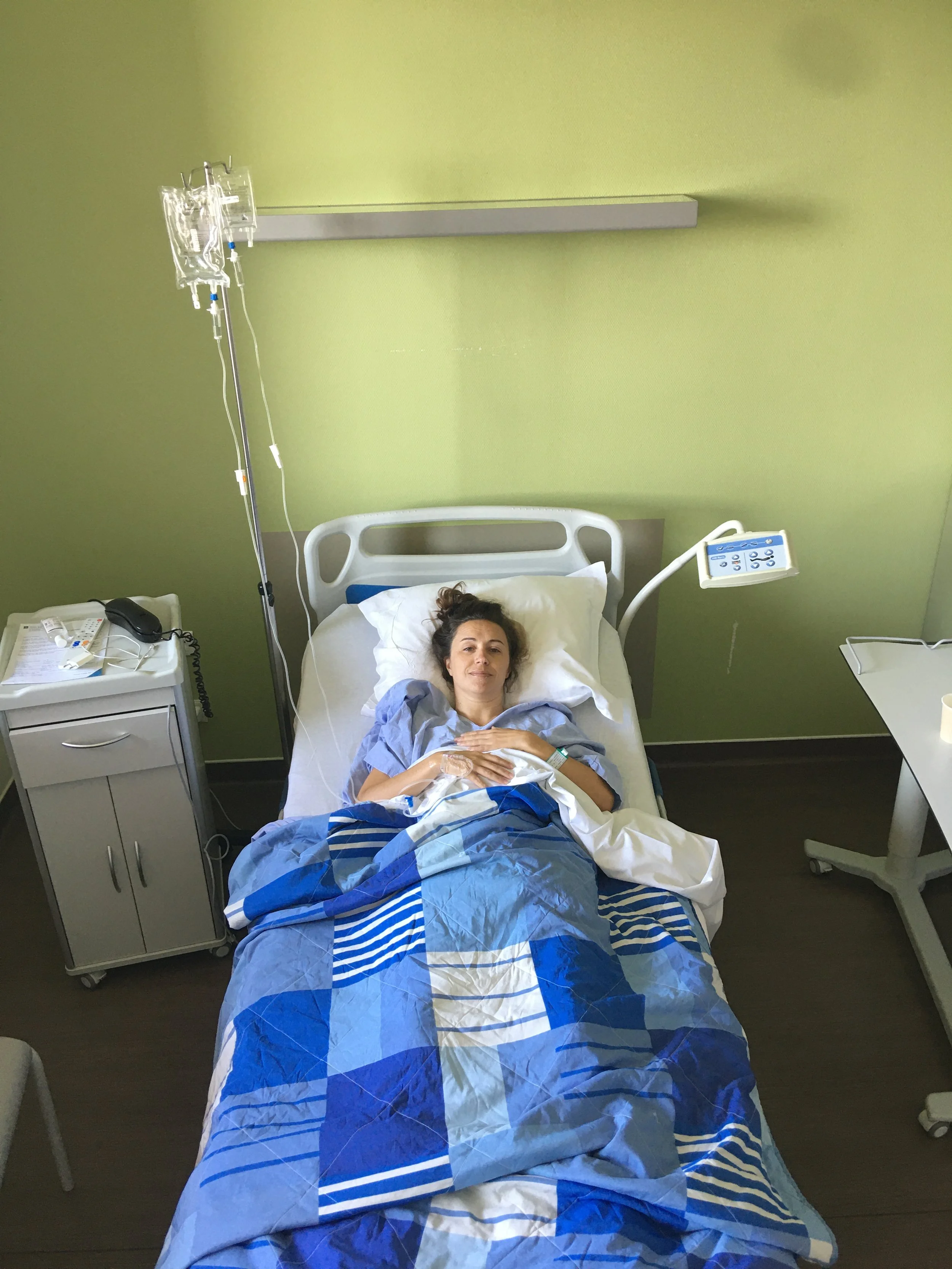
My surgeon popped in just before nightfall and declared the surgery a success. The next 12 or so hours were absolute hell. I reacted to the morphine and was hallucinating, vomiting and had a raging fever. The nurses managed to take me off the heavy drugs and make a milder blend of fluids and painkillers that took the edge off the uterine pain but did little to quell the back pain. I was restricted to lying flat and not moving at all for 24hours in total post-surgery, and it was all terribly agonizing on my back. My bladder was filling rapidly, and it was near-impossible to pee in the bowl they placed under my hips. Each time the nurse came to place the pee bowl under my hips, my back screamed in resistance.

Recovery in hospital post-surgery.
By the next morning, I was completely wrecked and broke down into tears at one point when the nurse came to check on me. My bladder was so full now that I couldn’t bear the combination of pain I was experiencing. What would help, I told her in my broken French, is if I could just pee. She checked my suction caps and decided it was ok to take them off and gave me permission to gently get out of bed to go to the toilet. She left me to it, and I shuffled in my stinky, sweaty gown and softly sat myself down on to the toilet. I think I was there 30 minutes as the bladder started to remember how to function and gravity played its part. I cried my eyes out with joy, drip after drip; I could pee, an act I have always taken for granted now felt like the most incredibly freeing act!
Before I could check out, I needed the all-clear from the surgeon. I was wheeled down to a room where he conducted another intravaginal scan. All was well, he declared, I could go home and expect the bleeding to stop – finally - in about five days. He aput the two miscarriages down to coincidences as all looked well in my ovaries, we were getting pregnant easy, and I already had two normal pregnancies. He did suggest we wait a few months for my uterus to take a break before trying again.
I called the Osteo a few days later and we started work on healing the back, which had become weakened and tweaked from lack of exercise during my two pregnancies and healing periods when I was hauled up in bed. As a very active person who was also born with dislocated hips, movement is crucial to keep my bones and muscles in good shape. The Osteo suggested that as soon as I stopped bleeding I should start walking for exercise again, and recommended, to my delight, trekking. Hilly terrain, he said, would build up the thigh muscle, better supporting my hips and back. Great! Life would go back to normal. Or so we thought.
Unfortunately, just as my sailing, surfing surgeon went off to Mykonos for a week’s summer vacation with his family, I was hemorrhaging again. As I was without fever and felt I could manage the bleeding at home, it was decided in consultation with his office staff that we would wait for him to get back rather than go through the process of walking an emergency gynecologist through the whole history of my ‘condition’. If I started to feel faint or have a fever, we would have no choice but to go to emergency.
My surgeon returned – tanned - from his sailing holiday, and we did another internal scan. Yes, indeed, not everything has quite passed since the surgery, and the body was taking a little longer to heal than he had predicted. The diagnosis was patience, rest, and to take care until all had passed. A month later, the bleeding finally trickled to a stop and the surgeon declared my uterus “back to normal.” I had bled non-stop for three months since the miscarriage began. Life could finally move forward.
We went surfing down in Hendaye as a family, and I geared up to head to Fiji at the end of the year for a month’s film production work on a new documentary I’d been developing with partners in Australia and New York. Upon my return, the three months waiting period had passed and we were free to try for a baby again. We got pregnant first pop.