Lomani Gau means to ‘care deeply’ for Gau Island

Lomani Gau
Welcome to Lomani Gau
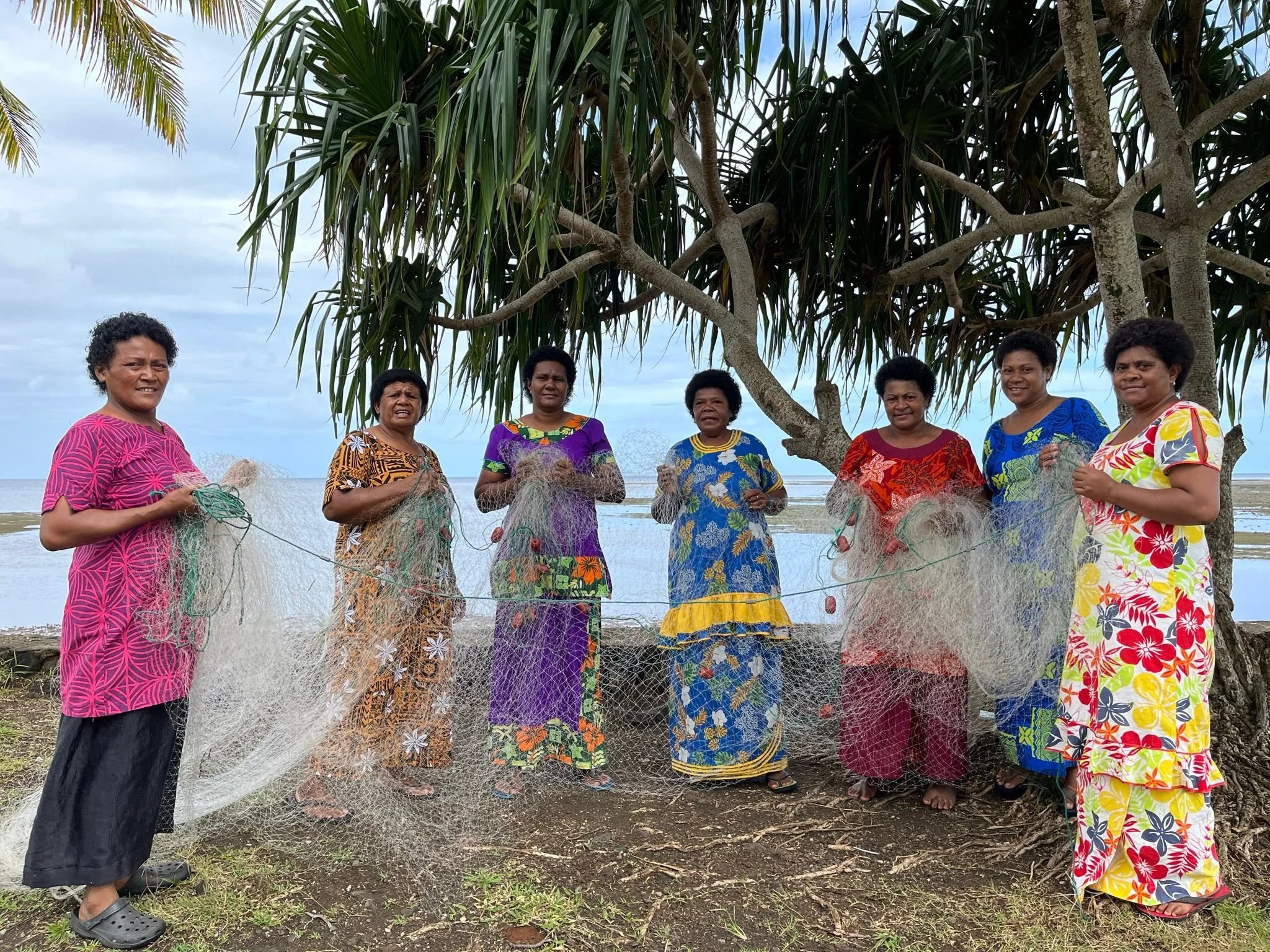
Gauans (people of Gau Island) are dedicated to caring for their lush Gau Island. They created the Lomani Gau project over a decade ago - coordinated community-led conservation, sustainable development and regenerative management efforts - to strengthen their custodianship responsibilities to the land and its surrounding marine environment, which they hold in trust for future generations.
-
Make Gau Island a model for climate change adaptation in small islands in transition from subsistence to commercial and economically viable rural development;
Conduct participatory learning and action training workshops and meetings to raise climate change awareness and stimulate self-determined climate change adaptation responses;
Formulate and implement Gau Island climate change adaptation and sustainable development guidelines;
Rehabilitate important natural habitats under increasing threat from human activities;
Reduce environmental degradation of natural habitats;
Use science and appropriate technologies to determine sustainable use of island resources;
Build capacity and promote good environmental resource use practices within Gau;
Promote integrated resource management and iterative learning;
Facilitate development of alternative sources of livelihood and income, monitoring and enforcement through regular follow-up and applied research activities;
Publicise the villagers, their flora and fauna, local culture, traditions, and way of life in Gau, and their importance;
Promote project features through publications and the production of visual aids.
-
• Improve Governance;
• Empower and support local communities;
• Meet people’s development aspiration;
• Articulate ‘measurable sustainable development’;
• Integrate customary and modern sustainable development practices;
• Enhance economic prosperity;
• Properly use and protect natural resources;
• Rehabilitate degraded environment resources;
• Improve ‘the quality of life for all’;
• Promote innovation in sustainable rural development.
-
• Marine Managed Areas (MMAs) in all 16 villages;
• People empowered, supported and organised – Lomani Gau, youth, women, rural development and livelihood initiatives, ban destructive fishing practices and wildfires, rehabilitation of coastal and riverine vegetation;
• Enhanced human capacity through training;
• Set up institutions and support champions and role models;
• Support self helped activities;
• Enhance community-based effort through financial and technical advice;
• Get people to invest in the future;
• Secure external funding for community development;
• Promote sustainable technologies;
• Publicise, share and promote the experience.
-
The Vunilagi (Horizon) Demonstration Centre is currently being created on a 50-year-lease of 50 acres of land on Malawai Village, Gau Island. The purpose of the centre is to illustrate sustainable rural development locally and internationally, involve local communities in sustainable development, create a learning centre that promote new sustainable development techniques and practice, set up a viable commercial operation, and assist local villagers, practitioners and researchers attain their goals and aspirations.
Planned activities:
• Set up a model farm;
• Demonstrate sustainable technologies in houses, environment care, agriculture, nature tourism;
• Establish a Learning Centre;
• Build a commercial operation in harmony with natural environment;
• Promote governance system that emphasise holistic development;
• Trial appropriate traditional practices – houses, farming;
• Offer study facilities to villagers as well as scholars;
• Introduce new ideas to address pertinent issues;
• Assist landowners and villagers.
So far, the local community have been successful in obtaining a 50-year land lease on 50 acres and have begun farming activities such as planing pandanus, duruka, dalo, niu, yaqona, and yasi. They have some cows on the property and have planted trees to protect the river. They have also secured a farm shed, mobile sawmill and tractor, though the community have come to believe the best way forward is to not plough the land with machinery.

About Gau Island
The fifth largest island in Fiji, Gau is located in the Lomaiviti Archipelago and is a biodiversity hot spot. This special ecosystem incorporates the fringing turquoise waters that provide necessary fishing grounds, critical mangrove habitats, and the Gau Highlands Important Bird Area, a 5,200 hectares (13,000 acres) area covering the entire forested interior, making up just over 50 per cent of the entire island. This lush area is home to the critically endangered Fiji petrel, and the vulnerable shy ground-dove and collared petrel.
Elder Gauans has been facing the impacts of anthropogenic climate change all their lives. Our elders have been experiencing climate change impacts all their lives, but recently these changes have become more rapid and intense.
Supporting Research
9 Lessons from Lomani Gau Project, Fiji: A Local Community’s Response to Climate Change, Veitayaki, J. and E. Holland, (2018), From the book Pacific Climate Cultures (2018). DownloadPDF.
Community-based action in Fiji’s Gau Island: A model for the Pacific? Remling, Elise and Veitayaki, Joeli (2016) in International Journal of Climate Change Strategies and Management. Download PDF.
Community-based Resources Management and Fisheries Management in Fiji: implications for coastal management, Joeli Veitayaki, for Conference: International Institute for Okinawan Studies At University of the Ryukyus (2013). Download PDF.
Sustainable Sea Transport Research Programme: Toward a Research-based Programme of Investigation for Oceania, Prasad, B., Veitayaki, J., Holland, E,. Nuttall, P. Newell, A., Bola, A. and Kaitu’u, J. (2013) in Journal of Pacific Studies (33). Download PDF.
Efficient harvesting and management of mangrove crab Scylla paramamosain in Gau Island, Fiji, Murai, T., Veitayaki, J. and Chifumi, I. (2012), in Journal of National Fisheries University Vol. 60 (2): 129-135. Download PDF.
Caring for the environment and the mitigation of natural extreme events in Vanuaso Tikina, Gau Island, Fiji: A self-help community initiative, Veitayaki, J. (2006), in Island Studies Journal 1 (2), 239-252. Download PDF.
Partnerships and the quest for effective community based resource management: Mositi Vanuaso Project, Gau Island, Fiji, Veitayaki, J., A. Tawake, A. Bogiva, P. Radikedike, S. Meo, N. Ravula, R. Vave and S. P. Fong. (2005), in Journal of Pacific Studies, 28 (2), 328–349. Download PDF.
Addressing human factors in fisheries development and regulatory processes in Fiji: The Mositi Vanuaso experience, Veitayaki, J. (2005), in Ocean Yearbook 20. Chicago: University of Chicago Press. Download PDF.
Taking advantage of Indigenous Knowledge: The Fiji case, Veitayaki, J. (2002), in International Social Science Journal, 173. Download PDF.
Traditional and community based marine resources management system in Fiji: An evolving integrated process, Veitayaki, J. (1998), in Coastal Management, 26 (1), 47-60. Download PDF.