
At Voyage ∞ Virage, part of our mission is to explore and communicate the intricate connections between human activities and the environment. Through our ongoing projects, we aim to foster awareness and inspire solutions for the possibility of regenerative futures. Today on the blog, we delve into three interconnected endeavors: the latest scientific research on Glass Reinforced Plastic (GRP) boats, our participation in an upcoming Symposium at the University of Brightonn, and our innovative Floating Stories Lab project.
The Hidden Menace of GRP Boats
Fiberglass, or Glass Reinforced Plastic (GRP), revolutionized boat building with its durability and versatility. However, recent research has revealed alarming environmental consequences. Scientists from the University of Brighton, led by Corina Ciocan, discovered significant amounts of fiberglass particles in marine life along the south coast of England. Oysters and mussels, collected near boatyards, were found to have ingested thousands of fiberglass particles, posing severe health risks to these filter feeders.
The contamination peaks during the winter months, aligning with increased boat maintenance activities such as sanding and cutting. These activities release microscopic fiberglass particles into the water, accumulating in the digestive glands of marine bivalves. Over time, the ingestion of these particles can impair their health and threaten their populations, with cascading effects throughout the marine ecosystem.
The disposal of end-of-life GRP boats exacerbates this issue. Many boats are abandoned or improperly discarded due to the high costs of proper disposal and a lack of recycling facilities. As these boats degrade, they release harmful particles into coastal waters, threatening marine life and potentially entering the human food chain.

Addressing the Crisis: Symposium on GRP Boat Pollution
Dr. Corina Ciocan of University of Brighton.
To tackle the growing problem of GRP boat pollution, the University of Brighton is hosting a symposium to highlight Dr. Ciocan’s pioneering research on GRP contamination and its impact on marine biota. By bringing together senior figures from academia, regulation, utilities, and coastal communities, the symposium aims to bridge the gap between science and policy.
Participants will discuss the urgent need for better regulation of GRP boat maintenance and disposal. Stricter controls, improved recycling facilities, and public awareness campaigns are essential to mitigate the environmental impact of fiberglass pollution. This symposium is a crucial step towards developing policy pathways that address the ecological and social challenges posed by end-of-life GRP boats.
Furthermore, Angie and Remy will be speaking at the symposium, presenting our Floating Stories Lab project and discussing how artists and creatives, grounded in regenerative thinking, can drive positive change.
Regenerative Tides: The Floating Stories Lab

Angie and Remy Richard.
Our commitment to sustainability and regenerative futures has led to the creation of the Floating Stories Lab. This innovative project involves building a classic Wharram design Narai Mk IV traditional Polynesian-inspired 41-foot wooden double canoe/catamaran using bio-composite materials. Departing from northern Europe, our family will embark on a circumnavigation to explore how humans can positively impact our planet through creative practice research, citizen science, and storytelling.
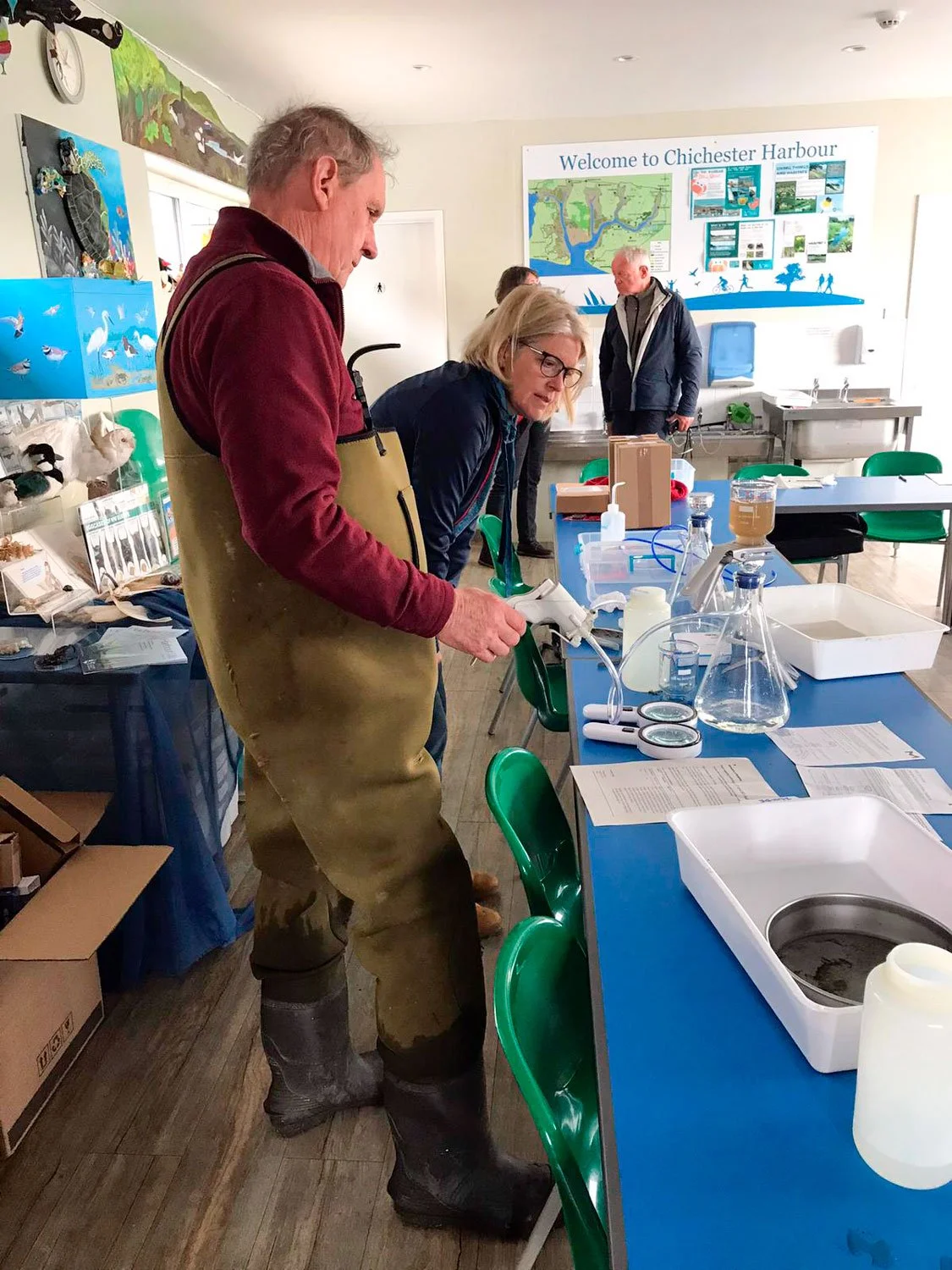
Angie, co-captain, storyteller, and researcher, is spearheading our Regenerative Tides: Sailing for Solutions initiative. In partnership with marine biologist Corina Ciocan, Angie aims to integrate creative practice with scientific research to foster community engagement and promote regenerative solutions. By documenting our journey and disseminating scientific findings through various media platforms, we aspire to inspire others to adopt regenerative living practices.
Our Floating Stories Lab will serve as a voyaging research and storytelling vessel, contributing to cutting-edge science and academic research. We will create an open-source global database of regeneration resources, showcasing community projects, businesses, organizations, and courses that exemplify regenerative living systems. Through our blog, videos, and community engagements, we will share our discoveries and inspire others to become better planetary custodians.
A Call to Action
The environmental impact of GRP boats is a pressing issue that demands immediate attention. By combining scientific research, policy advocacy, and creative storytelling, we can raise awareness and drive meaningful change. Our participation in the upcoming symposium and the launch of the Floating Stories Lab are integral steps towards addressing this challenge.
We invite you to join us on this journey. Stay tuned to Voyage ∞ Virage for updates on our projects, and let’s work together to become better custodians of our oceans to better enable regenerative futures for generations to come.
Want to support? Here’s how:
Power the Journey: Contribute to our project and help keep the sails unfurled by making a one-time financial contribution with PayPal.
Join the Inner Circle: Dive deeper by becoming a Patreon for exclusive updates and member benefits, or subscribing to our Substack newsletter community.
Crew Up for Change: Explore partnership and sponsorship opportunities. Join us in creating a more sustainable and hopeful future.
Philanthropic Contribution: Match or raise our personal investment with a philanthropic contribution. Please email us to learn more.
Your involvement propels our journey and helps to create ripples of impact. Thank you.
