

For humans to live truly regeneratively, the merging of biomaterials and regenerative agriculture offers a promising pathway. A recent study by Materiom, focusing on the Great Lakes Region of Michigan, explores this innovative approach, revealing how regenerative agriculture can not only support but also enhance the production of biomaterials.
Regenerative Agriculture and Biomaterials
At its core, regenerative agriculture is about revitalizing soil health, increasing biodiversity, and restoring ecosystems. This approach goes beyond sustainability; it actively improves the environment. The Materiom study dives into how this form of agriculture can provide critical resources for biomaterials. Biomaterials, often derived from natural sources, are pivotal in reducing our dependence on non-renewable resources like petroleum-based plastics.

Credit: Materiom
Closing the Loop
The study highlights a circular model where agricultural byproducts, such as residues from cover crops, become valuable inputs for biomaterial production. This is a game-changer. Instead of viewing these byproducts as waste, they're transformed into resources. This not only minimizes waste but also adds an economic incentive for farmers to adopt regenerative practices.
One of the key aspects of this synergy is the concept of 'closing the loop'. Biomaterials produced from these byproducts can be composted and returned to the soil, enriching it and supporting further agricultural activities. This creates a regenerative cycle where materials are used and reused, minimizing environmental impact and improving the environment overall.

Credit: Materiom
Benefiting People and the Planet
The implications of this study are vast. For one, it presents a sustainable alternative to conventional material production, which often depletes resources and damages ecosystems. By harnessing the power of regenerative agriculture, we can produce materials that are not just environmentally neutral but beneficial.
This regenerative approach also offers economic opportunities for farmers in the Great Lakes Region and beyond. By integrating the production of biomaterials into their farming practices, farmers can diversify their income streams. This is particularly important in a world where small-scale farmers are often economically vulnerable.
The Materiom study is not just about theory; it's a call to action. It encourages collaboration between farmers, scientists, and material developers to explore and expand the possibilities of biomaterials derived from regenerative agriculture. This collaboration is crucial. Beyond creating sustainable materials, the opportunity is here to build community grounded in regenerative practices.

Credit: Materiom
Circular Economies
Another significant aspect of this study is its contribution to the broader goal of a circular economy. A circular economy aims to eliminate waste and the continual use of resources, contrasting sharply with the traditional linear economy of 'take, make, dispose'. By fostering a system where agricultural byproducts are upcycled into biomaterials, which are then returned to the earth, the study aligns perfectly with the principles of a circular economy.
Credit: Materiom
Significance of The Great Lakes Region
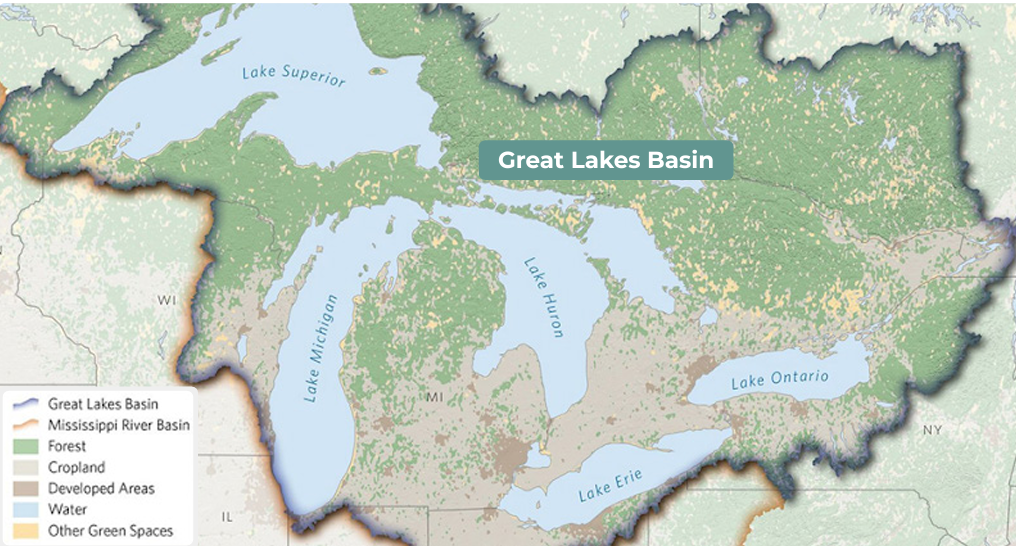
Moreover, the study’s focus on the Great Lakes Region is particularly worth a mention. This region, known for its rich agricultural history and diverse ecosystems, is an ideal setting for such innovative regenerative practices. The implementation of these practices in the Great Lakes Region could serve as a model for other regions around the world, showcasing how local resources can be leveraged for sustainable development.
Challenges
However, challenges remain. Scaling up these practices requires not just technological innovation but also policy support and market demand. Consumers and policymakers must recognize the value of biomaterials and support their development through conscious consumer choices and supportive regulations.
Hope for Regenerative Futures
This research can provide us with a roadmap for regenerative futures. The findings show how, by connecting the dots between agriculture and material science, we can create systems that are not just sustainable but regenerative. As we face the daunting challenges of climate change and resource depletion, this study gives us hope. It reminds us that through innovation, collaboration, and a commitment to regenerative thinking, we can create a world that truly centers planetary health and societal wellbeing.

Credit: Materiom
Voyage Virage is our family business focused on promoting regenerative living. Through adventuring and place-based experiences, we research and discover ways that humans can live more regeneratively, sharing our findings through transmedia storytelling and edutainment.
