
Week 66 hand-building a 41ft Polynesian-inspired catamaran
Originally published in the FSL Substack Newsletter on September 14, 2026. Subscribe to Substack to be the first to receive updates.
Hi FSL community,
We have just come off a huge five days presenting the Floating Stories Lab booth in the Racing for the Ocean tent as part of The Ocean Race Atlantic’s Park City installation in Lorient, Brittany. Before I write another line, I must say a HUGE thank you to Rebecca and Alexandra at The Ocean Race for inviting us to share our projects, and our WONDERFUL member/volunteers who came to Lorient to run the booth with myself and Remy:
Liza, who made the initial TOR introduction (THANK YOU!) and joined us from London;
Pascal M, our regular boat build volunteer from here in Plouhinec;
Bernardo, who can’t get enough of us and joined us once again from the Netherlands (we LOVE you!);
Marjolaine, who co-created the Table of Curiosity we presented as part of our booth and joined us from Brest.
I had the opportunity to introduce the Mayor of Lorient, Fabrice Loher, to FSL and our citizen science initiative ReTISS, particularly relevant to the city he governs as we recently began researching multiple boat cemetery sites along the Blavet River, which flows from central Brittany through to the Atlantic Ocean on the south coast in Lorient.
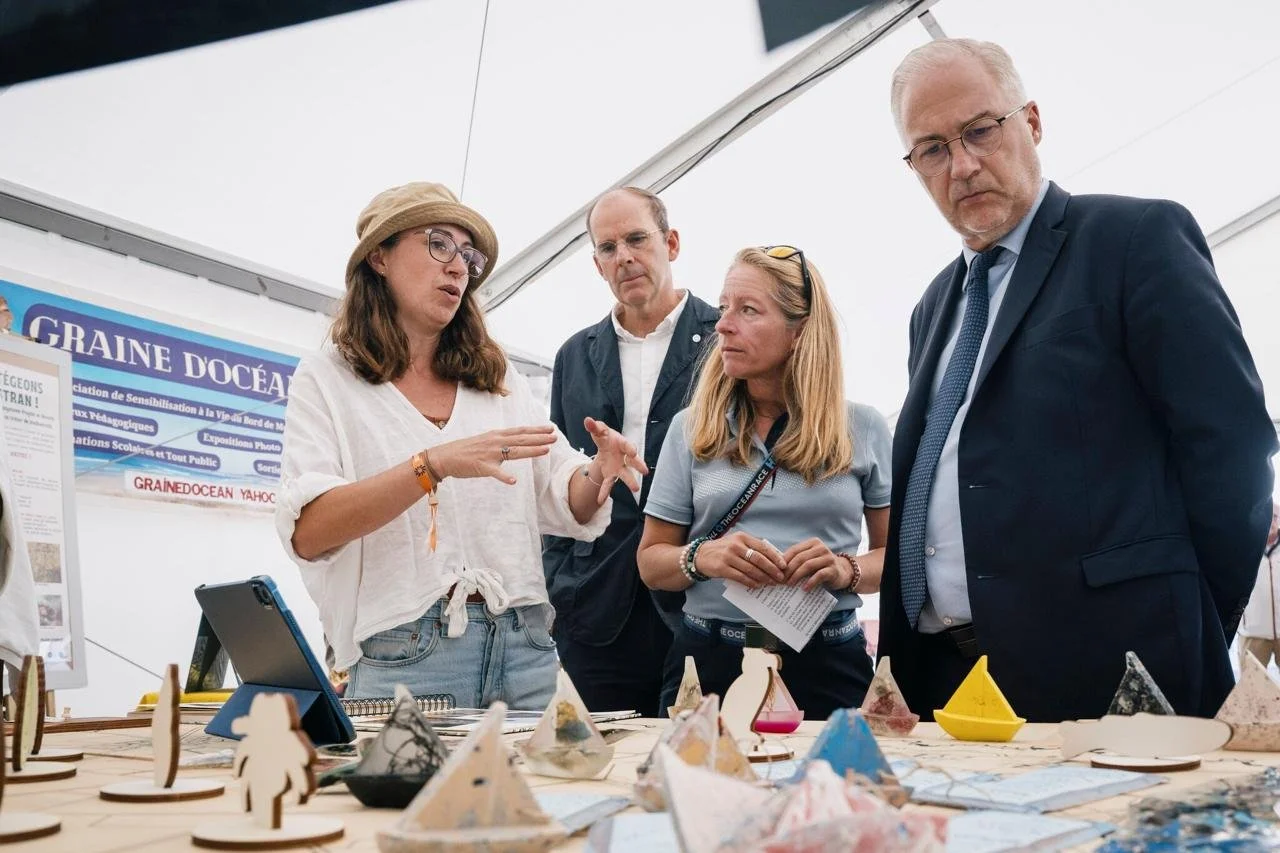
Photo credit (above): The Ocean Race
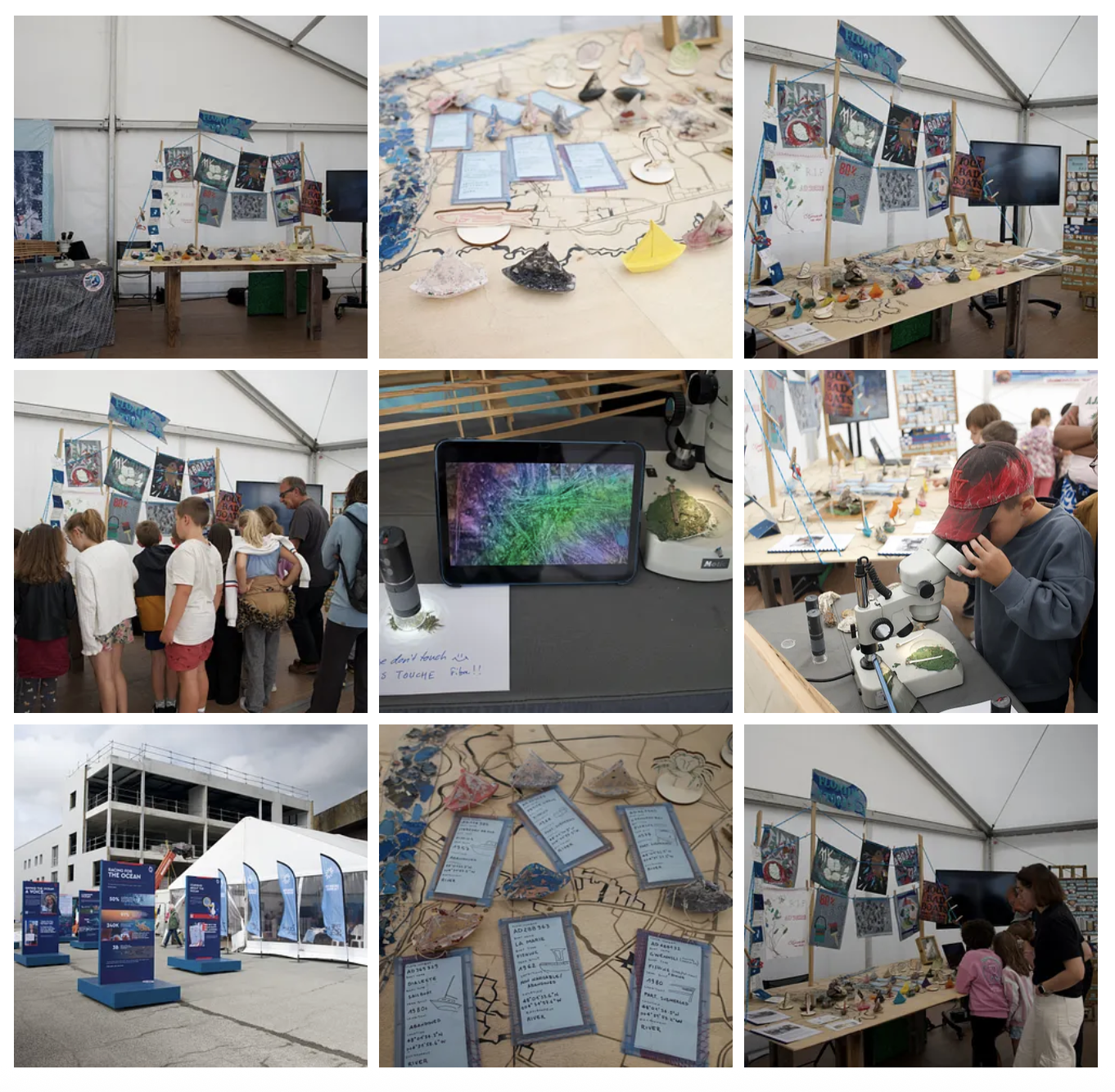
Pascal M was an absolute hit with the school kids, welcoming around 100 per day, getting everyone engaged in both sides of FSL — the boat build and our research mapping end-of-life boats and the impact of the pollution shedding from degrading hulls. Keen interest was shown from the general public, too. As Bernado noted: “Pascal often use the rhetoric that both dimensions will ‘merge’ together using the boat as a platform to create actions and awareness whilst collecting data and expanding the knowledge.” And he is spot on.
Though big, fast and uncomfortable-looking racing boats are not usually our vibe at FSL, I could not help feeling captivated by these IMOCA vessels. They are impressive feats of engineering and design, and I am impressed by the resilience of the humans who have to manage these beasts out at sea. Crossing the Atlantic ocean from New York to Lorient in under 10 days is ridiculous speed. The live videos captured onboard show nothing close to comfort, tremendous comradeship (unlike the Vendee Globe, in The Ocean Race Atlantic each vessel has four crew: two women, two men), and the not-so-champagne side of sailing. As someone who gets excited beating upwind on a 33ft wooden catamaran, I think I get it.
That being said, as the winners from team United by the Ocean sailed in to La Base Lorient to cheers from a throbbing international crowd, I couldn’t help but think of how these boats are made, from what, and where they go to die. That’s the entanglement of our project as influence, I guess. Those IMOCA carbon foils look thin as paper — how many fall off during these brutal races, slowly degrading in the ocean? And how much energy goes into making those boats in the first place?
From my own experience building our 41ft wooden composite catamaran, I am acutely aware that no new ‘modern’ boat build or refit/renovation of an older boat — heck, not even the maintenance of any boat — is without the use of consumables. All builds — ours included — generate waste. Some much more than others (one rigger at a team I won’t mention informed us of the copious amount of waste their boat yard throws out each week).
Without effective waste management policies in the marine industries and new boats being designed with end-of-life front of mind, we’re going to be counting ‘bad boats’ longer than I’d like.
Speaking with the public this week and over the past year at different events and community meetings, it’s quite clear that folks are tired of industry green-washing, claims of ‘net zero’, life cycle analyses that don’t include ecosystem impacts, and checkbox sustainability. It’s great if you’re riding your bicycle to the boatyard, but, that’s not near enough to do ‘less bad’ let alone move towards regenerative design and development practices.
At FSL, we take a more macro view. Net positive is the goal, tested through a Living Framework we're developing that brings together material hierarchies, a regenerative business model, and the human systems — the people, crews and relationships, asking what a boat, a build, a business or association/org actually regenerates, and where the gaps are, so we can keep improving.
Tomorrow, I am off to Brest to present at ICES Annual Science Conference 2026, a large ocean science conference where I’ll participate in a networking session on community engagement in biodiversity monitoring alongside sharing the Table of Curiosity once again.
Then Thursday and Friday I’ll be back to sanding stringers, epoxying maritime pine and fondling peel ply, percolating all the conversations, questions, challenges and ideas whilst working on the boat. It’s a unique experience to be hands on building a new boat whilst simultaneously getting muddy in estuaries and coastal shores examining the impacts of these materials when humans don’t ensure we manage their end-of-life responsibly.
Perhaps this is our ‘edge’ at the Floating Stories Lab — living the research in real time through relationships with other humans, non-humans and the materials themselves, and giving access to all of you to dive right in, too.
If you’re not already a member, please consider joining, your support goes a long way.
Have a great week everyone!
Angie & Remy
