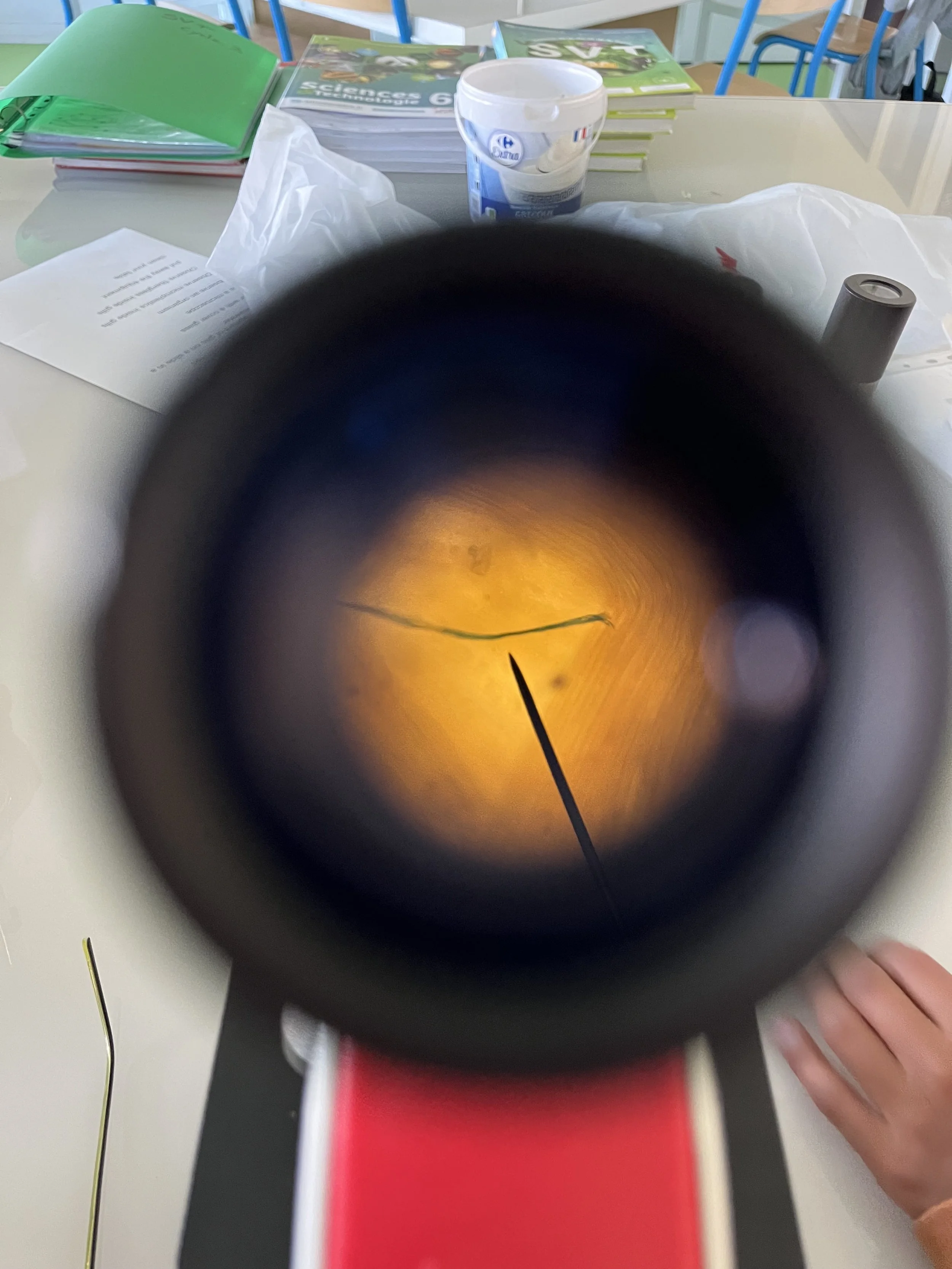
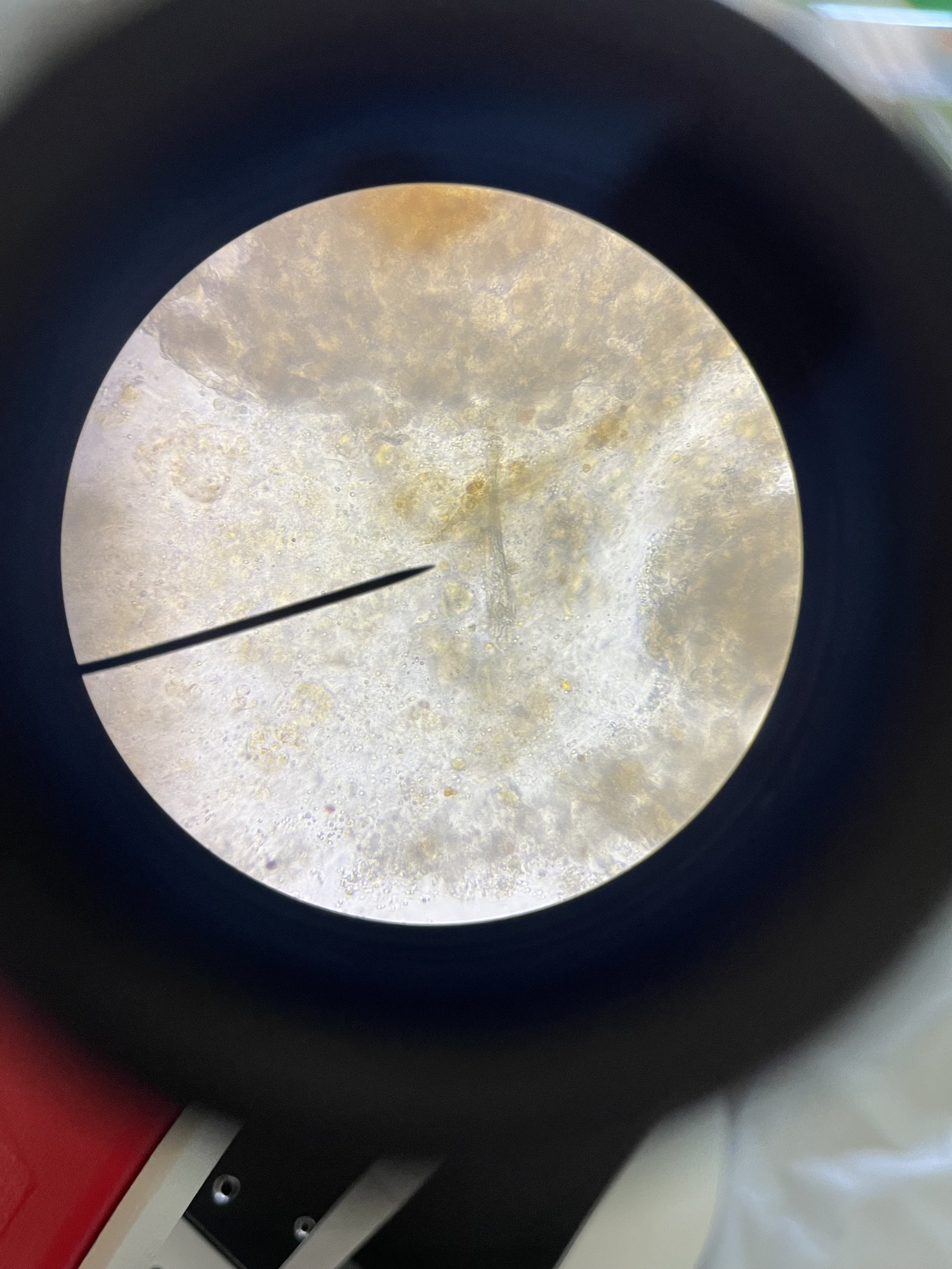
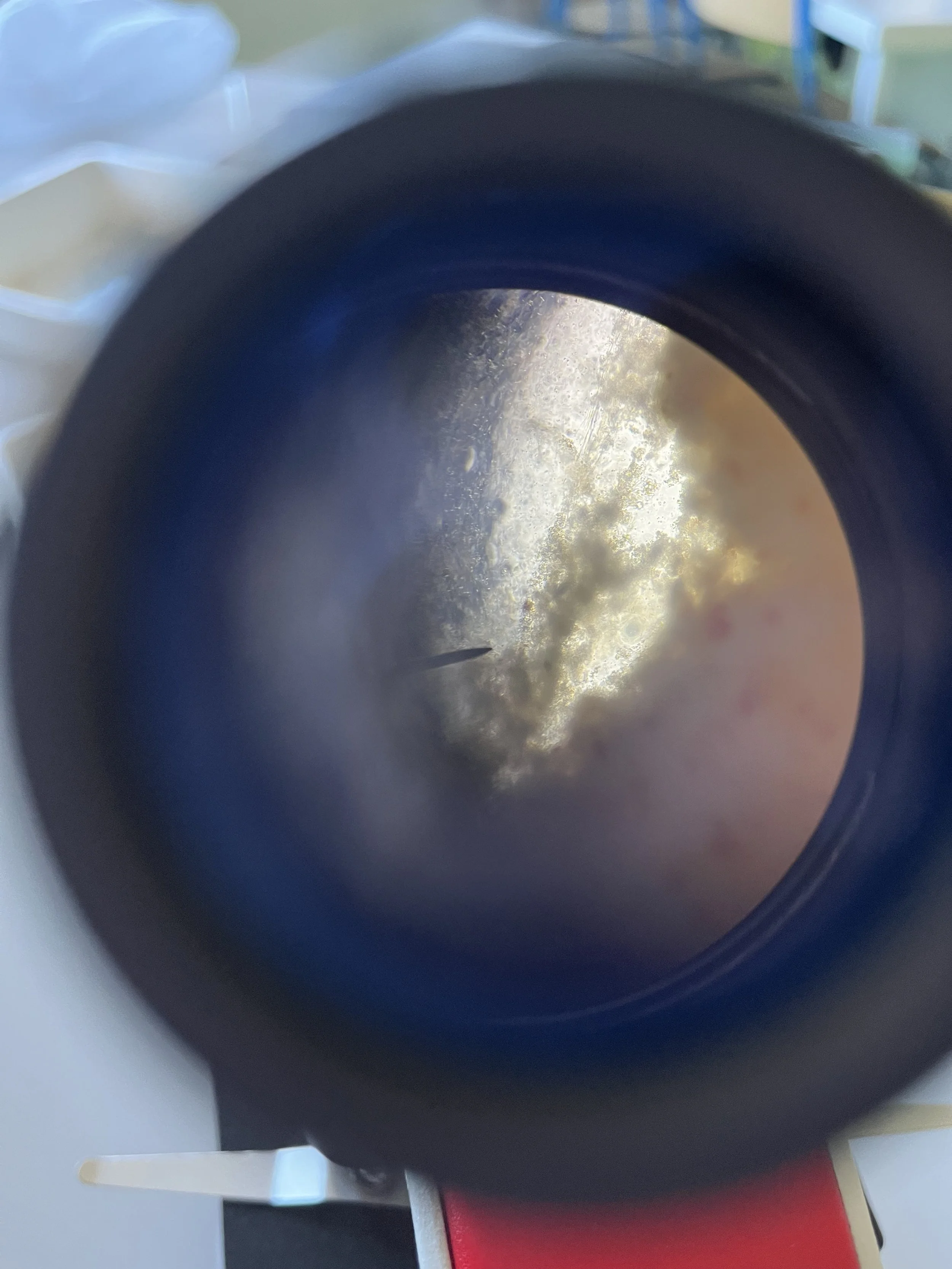
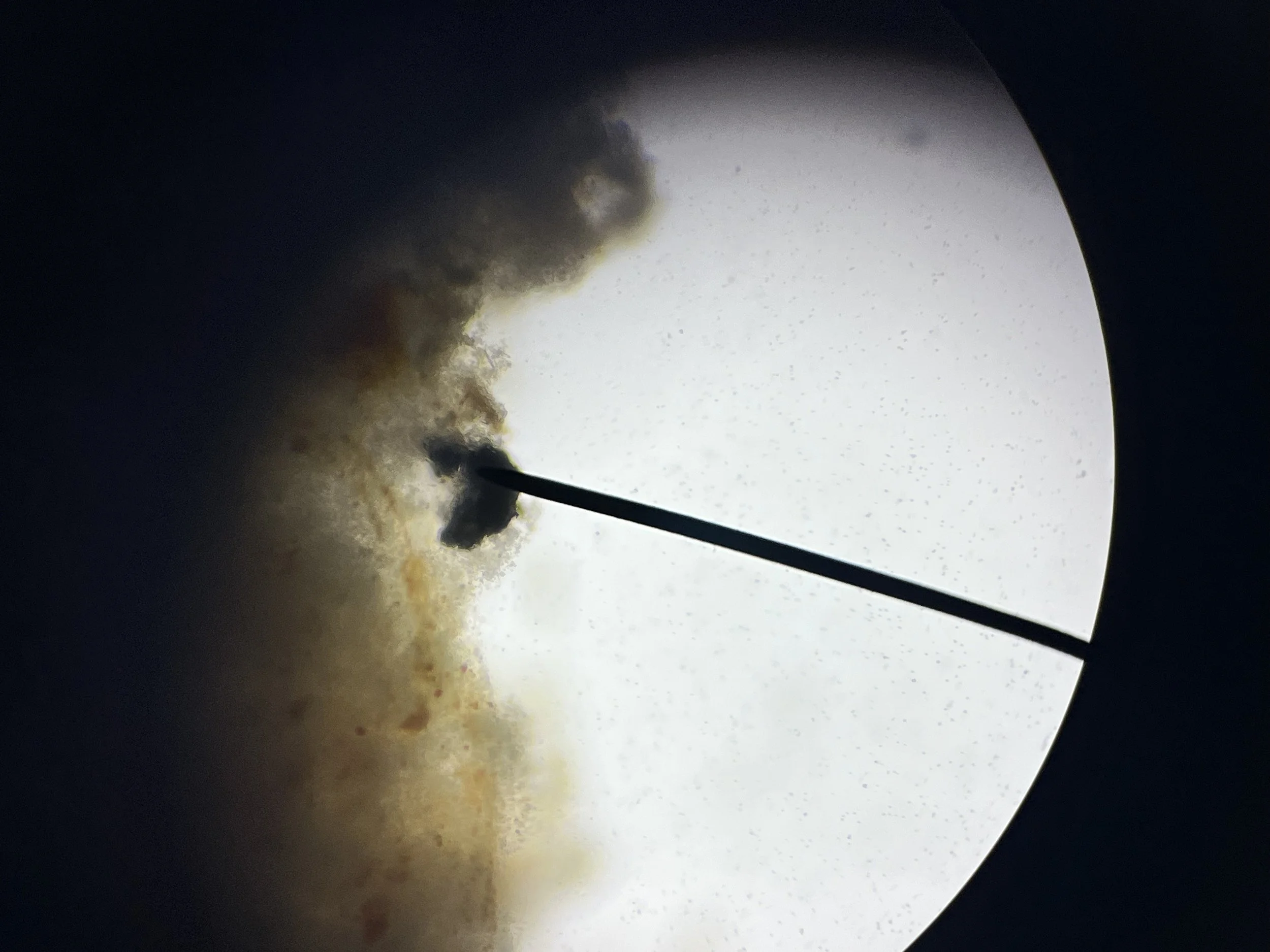
An oyster and three mussels collected on low tide in the Goyen River-Estuary, adjacent the abandoned boats and in an area of moored boats.
For three consecutive weeks I have donned my gumboots every Friday and trudged through the mudflats in the Goyen River-Estuary at low tide to conduct citizen science with our local middle school partners, Collège du Bois de Locquéran. Our most recent rendezvous coincided with high tide, so I first went down to the Goyen in the morning alone to collect oyster and mussels for later analysis with the students. Later in the afternoon, with the organisms resting in a pot of salted tap water in the shaded boot of my car, I stood beside the public road-bridge waiting to meet the kids, watching the tide rip in and high waters flood the abandoned boats that litter the shoreline, camera in hand. I’d only been walking around the boats a few days prior, documenting as many as I could in a short afternoon stint on low tide for our Bad Boats Map. Under my hand-held microscope, these wooden and fiberglass-hulled vessels visibly pollute the surrounding ecosystem with plastic paint flakes and fiberglass fragments, among other chemicals and materials, and are a stain on banks of an otherwise pristine-looking ecosystem. ‘Pristine’ to the naked eye, perhaps.
I could hear the kids coming down the road from school before I could see them; field trips get them chatty and excited. “Hello!” they shouted in unison, in English, as our work together is conducted as part of their ‘Euro’ curriculum, where Biology and English meet for two hours of cohesion. “Hello!” I replied enthusiastically, as any time spent with these kids generally lifts my spirits. “Today we are going to go for a walk up river and pay attention to what we see, particularly noting the biodiversity,” I explained, “But first, what can you see?”
“Bad boats!” someone shouted. “Likely abandoned!” another chimed in. “Paint flakes!” yet another quipped.
The English teacher, Isabelle, and I laughed—they’ve been learning their vocabulary from our Bad Boats Mapping Field Guide Pamphlet.

End-of-life boats litter the Goyen River Estuary in Brittany, France. Each day on high tide, most of the boats are submerged.
On we walked, across the bridge from our home municipality Plouhinec, to Audierne, and along the walking path up river that leads to Point Croix. With only an hour carved out for our field excursion before we’d need to be back in the school lab analyzing the organisms I’d dug up that morning, we’d not be walking too far—just enough to observe, immerse, and converse. As we walked, two paddle boarders drifted right by the abandoned boats, and I shared with the kids that I planned to obtain a paddle board or kayak very soon to spend more time on the river, and get yet another view of the boats from the water looking upon shore. What landscape can we imagine in the space where abandoned boats lie? I thought out loud. Isabelle translated my proposition in to French, and I heard answers like ‘more birds’ come from the kids.
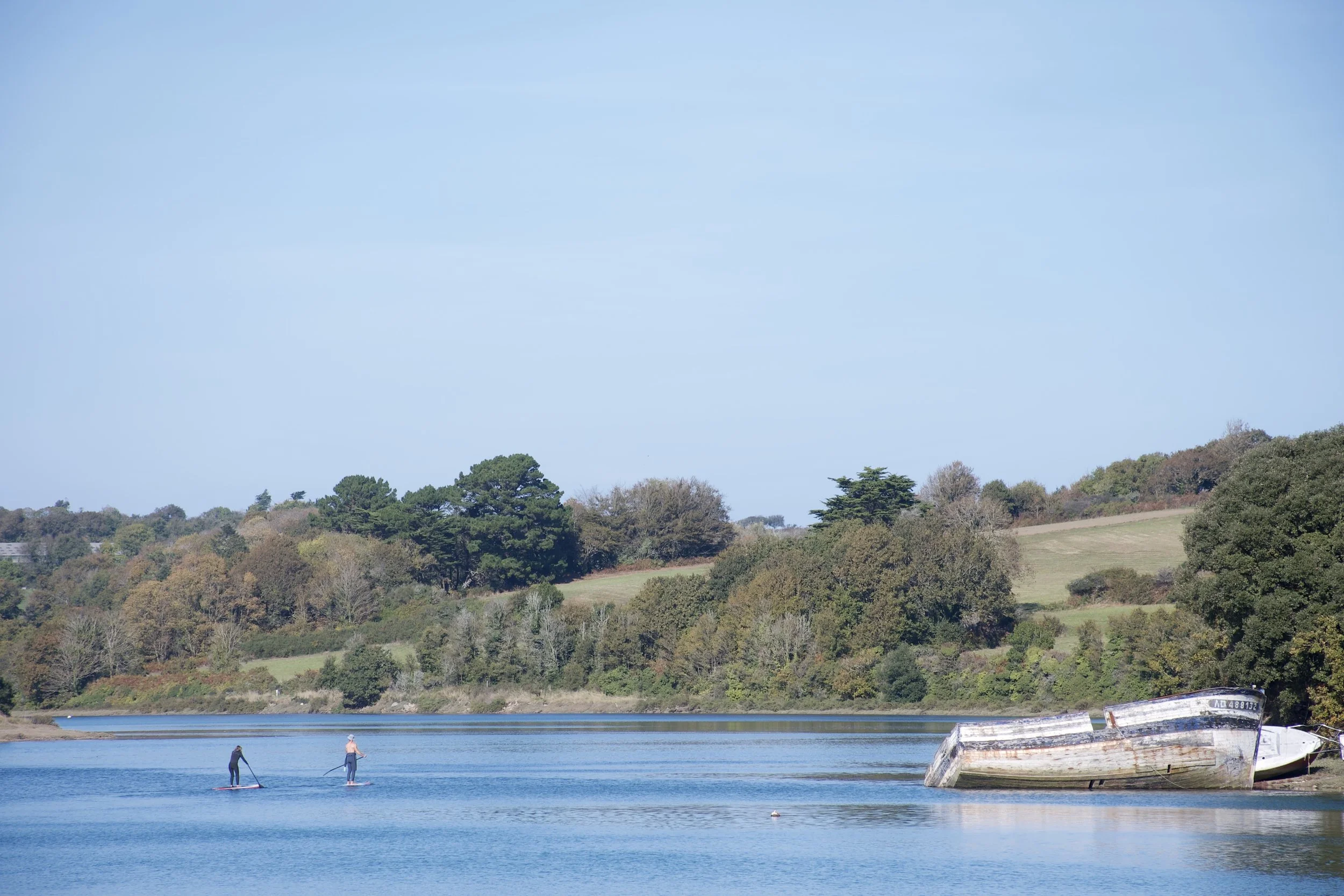
Two paddle boarders drifting up the Goyen River-Estuary. What landscape can we imagine in the space where abandoned boats lie?
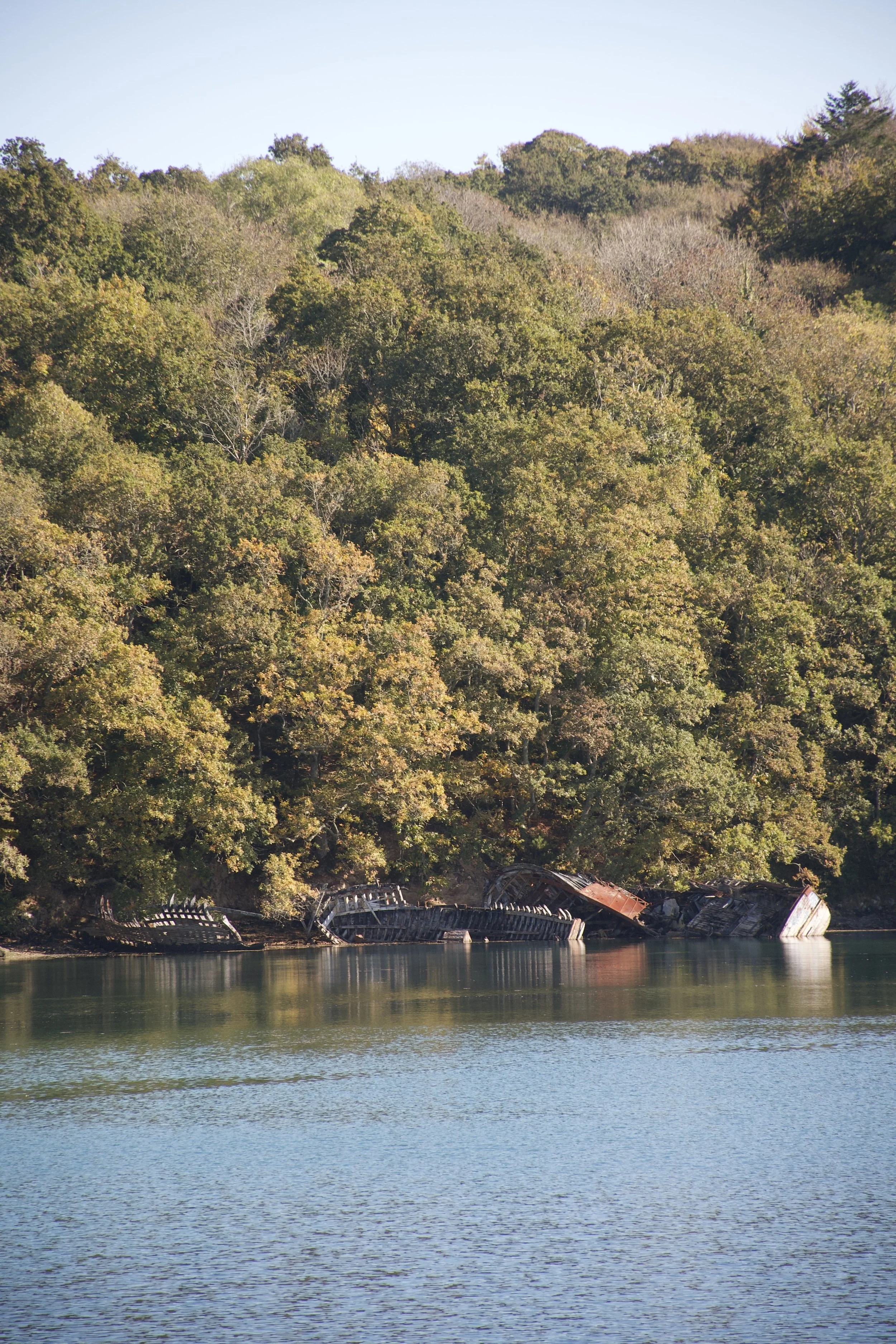
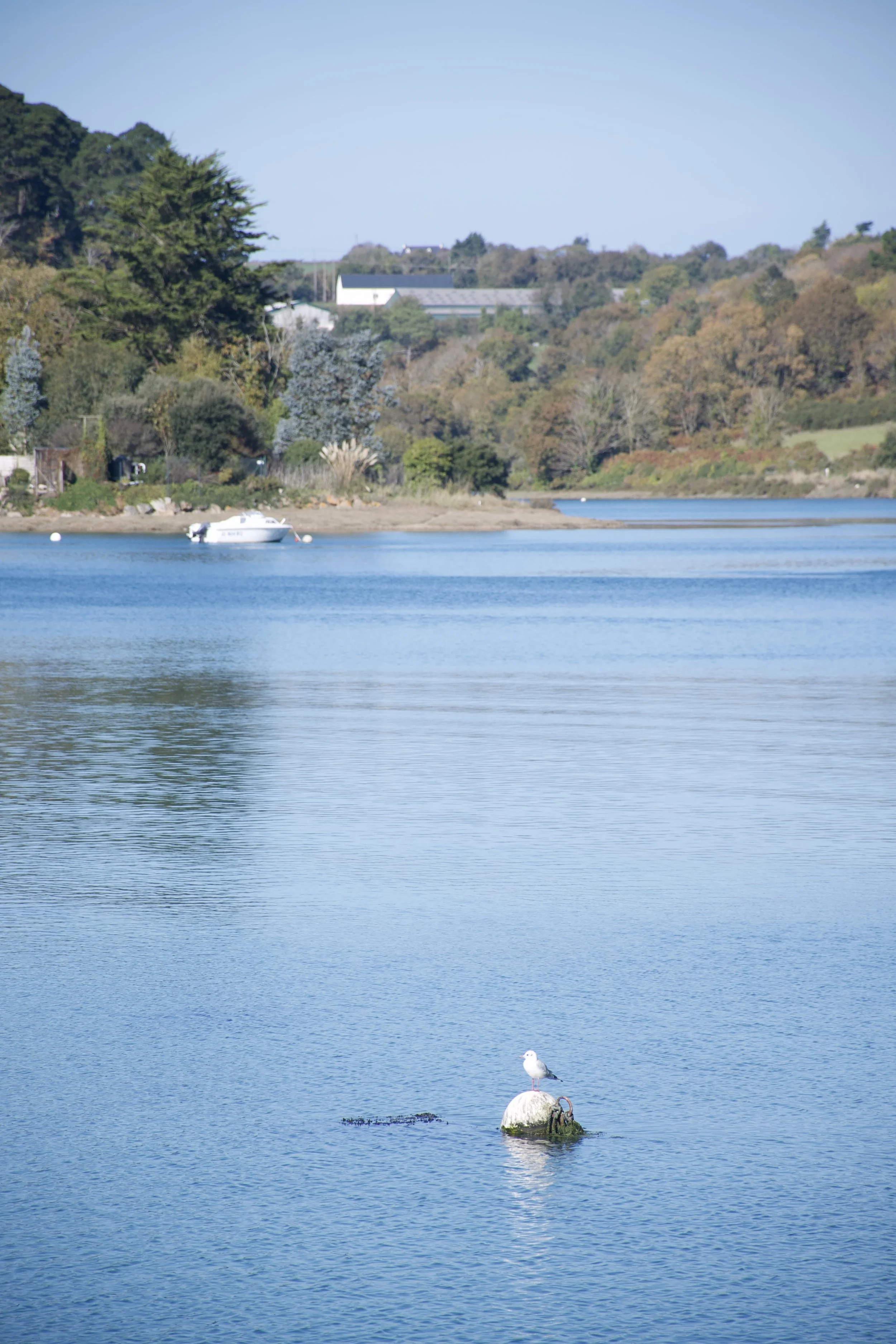
Onward we walk, hugging the river banks on our right-hand-side to allow bicycles to pass. We walk for a time, stopping when we notice birds—large and small. I can’t name many of the birds I see outside of the familiar seagulls. There are different bird species, for sure. We pass a bend and then another, and stop at a sunlight patch of sparkling water. “Algae!” one student announces. Yes, we’ve reached a kelp bed along the fringes of the riverbank. We gently quieten the kids, who follow my attention to the kelp. Surely there are fish hiding here, I think. Then, as if reading my thoughts, a big one appears. “A bar!” one of the male students shouts, excitedly. Sea Bass. I don’t know much about Sea Bass other than my husband, Remy, who line-fished a lot in his youth, gets extremely excited when he spots one. He’s told me they are stealth and relatively solitary and can be hard to catch. Well here was one, hiding in plain sight! What a beauty, too.
We continue a short while, and again stop to observe an alluring section of the river. Gosh, it’s sure inviting. I spot long, dark columns underwater, and know these to be human-farmed oyster beds as I’ve seen them many times on the low tide. Today, they are completely submerged. We talk about this, the relationship with the oysters, the kelp, the birds, and the abandoned boats. As we chat, a small, fiberglass fishing boat drives by.
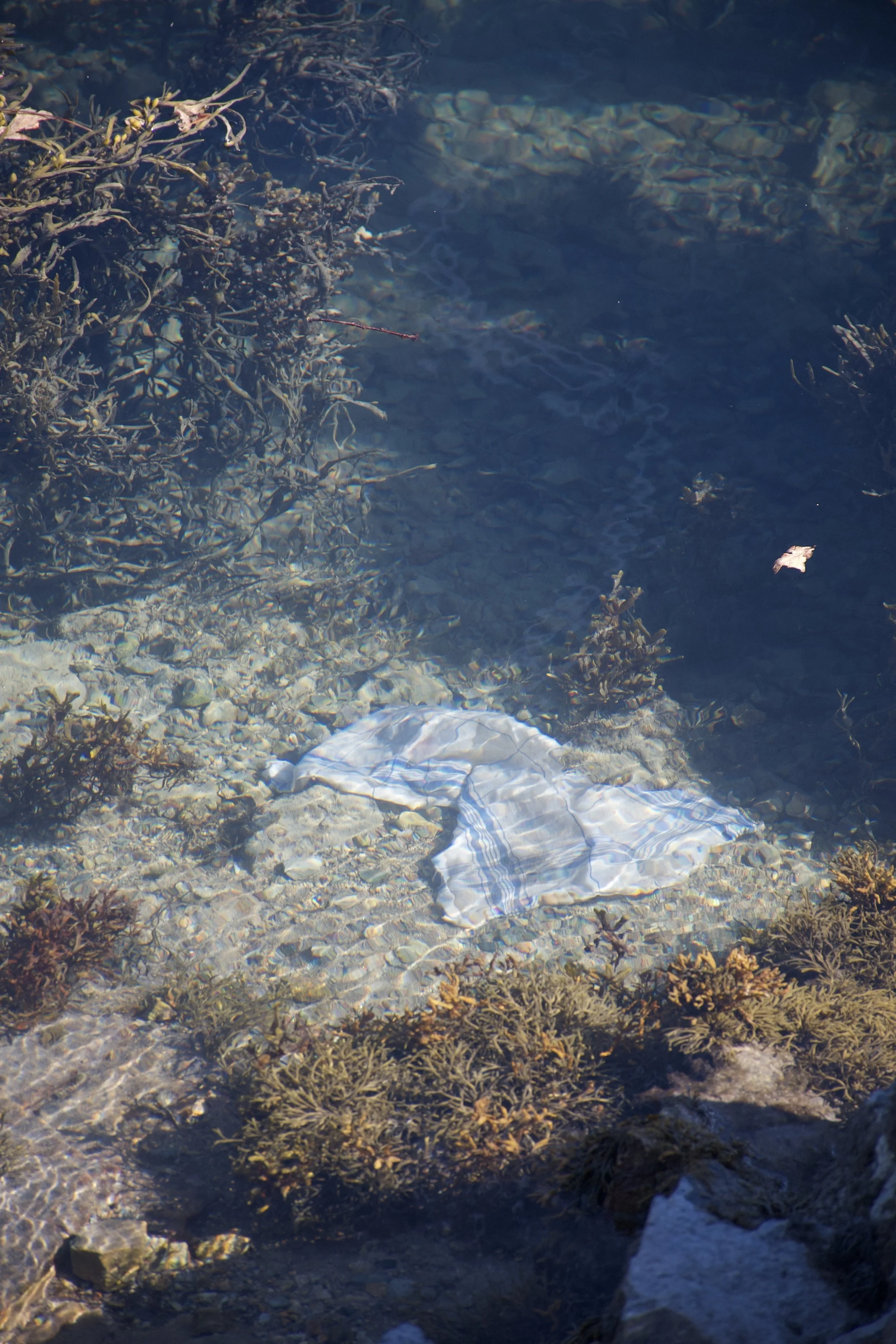
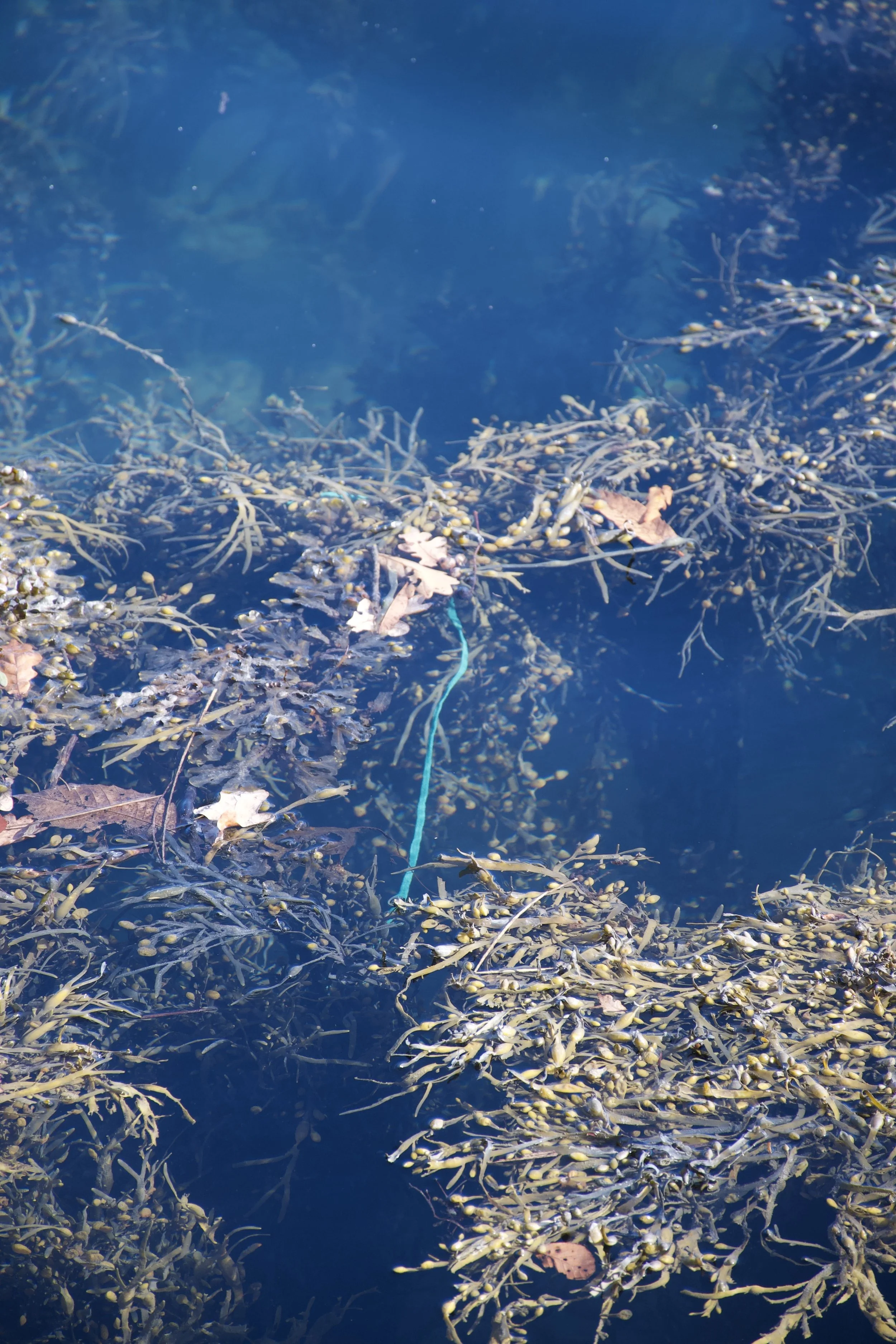
Closer to the shore, we note obvious signs of pollution. Green plastic cord. A tea towel. Beside these, smaller fish swim through the kelp, showing off their glittering silver bodies as they move. Not hard to spot when the water is as clear as today. It’s what we can’t see, though, that we are also interested in. Our time outdoors is up, and we track back to school, grabbing my harvesting basket from the car on the way.
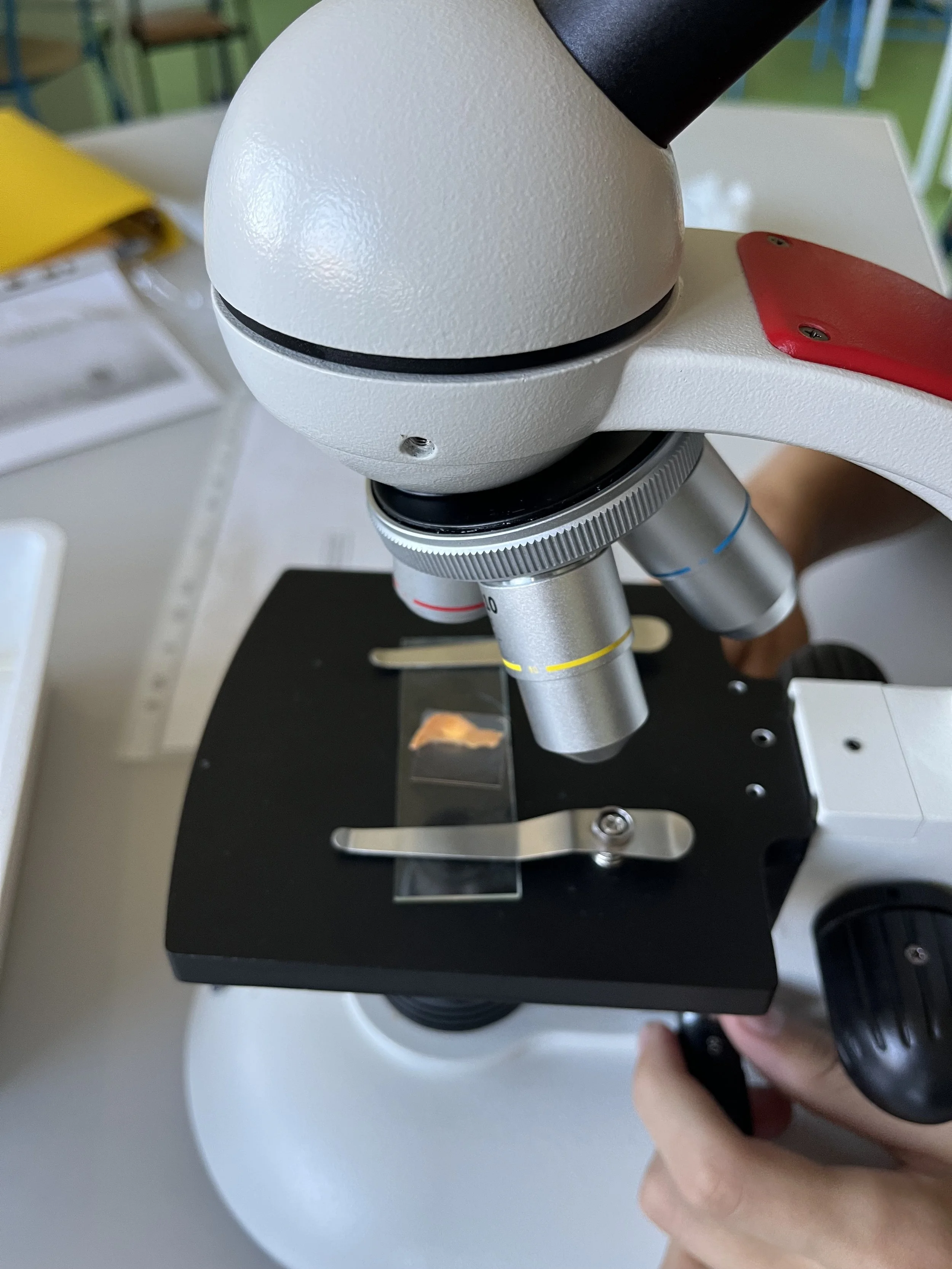
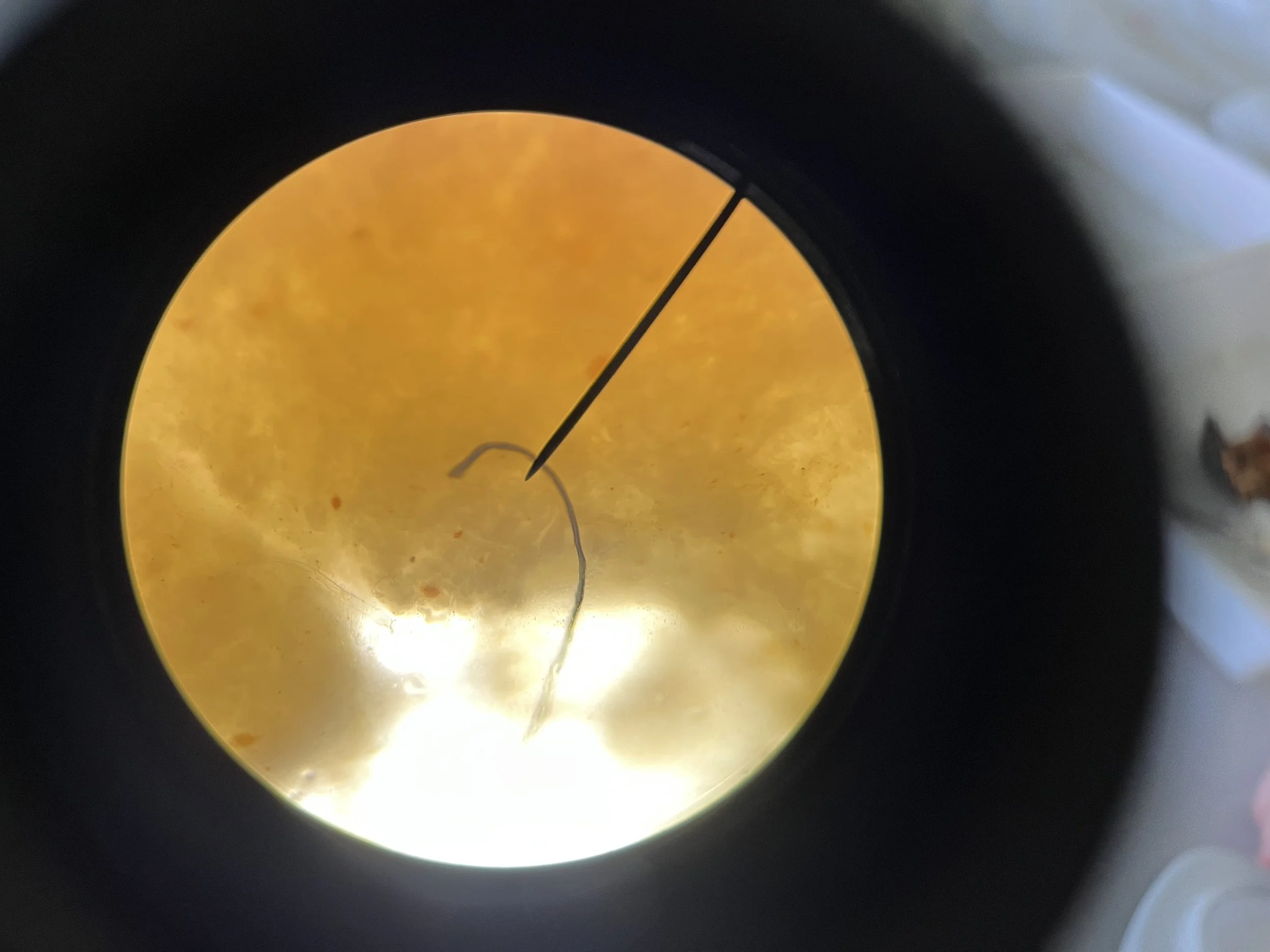
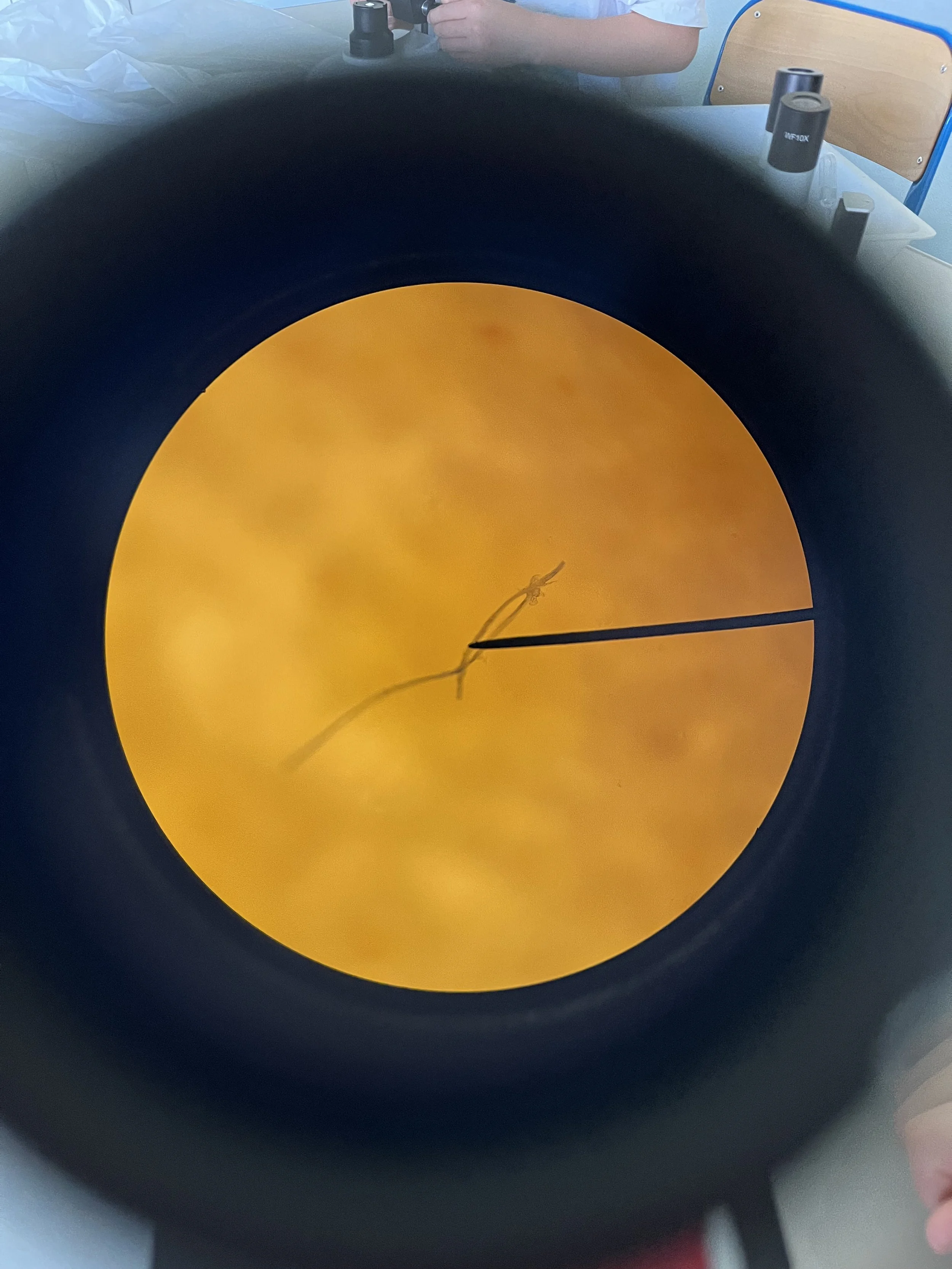
In class, I wash three mussels and one oyster, and the kids ready their tables. Initially trained by Dr. Corina Ciocan on her visit from the University of Brighton (UK) three weeks prior, the students developed a methodology for inspecting the gills of these filter feeder organisms for fiberglass and microplastics. Since then, in each lab session together, we’ve discovered microplastics and suspected fiberglass shards in our samples. Today is not different, and, with more time and well prepared, we find more pollution than in any other session, in every single sample of gill tissue we test under the microscopes.
The hour flies by with me running around the room from group to group attempting to document with my iPhone the ingested materials our innocent bivalves have gobbled up, unable to expel. Educated by Dr. Corina of the impacts of fiberglass ingestion, the kids know our research results are pointing towards a mass pollution issue in our local Goyen River-Estuary. With five minutes before the end of class and the beginning of the October school vacation period, I ask the kids, what solutions do you think are possible?
They answer:
Psychologists for the mussels and us;
Stop building boats with fiberglass and plastic materials—innovate harmless materials;
Remove all the end-of-life boats from the water and take them to the déchetterie (waste disposal centers).
Smart cookies.
Our citizen science work continues.
-Angie Richard