Several weeks ago we faced a challenging dilemma when receiving the second batch of Tebo Pin Maritime Pine plywood (FR). As the delivery arrived, I noticed the panels looked warped and, upon a sheet-by-sheet inspection with Remy, we discovered the quality of this batch was unacceptable for us.
After several days of discussions between myself, Remy, Pascal and Federico, and extensive negotiations with the distributor, Partedis, we decided to send ALL 100 panels of plywood back.
In truth, we had ordered one grade down from the ‘Elite’ range, as the sample panel we received last summer was excellent. The subsequent first pallet (50 panels) looked great upon arrival, too. We thus did not inspect each panel of the first batch.
Lesson learned: inspect your panels sheet by sheet before signing off on the delivery.
Partedis has been very understanding, the rep even came out to the boat yard to discuss our options. We came to an agreement to receive a full reimbursement for the second batch, and settle for a credit on the first batch.
With production of Tebo Pin Elite expected to take up to three months, we agreed to 20 panels of Okoume plywood in the meantime in order to keep the build moving forward, paid with our credit.
Nemotode (worm) discovery
Just as I was about to head to Australia for Christmas, we learned about the Nemotode worm discovery in the Maritime Pine plantations in southwest France.

This microscopic worm, Native to North America, is transmitted from tree to tree through beetles, known to then attack some varieties of conifers, particularly pine trees. By blocking the circulation of the sap, it causes the rapid death of the infested trees.
It’s discovery in November has created a sudden and terrible crisis for France’s Maritime Pine forestry, leaving a cloud of confusion over the future of production. Some infected trees are said to be destroyed, and a buffer zone created enforcing a halt on all production for at least four years.
Where does that leave us?
To be honest, we are still not sure.
Partedis have recently suggested their supplier, Thebault Group (a three-generation family business), are not impacted, but that the Tebo Pin Elite production has been significantly delayed due to the excessively wet winter.
(I have sent an email directly to the supplier to try and organise a visit to their forest plantations in the southwest, and the panel manufacturing factory.)
What we do know is that using Okoume for the entire boat build has become a high probability.
Okoume
Okoume as a ply/epoxy boat building material is, technically speaking, a solid choice. It has become popular for European builders due to its affordability , durability, and availability, though it is more expensive than Maritime Pine. (Sapelli, too, is a popular choice, though much more expensive and thus out of our budget.)
Our first preference was to avoid importing African-grown wood and to look instead for viable alternatives within Europe. (Our Movingui hardwood timber is legacy stock, sourced from a second-generation carpenter family who had the 200-year-old African tree in their warehouse in Brittany, France, for over 20 years.) French-grown and produced Maritime Pine ticked the boxes for us.
Good quality, affordable European plywood has become incredibly difficult to source, however. There are other sustainable options, such as Vendia Woods (Finland), however the price puts such options quite out of reach for most DIY and small-scale boat builders, including us.
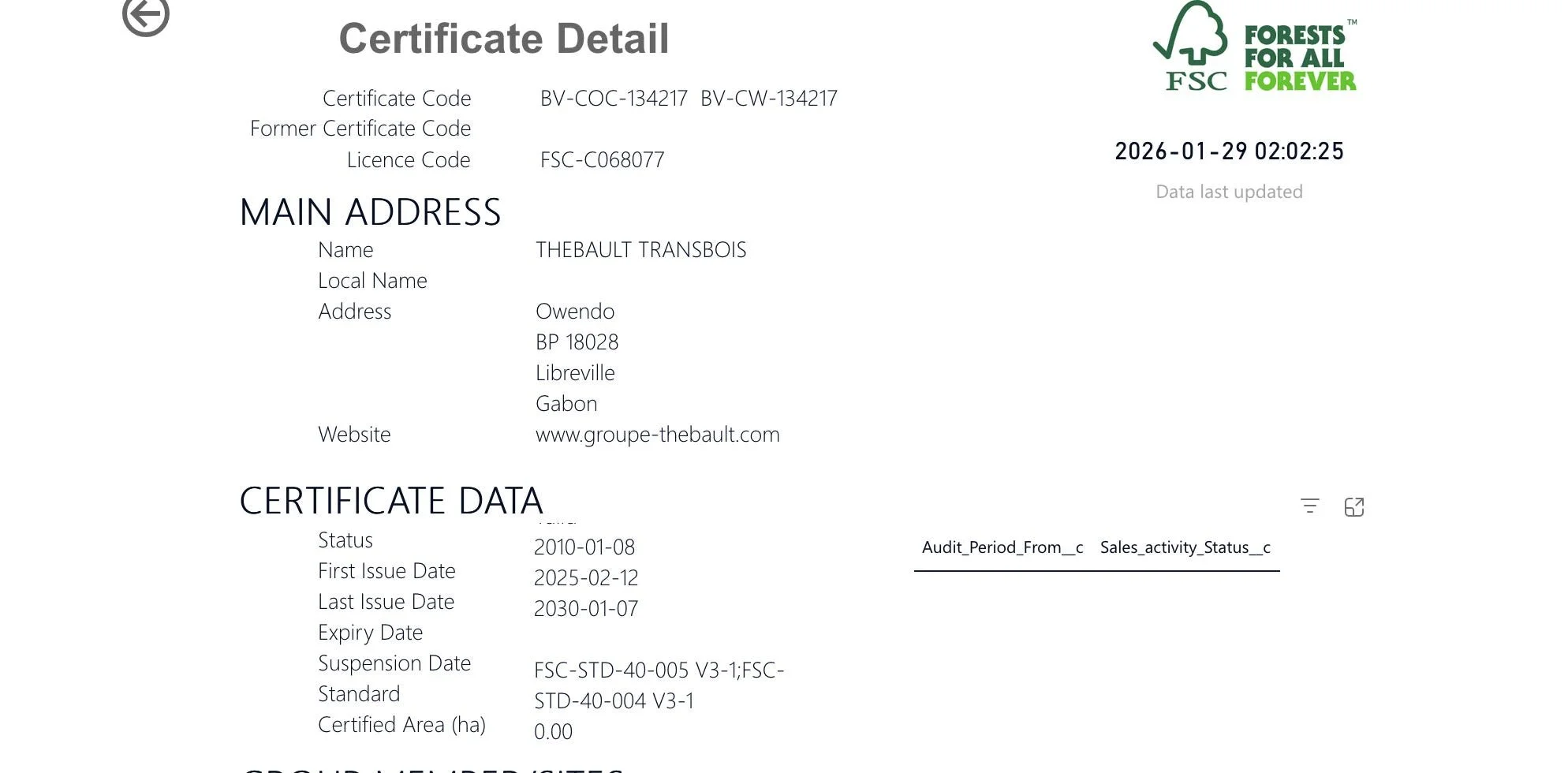
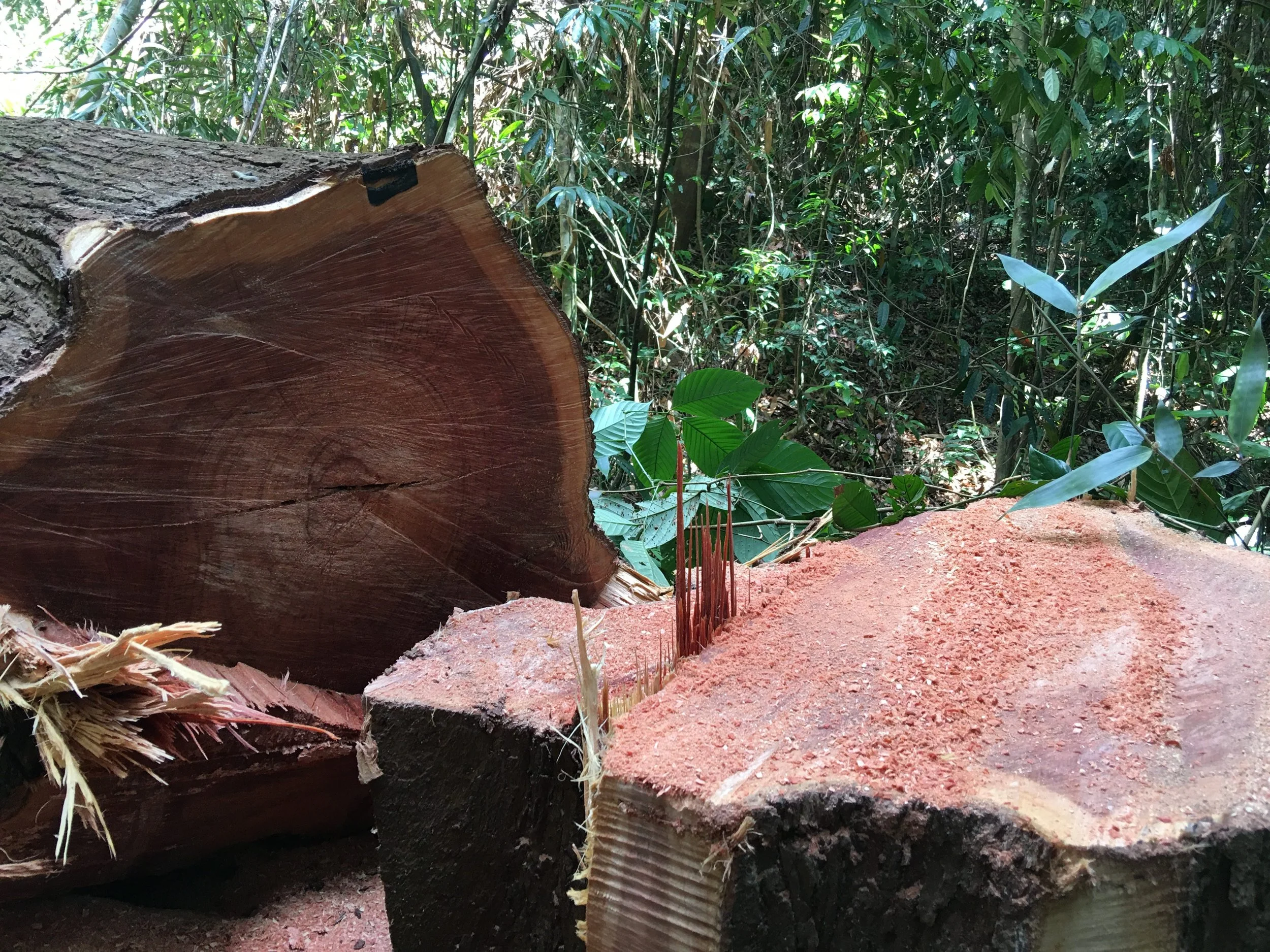
Okoume was our B-plan, available through the supplier’s sister company, Thebault Transbois, based in Libreville, Gabon. It is Forest Stewardship Council (FSC) certified, and after a few clicks on the FSC Trace web page, I could trace our plywood back to logs grown in one of two forests in Gabon—Haut-Ogooue or Ogooue-Lolo. These logs are NOT exported to Europe—the Government of Gabon passed a law in 2010 banning log exports; the logs are sent to a large industrial zone in Libreville, Gabon, for local manufacturing in to plywood panels. The completed panels are then exported to France.
A Visit to Gabon?
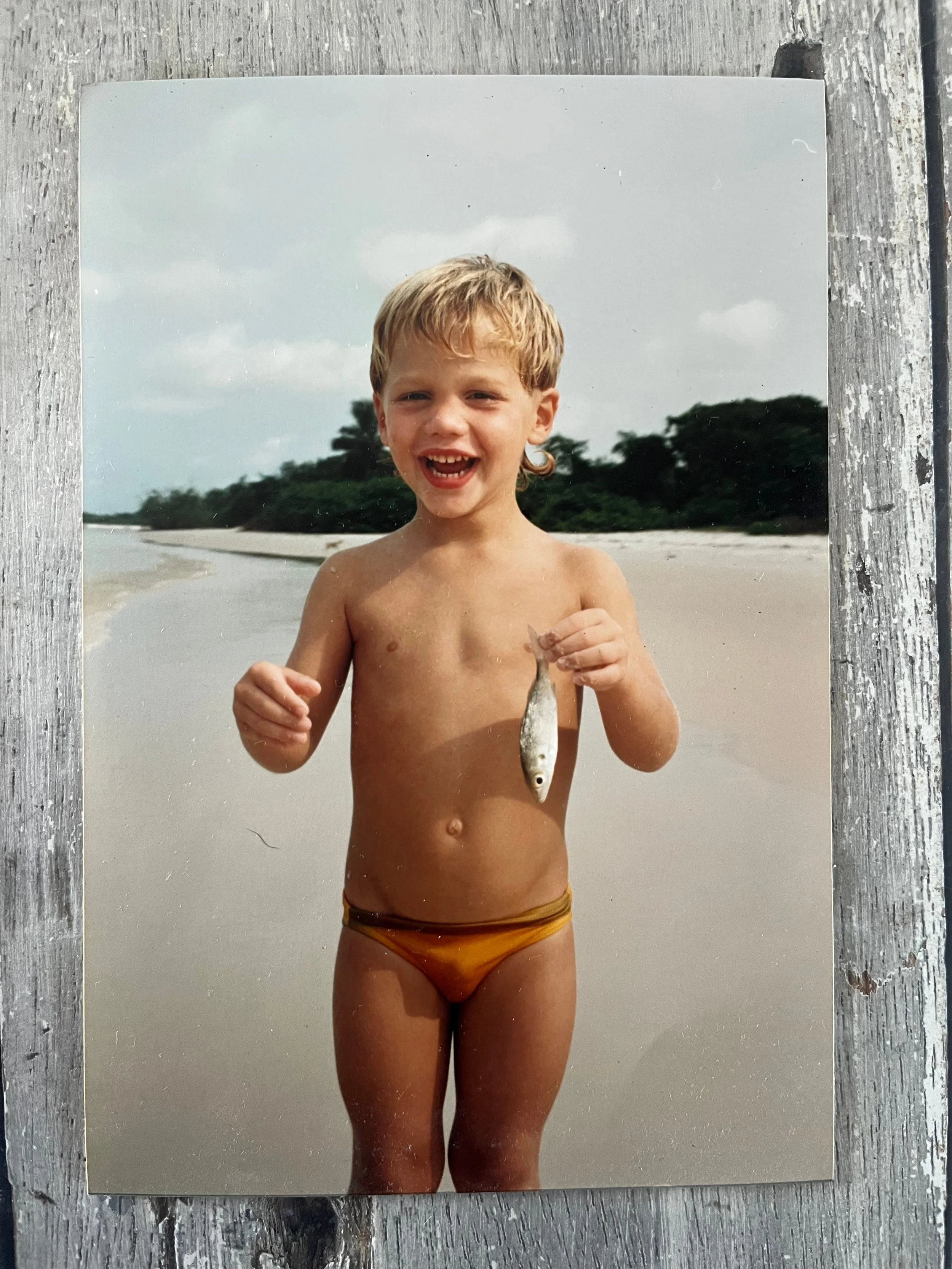
A young Remy in Gabon.
Remy grew up in West Africa, spending his entire early childhood in Gabon and, later, high school years in Congo. Gabon’s forests and coastline fill his heart with fond memories. He is also acutely aware of the impact of deforestation. Sustainable forestry certifications should give consumers reassurance as well as access to traceability. It is not always so clean cut (excuse the pun), though, and as always at FSL, we like to ask questions and do our own digging.
According to a Forest Trends report from 2021, “despite a strong legislative framework for forest management, illegal logging is still considered widespread in Gabon…Illegal logging and trade affect many timber species, but highly valuable - often rare and endangered - species that are protected under harvest and/or trade regulations are a key target and at an elevated risk for illegality.”
The report places Okoume on the list of high-risk species. And makes us slightly uncomfortable.
Having previously written and co-produced a VR documentary about the impact of Palm Oil production and subsequent deforestation on Orangutans in Malaysian Borneo, I don’t take lightly the decision to use imported plywood on our boat. During that shoot, I visited a sustainable-managed forestry in Deramakot, Borneo, which triggered me to hold concerns around industry definitions of ‘sustainable’.
Humans are a consumptive species, and all boat building has an impact.
Each boat builder has their own parameters and we do not deny that economics and availability of materials play a major factor in many builders’ decision making processes.
At FSL, we take transparency seriously, and strive to document the honest process of building our Narai Mk IV Wharram catamaran to share publicly. We consider overall impact holistically, not just in terms of the physical build but also including the long-term use of the boat as an educational, cultural and co-shared vessel—we naturally want this to have as positive an impact as is possible.
Deramakot, Borneo. Credit: Angie Richard.
A major part of the project for us, too, is developing relationships with the materials used in the boat build. Timber is not merely a resource for exploitation by humans; trees, and the forests they are grown in, are critical for all life on the planet. Wood holds multi-faceted stories.
We have thus decided to visit Gabon later in the year to trace the supply chain of our plywood backwards. We want to visit the plywood panel manufacturers and see how the logs are transformed in to ply sheets ready for boat building. To journey to the forests where the logs originate. To discover the biodiversity of the ecosystem and meet the local communities.
The goal of the visit is to collect data through interviews, video and photos, to share with our community and the public interest.
In short, we’d like to contribute to facilitating the wood’s story, and share that with you all.
Let us know your thoughts in the comments.
As always, thanks for being here.
Have a great week,
Angie
FSL Membership
The beating heart of FSL is our membership community of volunteers, collaborators, advisors, and ocean-loving sea people. We call this a ‘relational network’ and welcome all folks wanting to get involved.
Memberships start at 20€ per year and provide grassroots financial support across all aspects of the association.