
From glue-ups in the yard to hosting scientists across Brittany — a couple of big weeks here for FSL!
*First published in the FSL Substack newsletter.
Hello FSL community!
The past weeks have flown by here in Brittany. It has truly been nonstop with new volunteers, a week-long visit from Remy’s parents, and hosting four scientists from UK and French-based institutions for our UN Ocean Decade Endorsed Action ‘ReTISS’ — a citizen science initiative mapping end-of-life boats, examining their impact on coastal ecosystems, and searching for solutions.
At the end of June, we will host our second art x science residency here in Plouhinec, in partnership with the University of Brighton. Applications will open shortly — FSL members (including Paid Substack subscribers) get a first look at residencies and workshop opportunities, so do take a moment to choose one of our membership tiers or upgrade your Substack subscription to get priority access to opportunities.
The boatyard has been buzzing with activity and new faces.
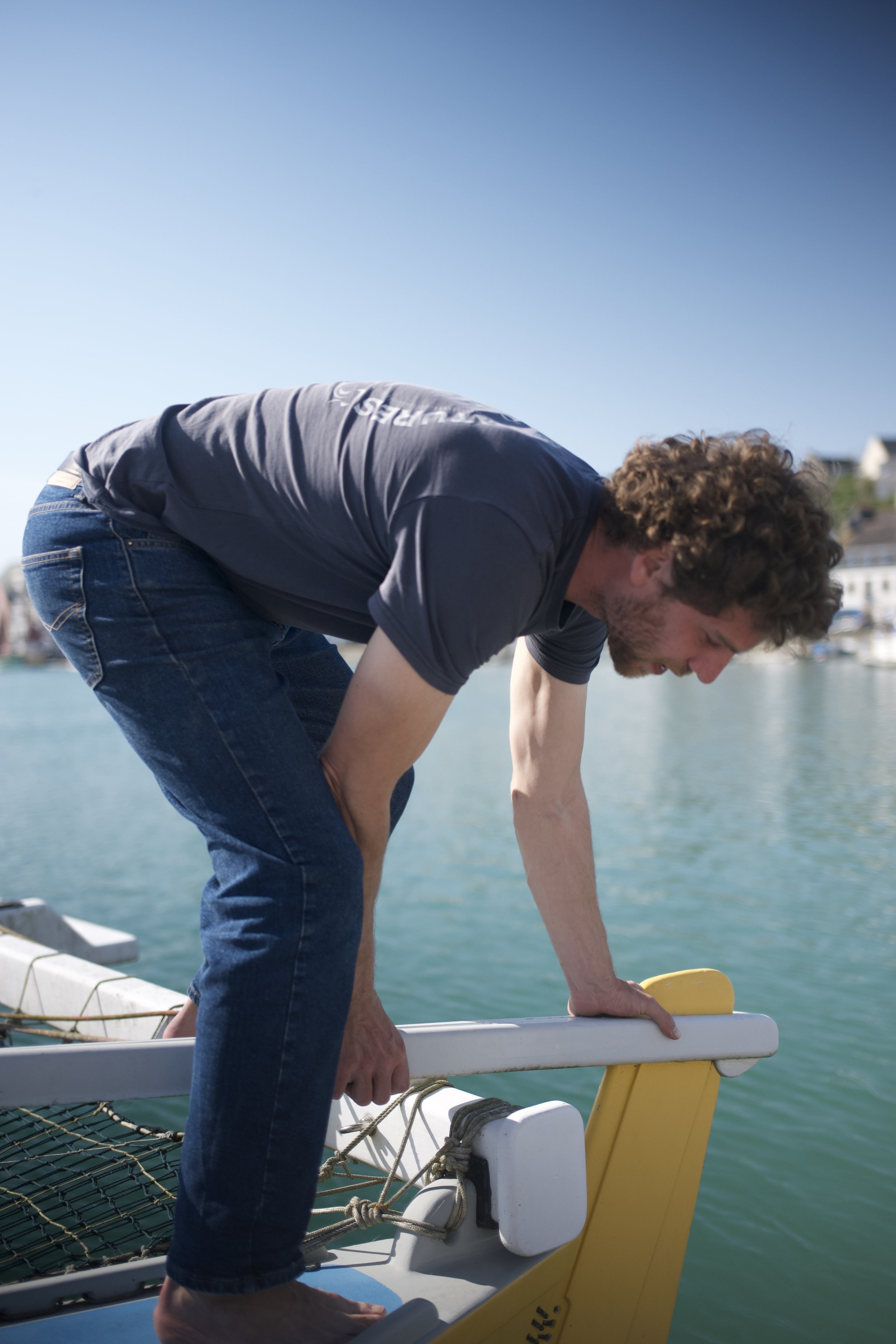
Ed visited for a week from the UK to do a university work placement just as Olivier returned to France from overseas travels to lend a hand, sharing tips learned from decades of experience working in boatyards. Pascal Petit paid a visit to kick off the next milestone step in the build: gluing the backbone and bulkhead scarf joins. We had a full house in the yard for the occasion! The video is out now on YouTube.
Once glued, we suspended the backbone up on the wall overnight, which took a great team effort and was one of the more stressful moments for me in the yard to date. There are two major milestones I am NOT looking forward to: 1. turning the hulls (which we need to do before November ahead of the winter), and 2. dismantling the boat to move both hulls out of the yard and transporting them on tractors down to the port when we launch. I might call in sick on those days!
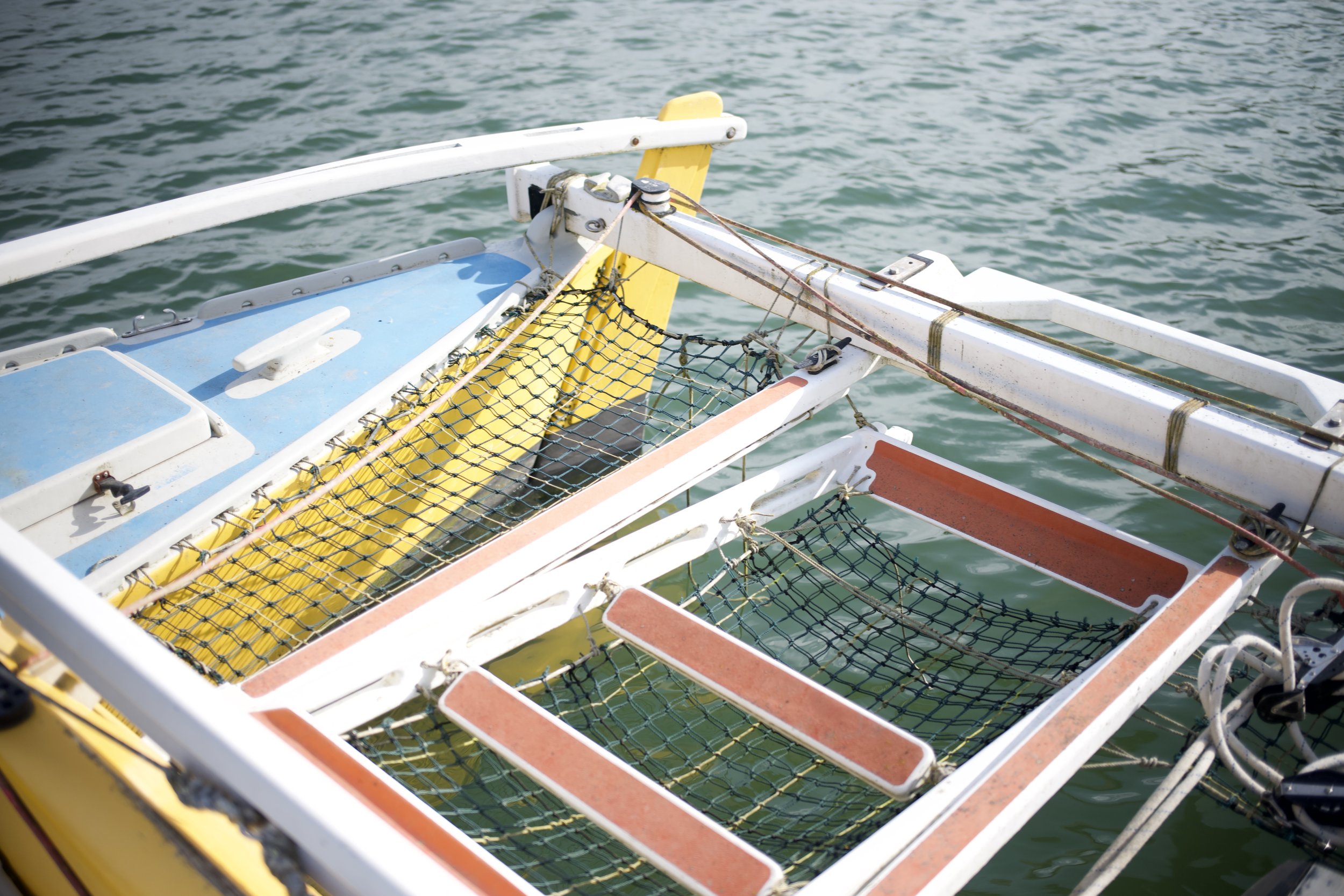
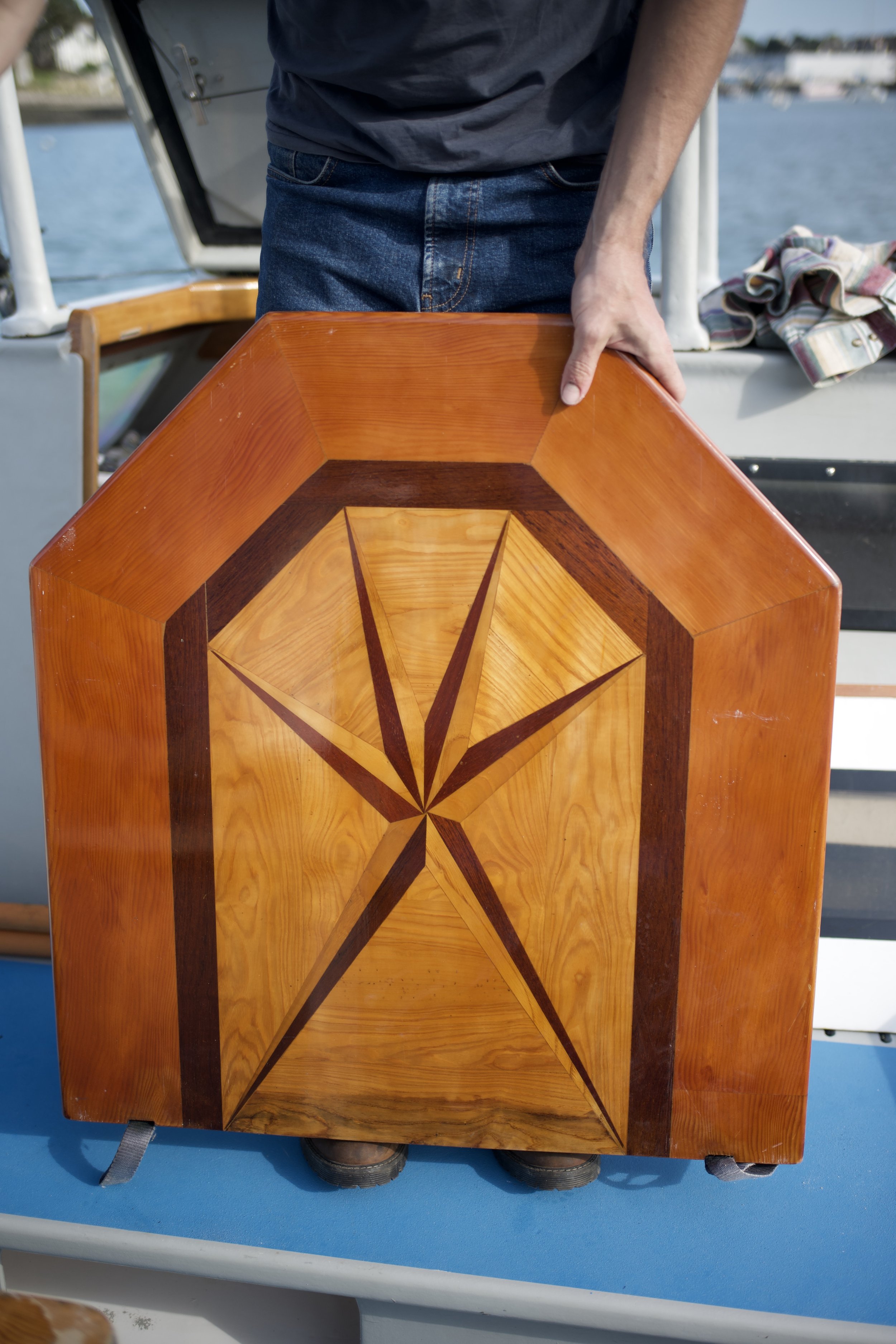
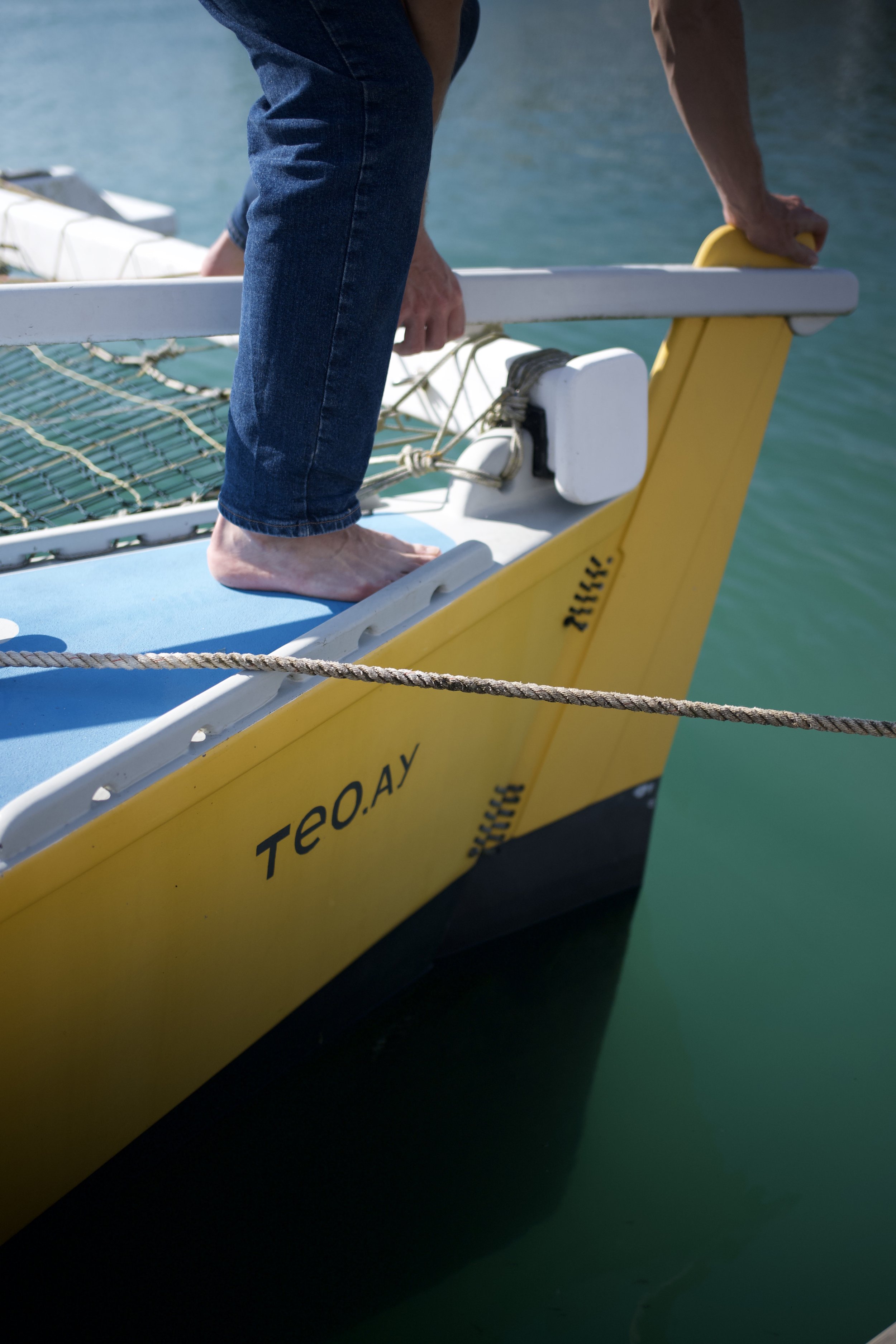
On Ed’s final evening in town I received a call from a skipper mate Aleksi who had just sailed in to Audierne on his newly purchased Tiki 30 (modified to a 33). Would we like to come down to check out his boat?!
The boat is exceptionally well built and we all had a wonderful moment poking our noses around inspecting every aspect of the build. The boat is registered for the Wharram Hui taking place on July 18-19 in Audierne — you don’t need to own a Wharram to attend and there are campgrounds within walking distance from the port if you’d like to join us for the weekend’s festivities, including visits to the FSL boatyard.
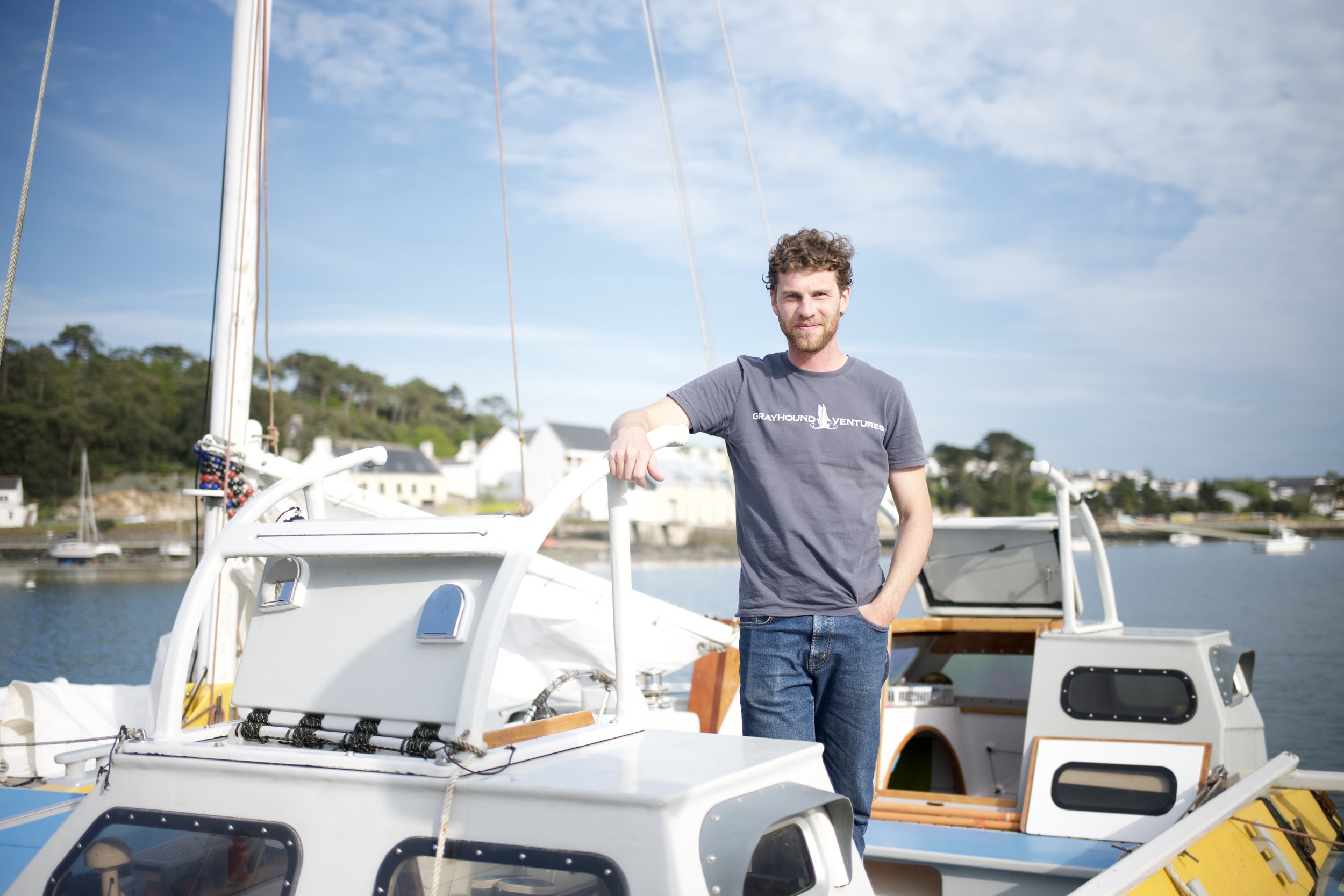
Scientific Visit
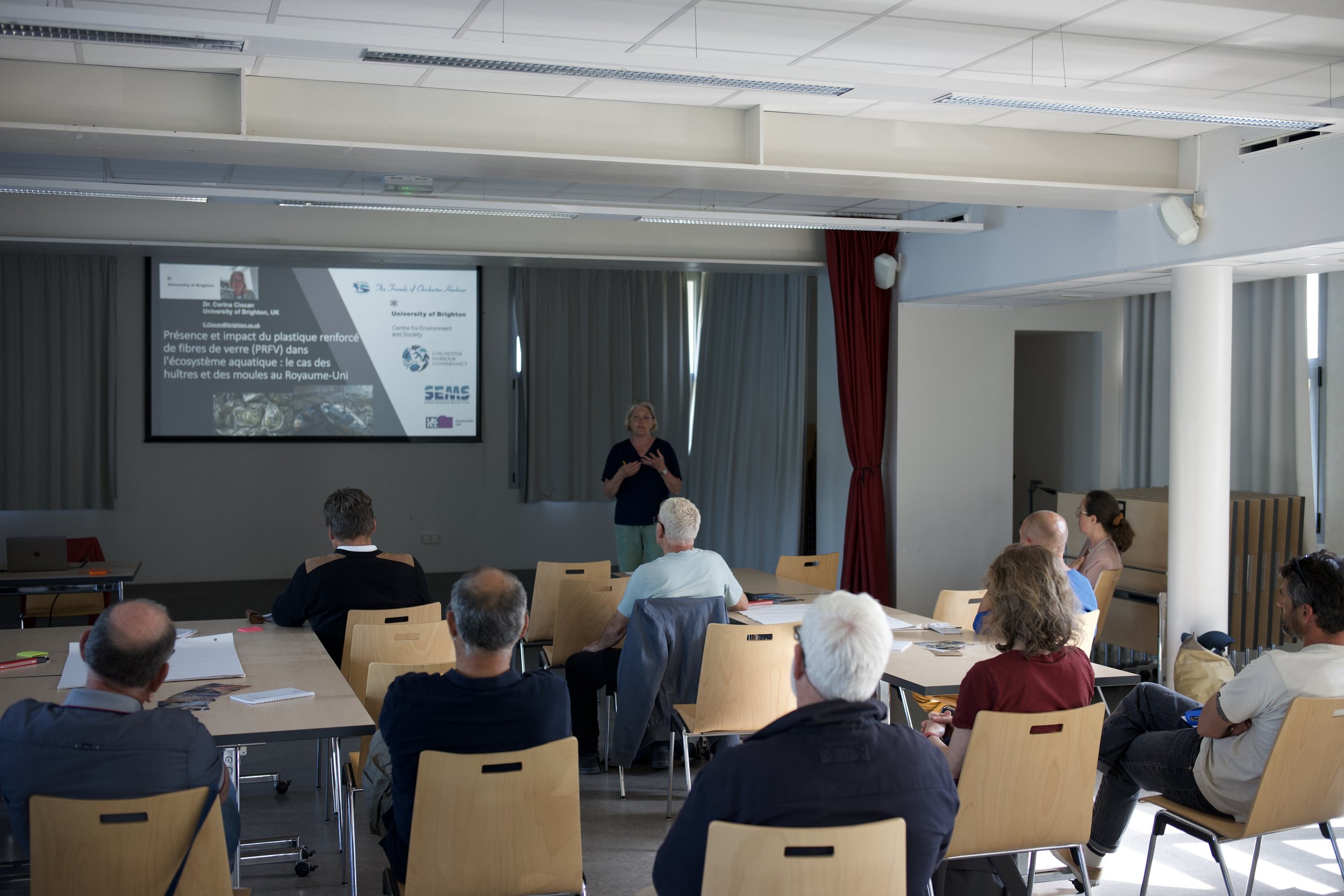
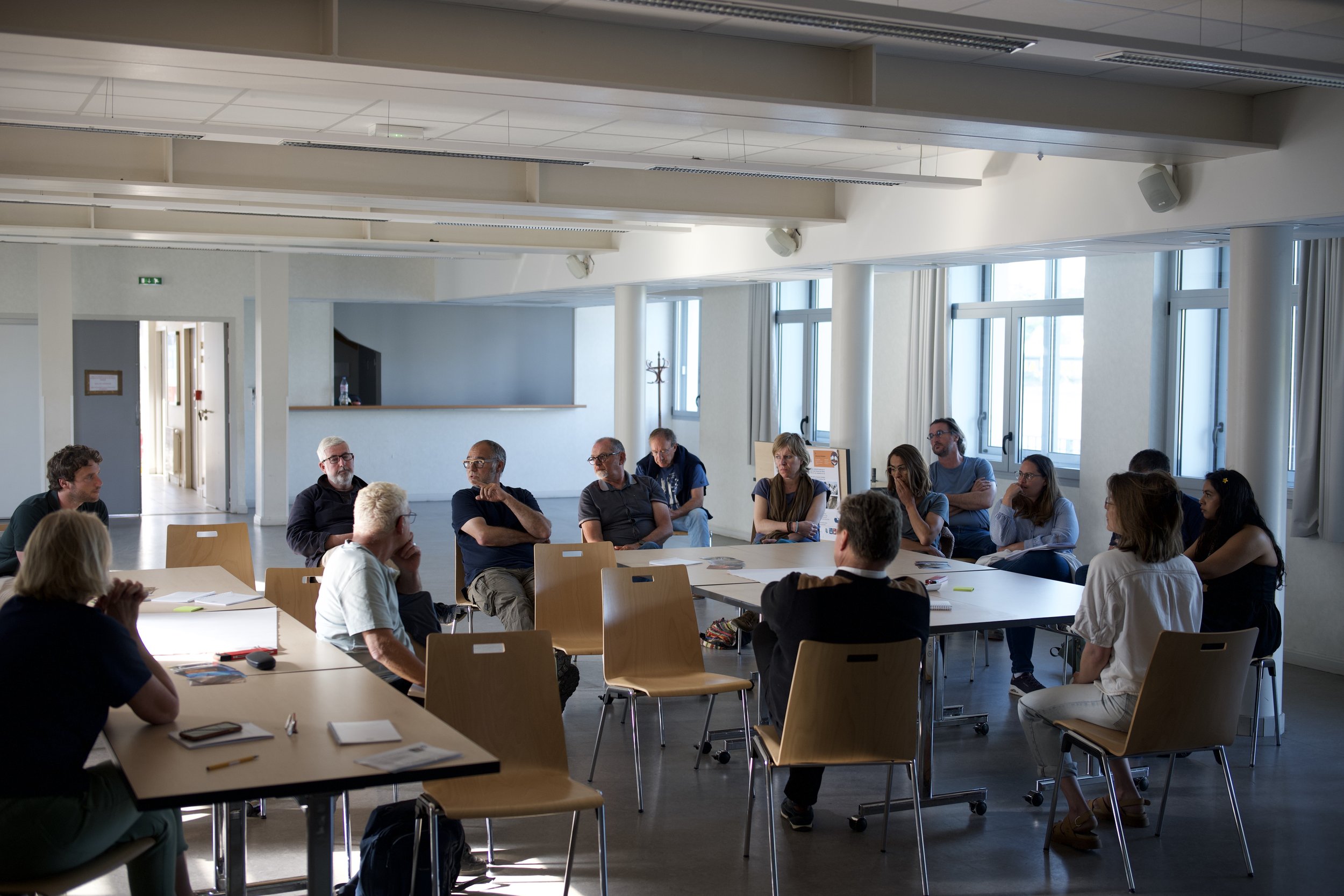
The next week, we welcomed four scientists to Plouhinec from their institutions in the UK and France, co-hosting a community x science workshop in Audierne on the impact of decaying boats on coastal ecosystems. I had a heavy bout of food poisoning the night before the workshop, barely making it out of bed on time to attend the event and present our citizen science results from our work with local middle school students in the Goyen Estuary over the past year. Our workshop made it in to the Ouest France news journal the next day.
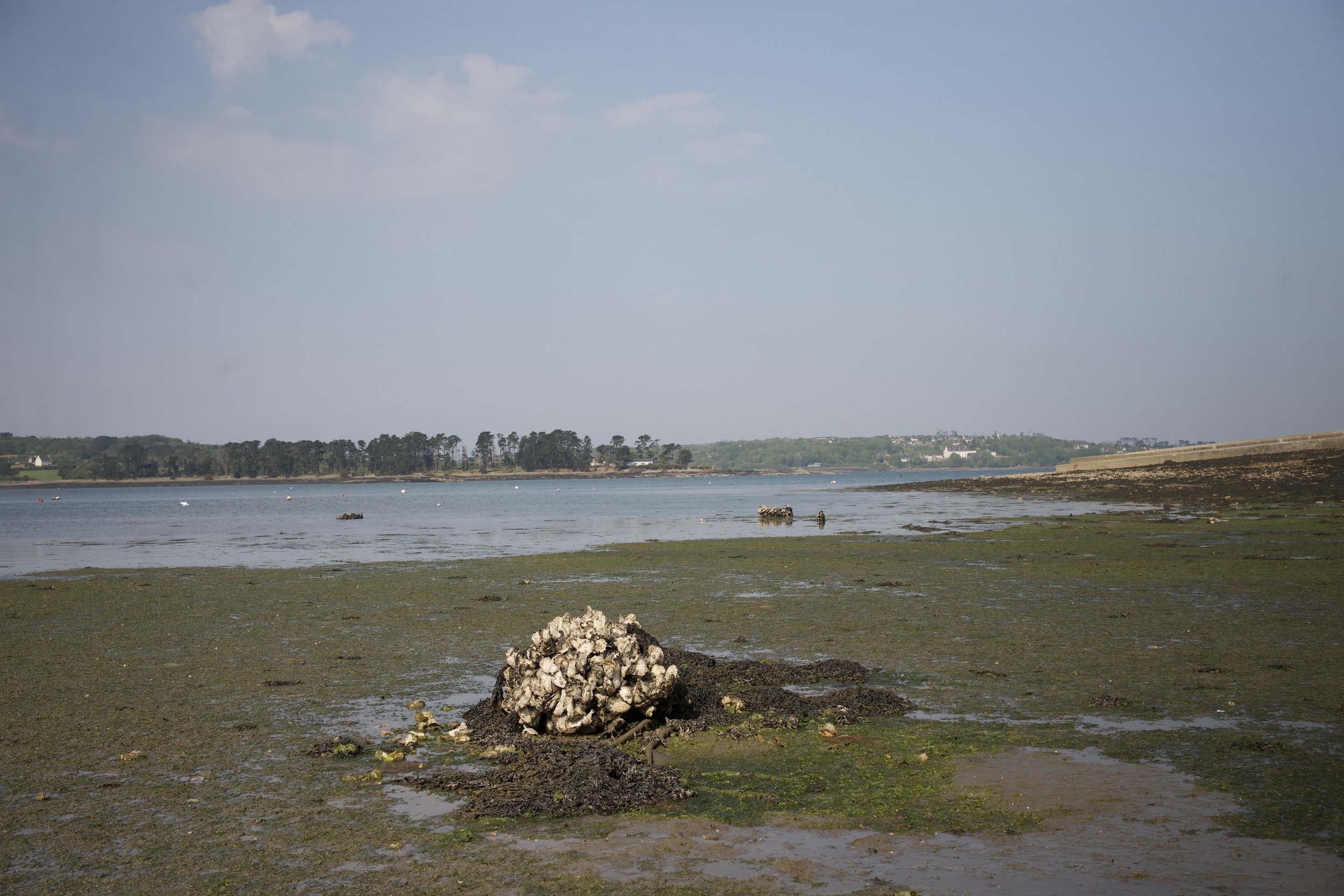
Over the following four days, I took the scientists to visit three boat cemetery sites across Brittany to survey pollution in the sediment from abandoned boats and discuss the potential to collaborate on a greater research opportunity that could possibly lead to pollution mitigation solutions.
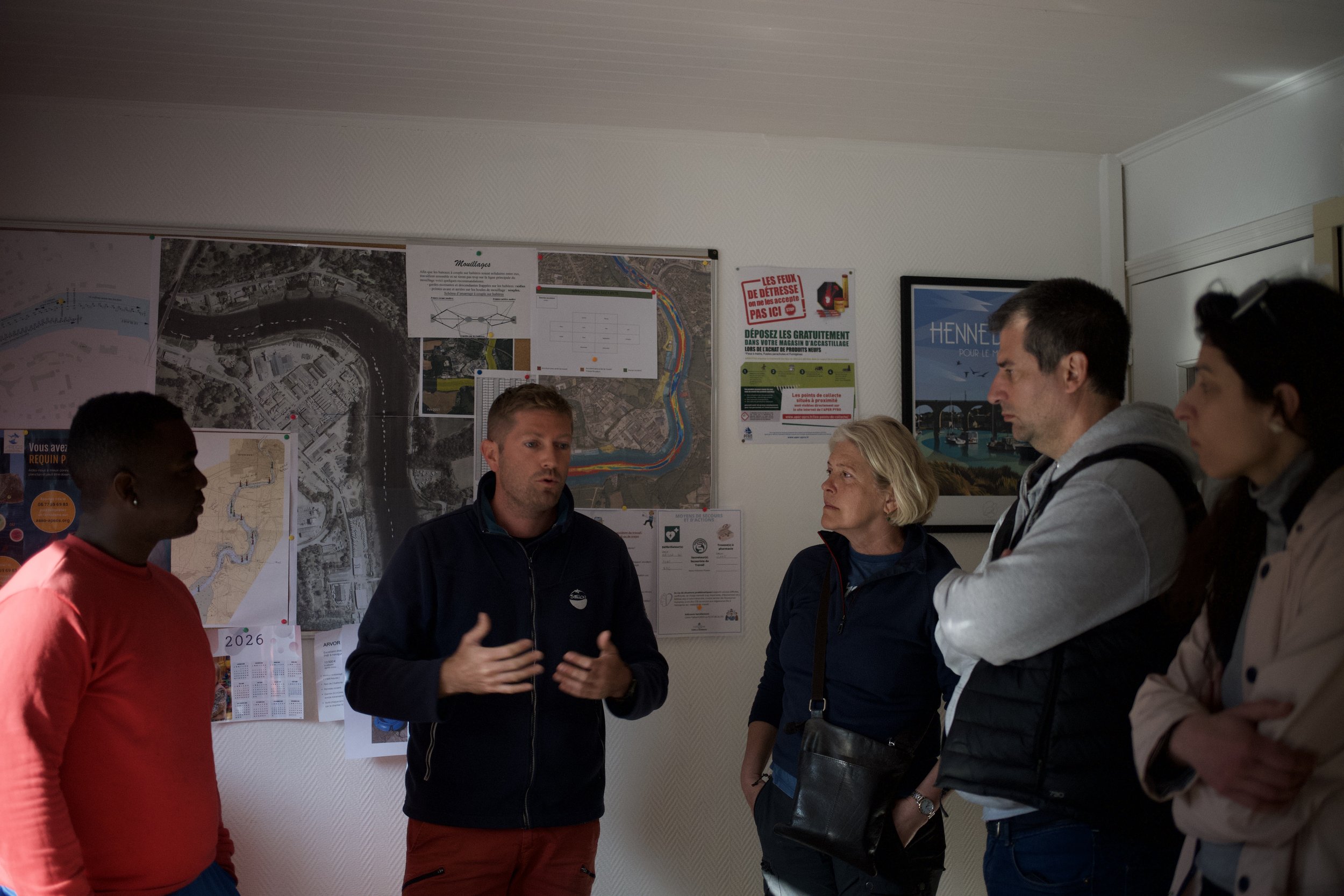
During our visits, we met one harbormaster actively making a difference. Alexandre of the Hennenbont Capitainerie along the Blavet River which makes it way out to the sea in Lorient, took on the task of removing abandoned boats from his marina from their budget. A crane was supplied by local boatyard Nath Yachting and dozens of boats were removed. They now lie across the road in an open-air public carpark, awaiting owners to claim responsibility and pay transportation to the nearby APER boat disposal center a mere one kilometer away.
Herein lies the fractures in France’s policy that slapped an eco tax on new recreational boat production to finance end-of-life disposal: owners are hard to trace despite boat registration (some are even deceased) and, if contactable, they often lack the funds to cover transportation. At 100€ per 1-meter of boat to travel just a kilometer away, it’s becoming clearer why boats located hundreds of kilometers from APER centers are not being picked up. Furthermore, typically owners also should front the costs of removing the boat from the water, and crane hire is commonly expensive.
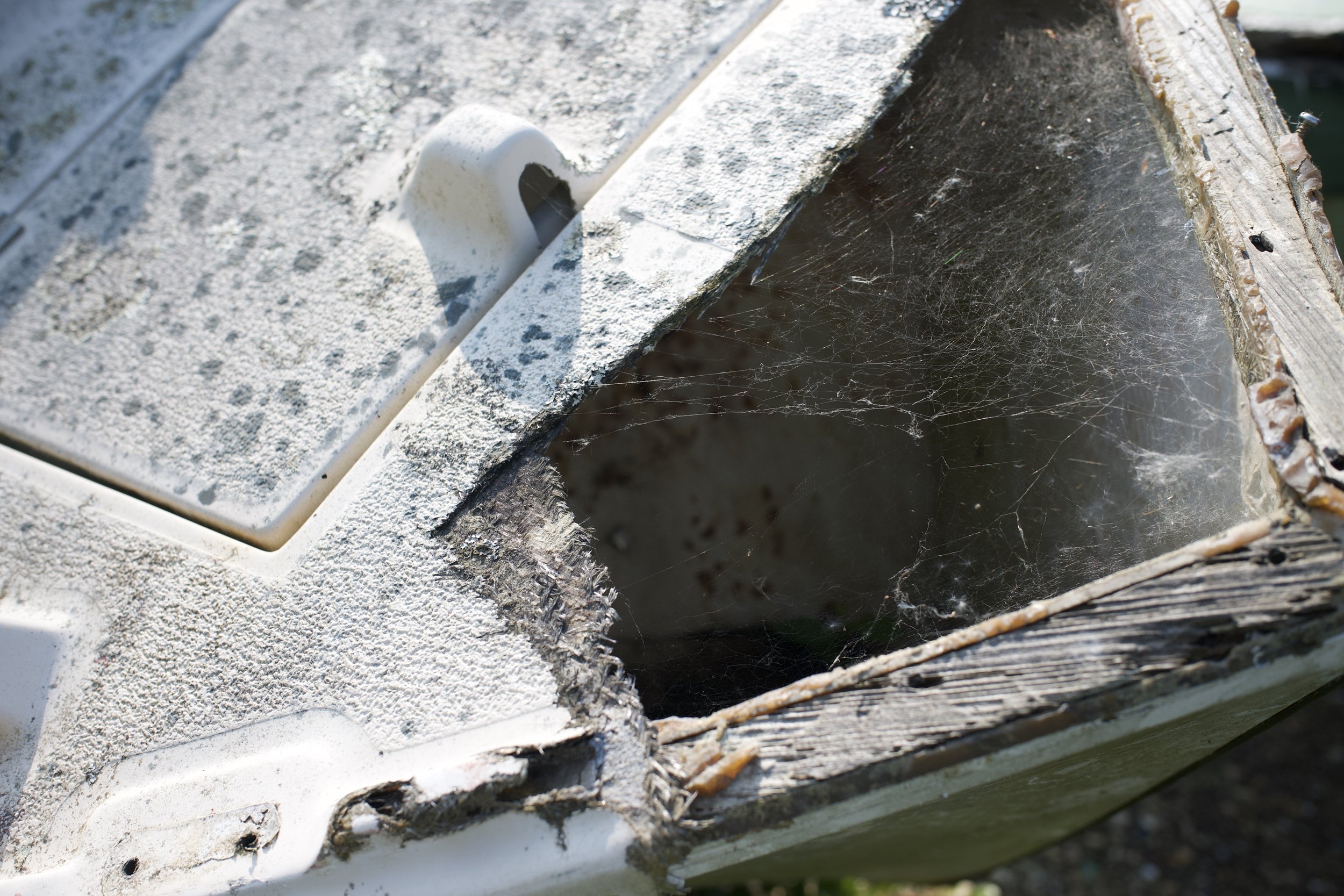
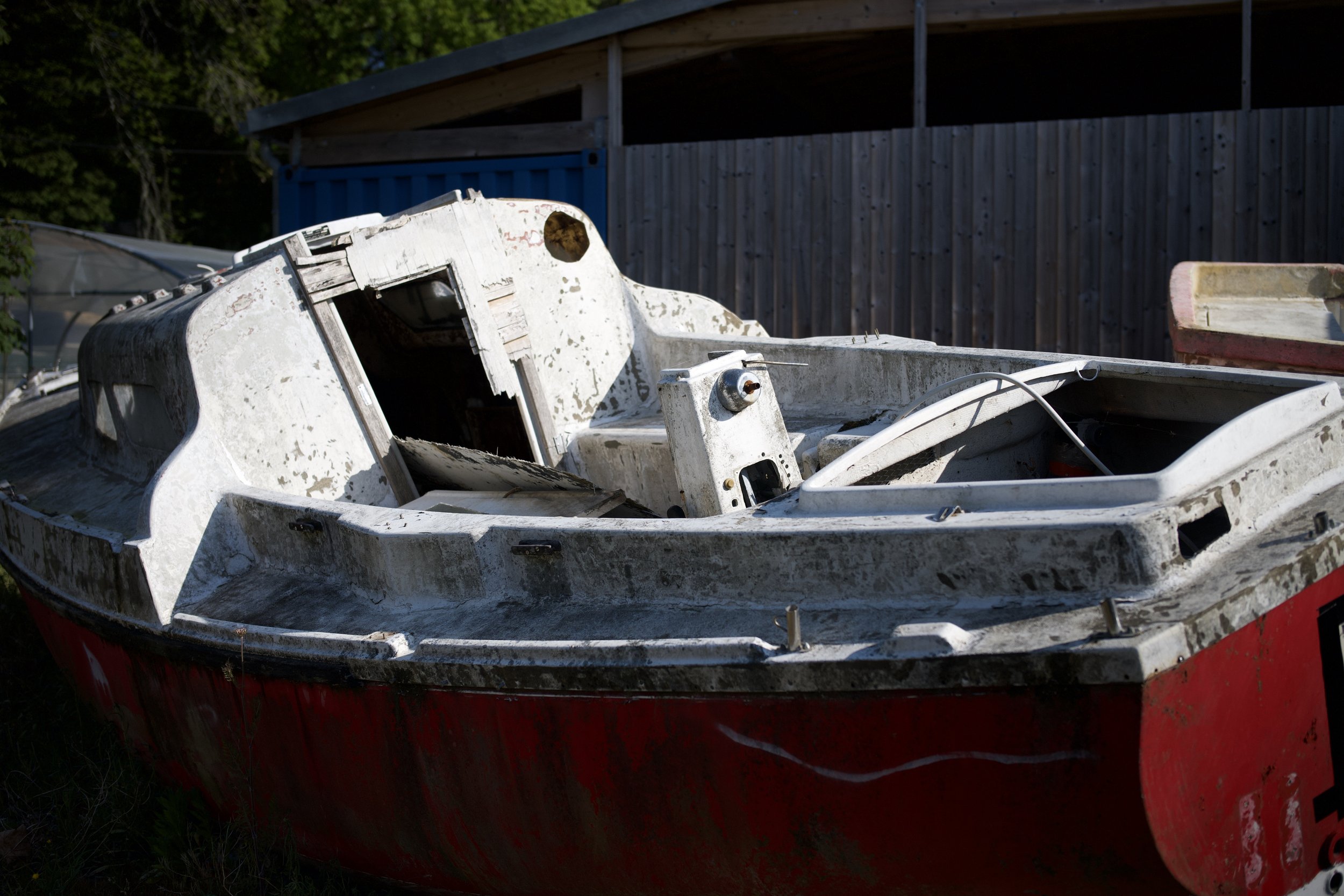
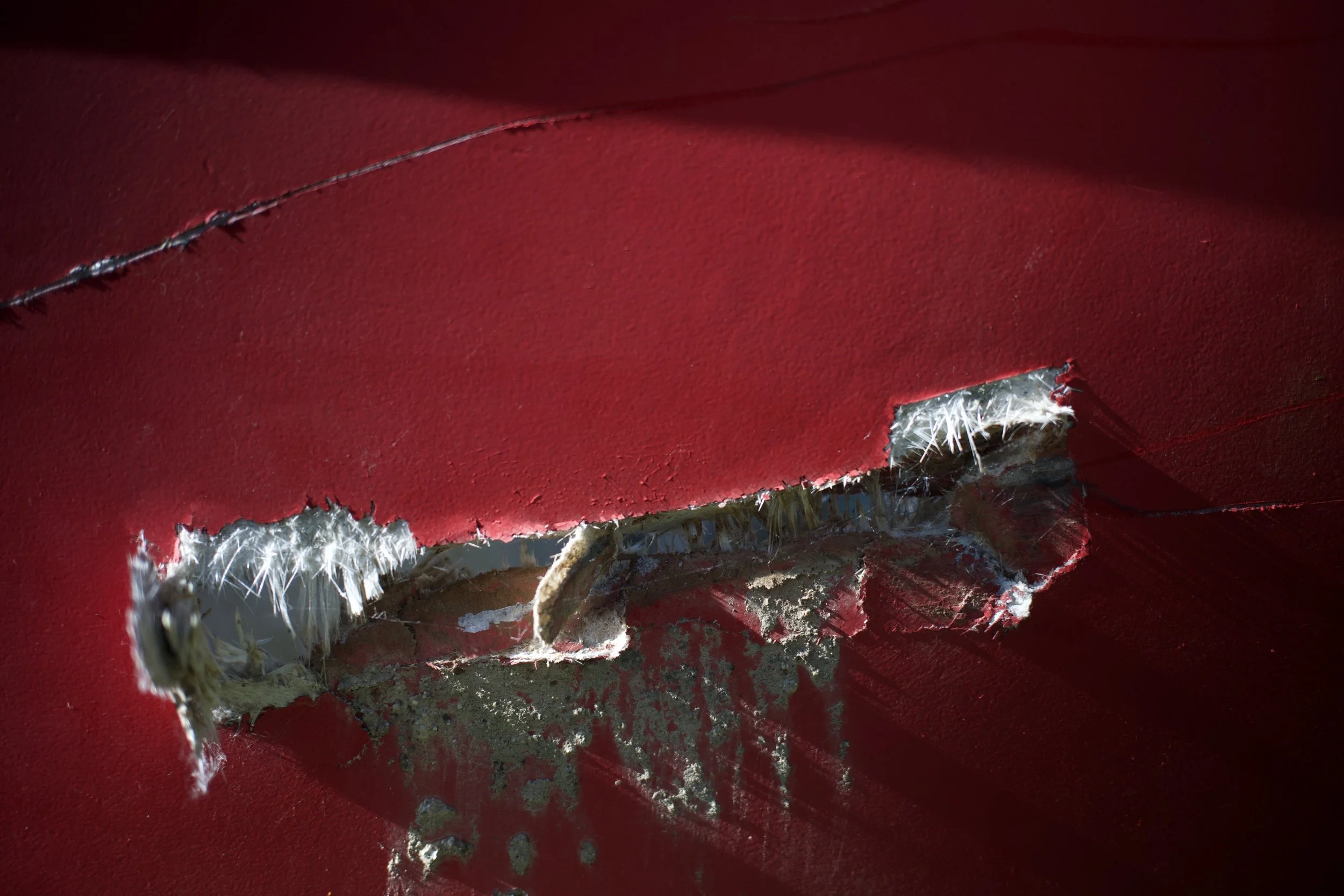
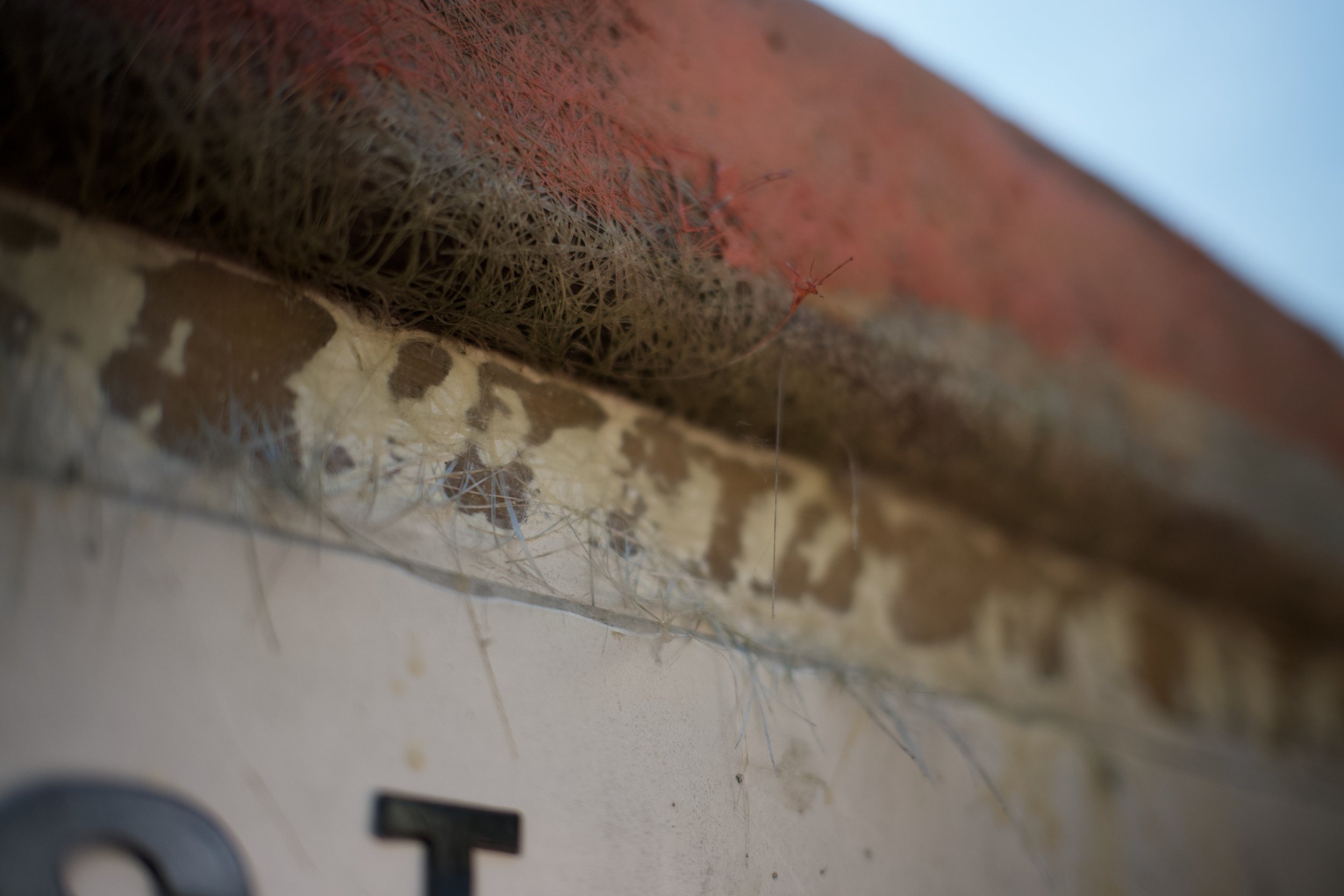
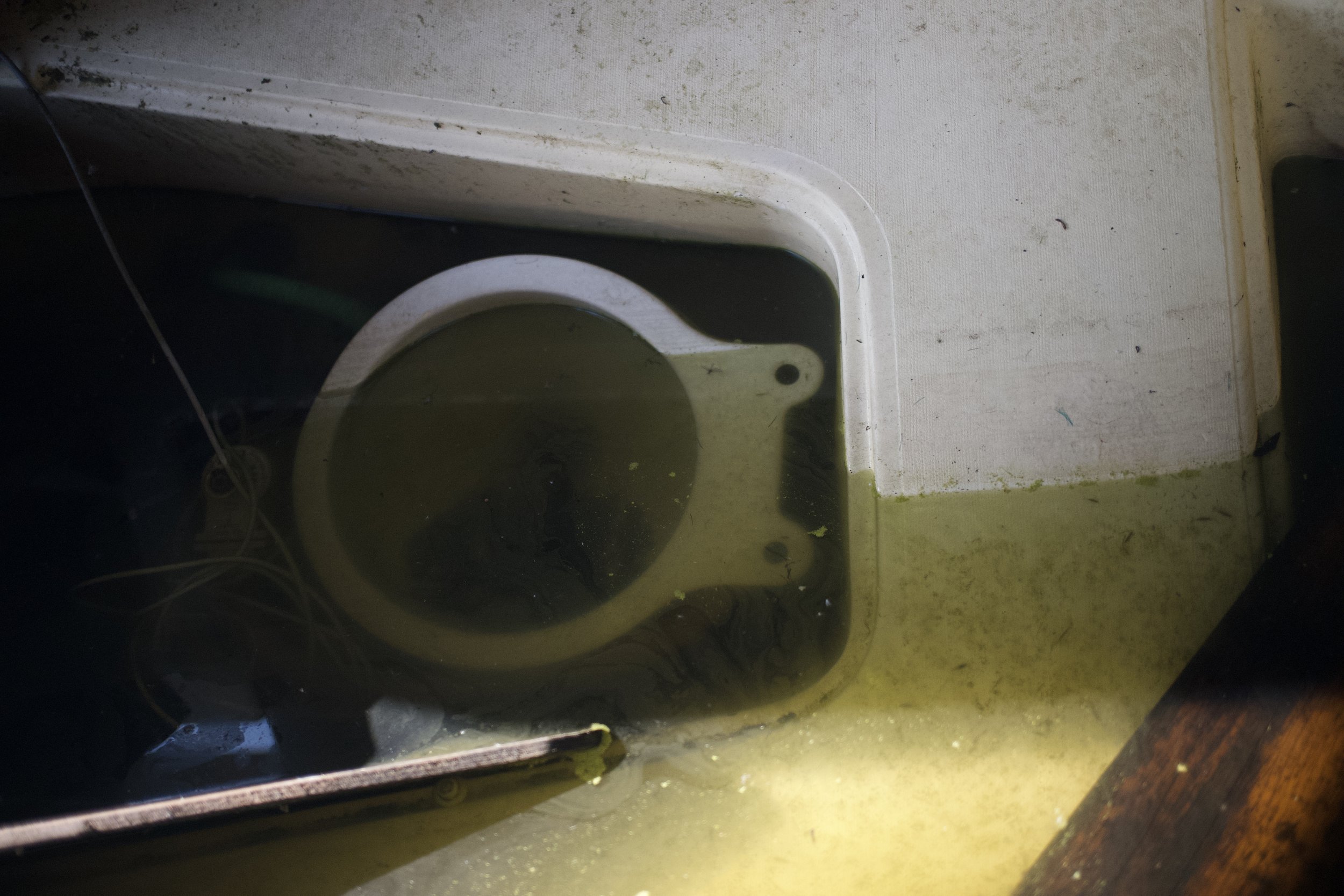
In the meantime, derelict boats rot in our estuaries, coastlines, and public car parks, releasing micro particles of fiberglass, paint, plastics, and other toxic materials. Alexandre also commented more boats are being dumped at the car park by sneaky owners in the middle of the night who scratch off the registration to not be traced. This is something I see across designated boat cemeteries across the region — traditional wooden boat wrecks rotting in the shore become an attractive dumping ground for modern, ‘plastic fantastic’ derelict boats to be dumped along with other marine related trash.
It’s back to the boatyard this afternoon for Remy and I. We’ve been profiting off a long weekend and teenage babysitters to smash out more work the past three days: all bulkheads are now glued, Remy is cleaning them up by hand-sanding and ensuring a smooth finish, and now that the beam troughs plywood pieces have been cut and epoxied, the cabin was emptied of plywood yesterday and filled with hardwood.
If you’d like to stay up to date in real-time, do consider becoming a member or upgrading your Substack subscription, enabling you to opt-in to our WhatsApp community group where we share behind-the-scenes from the boat yard, post opportunities and open calls, and engage more intimately with our growing community.
- Angie
President and co-founder, Floating Stories Lab
