
Setting Sail with Confidence and Savings

When we embarked on our quest few years ago to find a secondhand sailboat that would become our Floating Stories Lab, we were utterly adrift in a sea of choices. Where does one even begin, especially when you're setting sail as novices on a (very) modest budget? True to form, we dove headfirst into research, devouring books, watching endless YouTube videos, and seeking wisdom from friends who've spent decades at sea and are well versed in buying and selling older boats. We pooled this knowledge into an informative checklist that helped us make sense of it all, and now we share it with you here. It’s a fluid list so if we've missed anything, don't hesitate to drop the anchor in the comments and let us know.
1. Determine Your Budget:
Before you set sail on your buying journey, establish a clear budget. Consider not only the purchase price but also costs for maintenance, repairs, and upgrades. We’ve been repeatedly told that a general rule of thumb for annual maintenance can be 10% of the boat’s purchase price. Having a realistic budget will help you navigate the rough waters of boat shopping. Note that you’ll want to make a secondary budget for your life-at-sea expenses if you plan to live aboard like us. This can vary wildly, depending on your preferred way of life. Ours is comfortable but minimalist, and we’ll share more on budgets in the future.
2. Identify Your Needs and Preferences:
Every sailor has unique preferences and goals. Think about your intended use, whether it's coastal cruising, offshore adventures, or racing. We’re a family of five with a medium-sized dog and we plan to sail the world. We’re looking for comfort and stability, but we’re also on a budget, so somewhere between 12-14m should be just right for us. We also plan to do a lot of maintenance and upgrade work ourselves, but as we’re new to boat ownership we don’t want to be too overwhelmed from the get-go. We also want to go north and are thus thinking about steel or aluminum hulls. And we want to spend as much time at anchor as possible, so energy balance and autonomy is important, so if a boat catches our eye but doesn’t have solar panels, a wind generator, or a water maker, for example, we need to budget in these upgrades over time. Determine the type, size, and features that best suit your needs and get you excited to hoist the sails.
3. Research and Market Analysis:
Start your research by exploring the sailboat market in your desired region. Online boat listings, local boatyards, and boat shows are like treasure maps leading you to a bounty of information on available inventory and pricing. We set up alerts on multiple boat listing sites filtered to meet specific parameters, i.e. price and size range. When a boat pops up that ‘looks good’ on paper and in photos, I then research that particular model and year and gather as much additional information as possible. Cruiser’s forums and Facebook groups are great sources for picking seasoned sailor’s brains but be warned, there are some salty sea dogs out there who love to do a bit of armchair social media snapping (read: take some comments with a grain of salt and never take anything personally).
4. Inspect the Boat:
When you find a sailboat of interest, schedule an in-person inspection. We recently visited a steel sailboat we fell in love with (follow our behind-the-scenes boat buying journey on our Substack community) and spent two hours looking the boat over. You want to dive into every nook and cranny, inspect the hull, deck, rigging, sails, engine, and onboard systems for signs of wear, damage, or corrosion. I was well researched with the crucial things to look over, but as we are not experienced sailors, we will hire a marine surveyor to give us a professional evaluation (more on this below).
5. Maintenance and Service Records:
Request maintenance and service records from the seller, and – if they have it – a recent survey. A well-documented history can be your compass, guiding you through the boat's past care and maintenance. I then spend hours poring over these documents researching as I go. It’s a fun process that expands your knowledge of boat systems and maintenance processes.
6. Test Sail:
Whenever possible, take the boat for a test sail. Aside from feeling the wind in your hair, the pull of the sails, and the rhythm of the waves, you want to evaluate the boat's handling, performance, and overall condition while underway. As we are looking for a boat around 12-14m to accommodate our family, we want to make sure it’s still relatively easy to sail shorthanded. We are looking for good stablity but also don’t want to go too slow, so on a test sail we want to feel how the boat performs and get an idea for its average knot speeds on different points of sail.
7. Negotiation: The Art of Deal-Making:
Ah, the negotiation stage—the exciting part of the journey where you chart the course for your purchase. It’s not my favorite part and for this Remy and I are a team. I do the research, we sit through it together, and he jumps on the phone to negotiate with the seller. Our advice is to make an offer pending a sea trial and survey after you view the boat personally, especially if you believe the seller is asking too much. Here's some additional advice we’ve accumulated:
Research Comparable Sales: Know the prices of similar boats in the market to set your bearing for negotiations. We spent two hours on the phone to our steel boat expert friends who made us understand the seller we were dealing with had massively overpriced her boat. We had to make an offer well below her asking price, but we would have been getting ourselves in debt over our heads if we had of pitched higher.
Be Prepared to Walk Away: I’m told repeatedly not to fall in love with the first boat you look at (I did anyway) and importantly, don't be afraid to hoist the anchor and sail away if the seller won’t budge on price or their terms don't align. Walking away can often sway sellers to be more accommodating, or save you from a financial headache.
Consider the Boat's Condition: If the boat needs repairs or upgrades, use these as negotiation points to lower the price. The steel boat we looked at was in great condition and was extremely well documented but all of the rigging and many of the boat’s systems were original from 1985, so we knew we’d have to replace the rigging and make many upgrades and calculated all of this into our negotiations.
Seek Common Ground: Forge a connection with the seller, and together, navigate the waters to find common ground. Understanding their motivations can be the key to successful negotiation. Be careful not to be swept up too much by their emotional attachment to the boat, though, as this can end up in you paying more.
Use a Professional Broker: If the sea of negotiations feels too deep, consider hiring a professional boat broker with expertise in navigating these waters. Brokers are often better versed in a boat’s market value and can educate the seller, so they don’t expect more.
8. Consider a Marine Survey:
For high-value or older boats, a marine survey conducted by a qualified surveyor is like having a trusted navigator. It can reveal hidden issues and provide a professional valuation. As surveys are quite costly (you’ll also need to factor in pulling the boat out of the water if it’s not already on the hard so the surveyor can inspect below), we recommend making an initial offer pending a sea trial and survey. Once you’re happy with the sea trial you can go ahead and order a survey. Remember that surveyors are like a medical General Practioner (GP), they can give you an overall evaluation, but you’ll need to hire specialists for specific areas of concern, i.e., rigging and engines.
9. Evaluate Ownership Costs:
Beyond the purchase price, calculate ongoing costs like mooring or slip fees, insurance, maintenance, fuel, and planned upgrades. And as I mentioned above, if you plan to live on the boat full time like us, you’ll need to incorporate other sailing costs such as visas, food, and pet expenses if you’re bringing your beloved furry friend on your journey too. Ensure your budget accounts for your planned lifestyle.
10. Legal and Documentation:
Ensure all legal and documentation requirements are shipshape. Smoothly navigate the waters of transfer of ownership, registration, and tax considerations to avoid any post-purchase storms. As we’re in the EU, we need to ensure VAT has been paid on the boat we purchase, otherwise we may be slapped with that expense when entering another EU country.
13. Post-Purchase Checklist:
After the purchase, create a checklist for post-purchase tasks, including insurance, registration, and immediate repairs or upgrades. Thankfully Remy is an Excel master, so he’ll be tasked with the job of keeping us organized.
14. Learn and Plan for Maintenance:
Educate yourself about boat maintenance and upkeep. Develop a maintenance schedule to keep your vessel sailing smoothly. I just bought Nigel Calder’s Boatowners Mechanical and Electrical Manual for Christmas after being recommended on a sailing Facebook group as the BEST maintenance guide for boat owners.
15. Enjoy and Be Safe:
Finally, embark on your new sailing adventure with excitement and responsibility. Invest in necessary safety equipment and training, especially if you're not an experienced sailor. Above all, prioritize safety on every voyage.
Buying a secondhand sailboat is a thrilling adventure, it’s a buyer’s market and you should take your time finding a vessel that meets your needs and budget. No boat is perfect, and all boats have problems and will require ongoing maintenance. This checklist is just a guide, but it’s certainly helped us on our boat buying journey thus far. If you have additional insights or experiences to share, please share in the comments below. For behind-the-scenes insights into our own boat buying journey, join our Substack community where we share frequent updates.
Further Resources
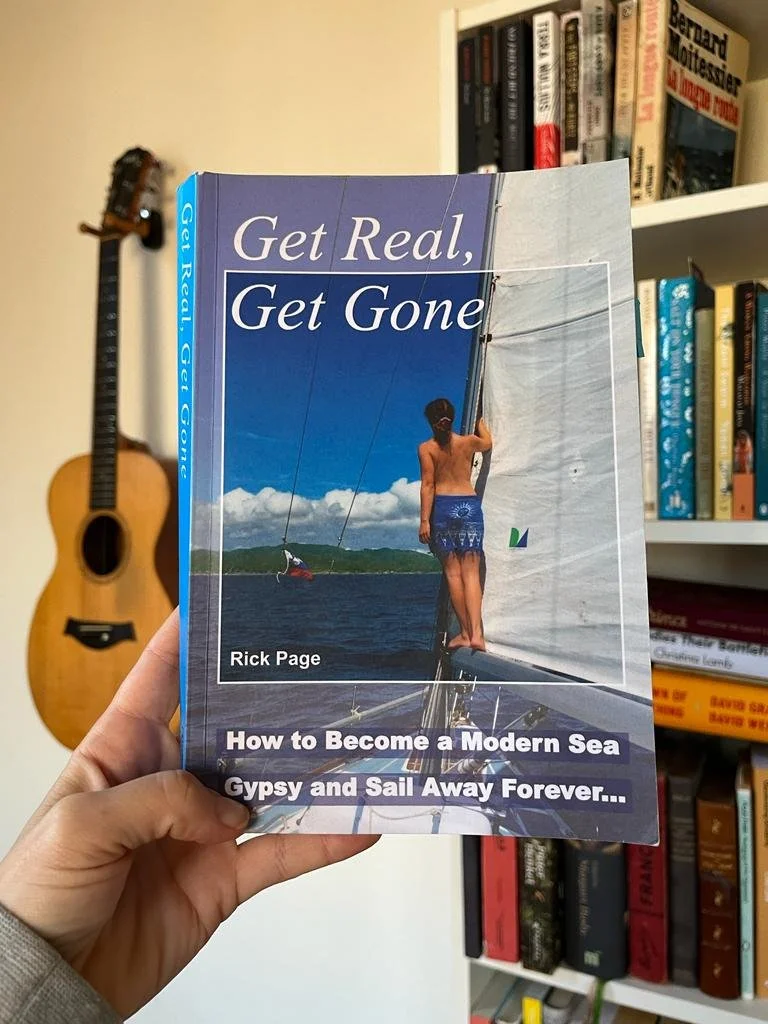
Photo: Angie Richard.
Book
Get Real, Get Gone - How to Become a Modern Sea Gypsy and Sail Away Forever, by Rick Page, is a terrific starter for wrapping your head around buying a good secondhand blue water cruiser on a budget. We’ve read this book inside and out several times. (We may receive a small affiliate kickback if you purchase this book from the link provided. It’s a great way to help our project and your own at the same time!)
Online Communities and Forums
When it comes to seeking advice on buying a secondhand boat, there are several websites and forums that offer valuable information, tips, and discussions. Here are five of the best ones to consider:
SailNet: SailNet is a popular online community dedicated to sailing enthusiasts. It has a robust forum section where you can find discussions on various aspects of boat buying, from choosing the right boat to negotiation tips. You can also connect with experienced sailors who are willing to share their knowledge.
Cruisers & Sailing Forums: This is a comprehensive forum that covers a wide range of topics related to sailing and cruising. There are many relevant sub-forums that we consider valuable resources for those in the market for a secondhand boat. You can ask questions, share your experiences, and learn from others.
Practical Sailor: Practical Sailor is a well-respected publication in the sailing community. While some content may require a subscription, they offer valuable boat-buying guides and reviews of used sailboats. Their insights are backed by rigorous testing and research.
BoatUS: BoatUS has a dedicated section on their website for boat buyers. It includes articles, checklists, and tips to help you navigate the process of buying a boat, including valuable information on inspecting used boats and understanding boat values.
Sailing Anarchy: While Sailing Anarchy is known for its edgy and irreverent style, its forums are a great place to find candid discussions about all things sailing, including buying secondhand boats. It's a place where sailors from various backgrounds and experiences share their insights.
Remember to participate in these forums and ask questions when you need guidance. However, always exercise caution and use your judgment when considering advice from online sources. It's a good practice to cross-reference information and seek professional advice when necessary, especially when dealing with significant financial transactions like buying a boat.
Boat Sales Websites
If you're like us and specifically looking to buy a boat in Europe, you can focus your search on websites that cater to the European boat market. Here are some of the best websites for buying boats in Europe:
Boat24: Boat24 is a popular European online marketplace for buying and selling boats. It covers a wide range of boat types, including sailboats, motorboats, and yachts. You can search for boats by location, boat type, and price range.
YachtWorld Europe: YachtWorld has a dedicated section for Europe, making it easy to find listings for boats available in European countries. It offers a comprehensive range of sailboats and powerboats.
Leboncoin: Leboncoin is a well-known online marketplace in France. Leboncoin allows you to search for boats and offers a range of listings from private sellers and dealerships. It's a popular choice for those looking to explore local boat listings in France and potentially find great deals within the country's vibrant boating community. As with any online marketplace, exercise due diligence when communicating with sellers and arranging boat inspections to ensure a safe and informed purchase.
Apollo Duck: Apollo Duck is an international classifieds platform that includes listings for boats in Europe. It features various boat types and allows you to search by country or region.
Scanboat: Scanboat is a European-focused platform that specializes in boats and yachts. It covers various European countries and provides detailed listings with photos and descriptions.
TheYachtMarket Europe: TheYachtMarket offers a European section where you can find listings for boats, yachts, and sailboats. It allows you to search by location and boat type.
YachtFocus: YachtFocus is a Dutch-based platform that features boats from various European countries. It provides detailed listings and advanced search filters.
Rightboat: Rightboat includes listings from boat dealers and private sellers across Europe. You can search for boats by location, boat type, and budget.
EYB - European Yacht Brokerage: EYB specializes in boat brokerage and offers a wide selection of boats in Europe. You can search for boats by location and boat type.
Finn.no: If you're considering purchasing a boat in Norway, FINN.no is a notable online marketplace to explore. FINN.no is a comprehensive platform that covers a wide range of listings, including boats and maritime equipment. It allows you to search for boats of various types, from sailboats to motorboats, and offers detailed listings with photos and descriptions. Whether you're looking for a boat to explore Norway's stunning coastal waters or venture out on its picturesque fjords, FINN.no is a valuable resource to find boats available in Norway. As always, when using online marketplaces, it's essential to communicate with sellers, ask questions, and consider arranging boat inspections to ensure a smooth and secure boat purchase in Norway.
Local and Regional Boat Dealerships: Don't forget to explore the websites of local and regional boat dealerships in Europe. They often feature their current inventory online, allowing you to find boats available in your desired location.
When using these websites, it's essential to communicate with sellers, ask questions, and consider arranging boat inspections, especially for used boats. Additionally, be aware of any local regulations and requirements related to boat purchases in the specific European country you are considering.
Elevate our adventure and be a part of positive change by supporting our Floating Stories Lab
Here's how you can get involved:
Power the Journey: Contribute to our project and help keep the sails unfurled! Support us via PayPal.
Join the Inner Circle: Dive deeper into our stories and receive exclusive content by subscribing to our Substack community.
Sail with Us: Become a Patreon and enjoy special perks while supporting our regenerative voyages.
Crew Up for Change: Explore partnership and sponsorship opportunities. Join us in creating a more sustainable and hopeful future.
Your involvement propels our journey, creating ripples of impact. Embark on this exciting voyage with us!