Trekking through the mystical island of Yakushima, Japan, reveals many of Mother Nature’s most sacred creations. Angie returns to the country she once called home, discovering old friends who have traded fast-paced city living for a more humble, natural existence.
On March 3, 2011, a triple disaster struck the northeast coast of Japan; an earthquake, a tsunami, and an unprecedented nuclear meltdown devastated life as I knew it. My family and I were living in the coastal village of Ichinomiya, Chiba, at the time of the disaster. We had a one-year-old son, with another on the way. At 2:46pm, on an otherwise crisp, uneventful day, a force shook the nation so ferociously, it changed Japan forever. More than 15,000 people perished, and entire villages were swept away. Ichinomiya was mostly left unscathed, at least from the naked eye. Beneath the capacity of human detection, however, blankets of radiation covered our town and filled our beloved Pacific Ocean.
Shortly after the first quake hit, loud speakers in and around our rural village summoned all residents to evacuate. We found sanctuary in cheap hotel rooms in the south, but after months passed and no one could forecast the future of Fukushima, my family eventually decided to relocate back to Australia, where I would birth my second son safely and raise my boys without the constant threat of radiation exposure.
Tomoko and Akifumi Kato, along with their two children, Marisa and Hideki, were the closest family I had in Japan next to my own blood. Tomo and I had breastfed each other’s babies during tag team surf days on the beach in Chiba, and spent our early days as new mothers learning how to grow small vegie plots and live more simply. Not long before the disaster, the Katos had completed building their dream house atop a grassy noll in Ichinomiya, overlooking the Pacific Ocean. Avid surfers, as we all were in northern Chiba, the Katos fled the disaster first to family property in Saitama, just west of Tokyo, but eventually made a brave decision to jump on the long-haul ferry from Tokyo and relocate to a magical island called Yakushima in the south of Japan. There, they could rebuild their lives, far away from Fukushima.
Two months past the five-year anniversary of the Tohoku disaster, and I am sweating in the back of a taxi listening to my elderly driver speak stories of volcano eruptions in a southern Japanese dialect that I don't quite understand. He is speeding me to Kagoshima’s cargo ship terminal, some 50 minutes in the opposite direction from where I’d stepped off the ferry. As he talks, I glance out the window and notice, with some bewilderment, the island’s iconic volcano Sakurajima erupt, blowing a cloud of grey smog over the otherwise untainted blue sky. Announcing my discovery, the taxi driver pulls over so I can take a few snaps on my iPhone, then we hurry off to the cargo port. The cargo ferry itself is an old, rusting ship loaded with shipping containers full of food and supplies to be delivered to the southern islands.
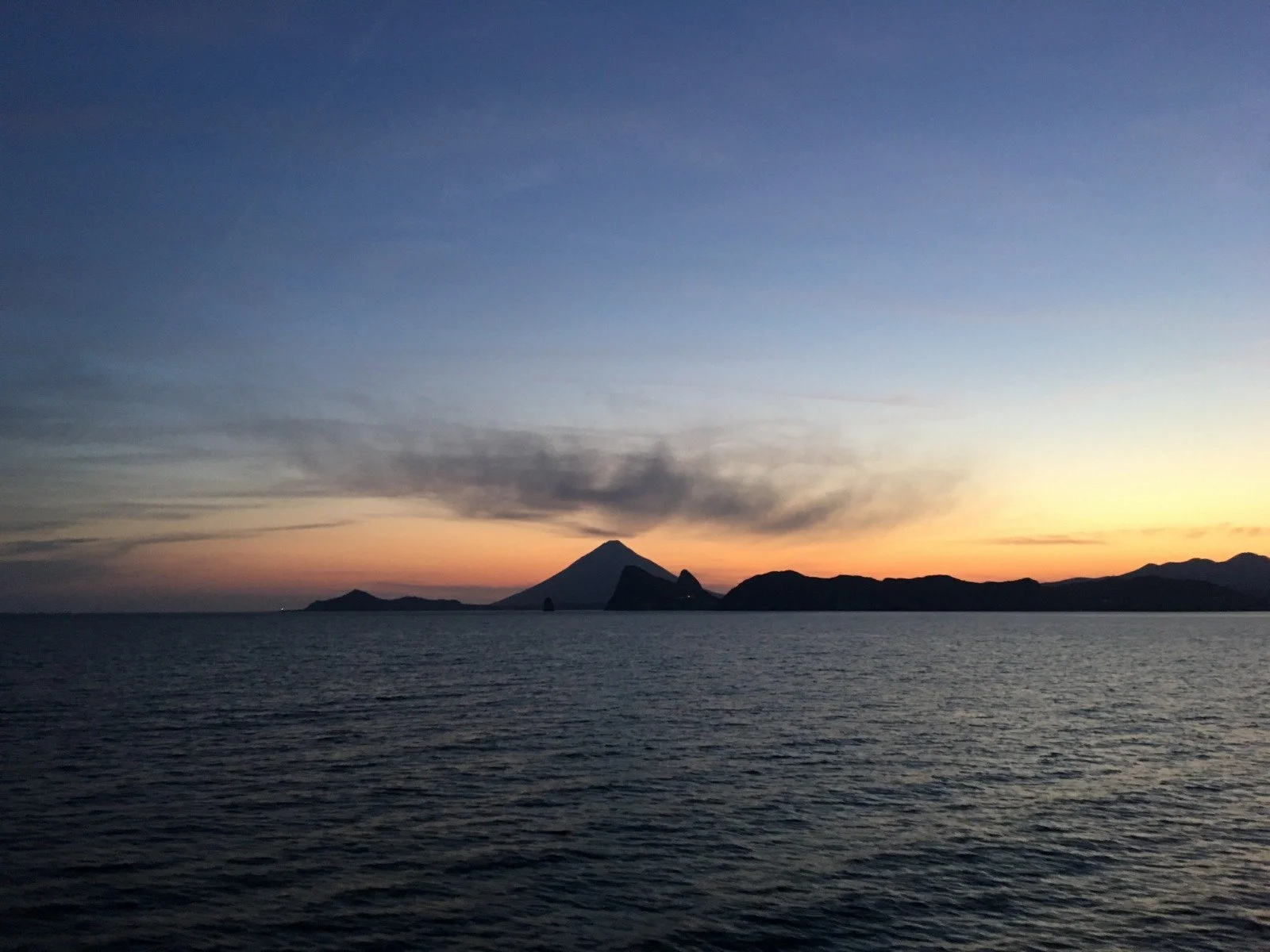
Yakushima is actually a short two- hour jet-ferry ride from Kagoshima, but I’m drawn to the opportunity to traverse the sea from dusk until dawn on the cargo ship, sleeping overnight on board in the port of Tanegashima. I make friends with four Kagoshima firemen and join their dumplings and rice picnic on deck as the sun melts into its own eruption of pastels atop the land we leave behind; dolphins frolic in the ship’s wake. Once night falls, I roll out my yoga mat inside the ship’s public passenger space and wrap myself in my alpaca blanket I’d bought from my last trip to Peru, and easily fall asleep.
The ship approaches Yakushima a couple of hours after dawn, the island a large mass of deep-green forest floating on calm water. Tomo is standing at the edge of the dock, waving like her life depends on it, and tears begin to stream uncontrollably down my cheeks. It’s been five years since our last embrace, but it soon feels as though a day hasn’t gone by.
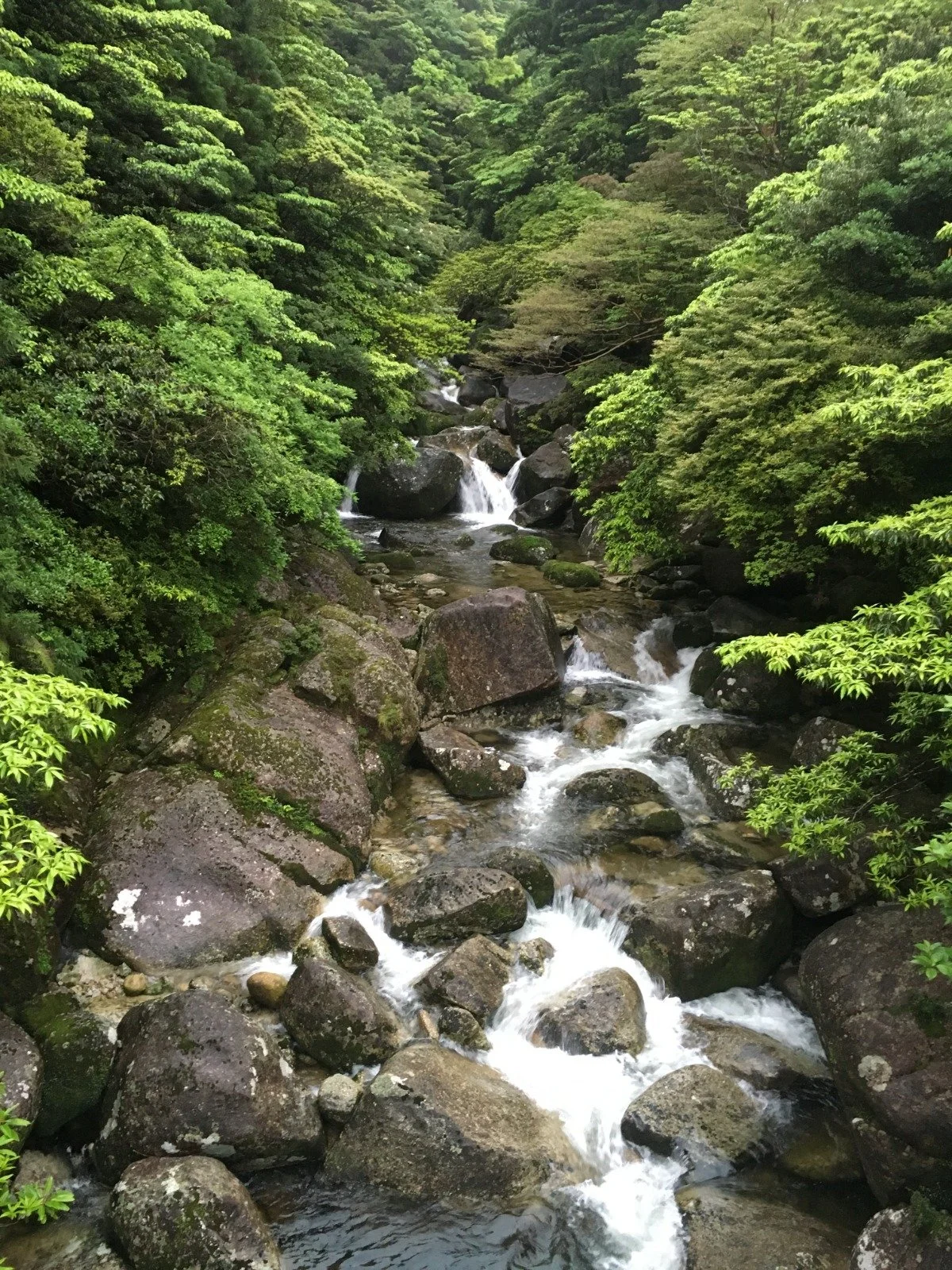
Tomo and Aki shipped their family to Yakushima because if they were going to start their lives over, they wanted to do it in the most sustainable way possible, immersed in nature, and without the temptations of department malls and convenience stores that plague their country. A little more populated than I had expected, Yakushima’s 13,000- plus humans reside mostly along the rocky granite coastline. Inland, much is reserved for the enchanting forests that coat this mystical island, best known for its abundance of Japan’s national tree yakusugi, or cedar, thousands of years old.
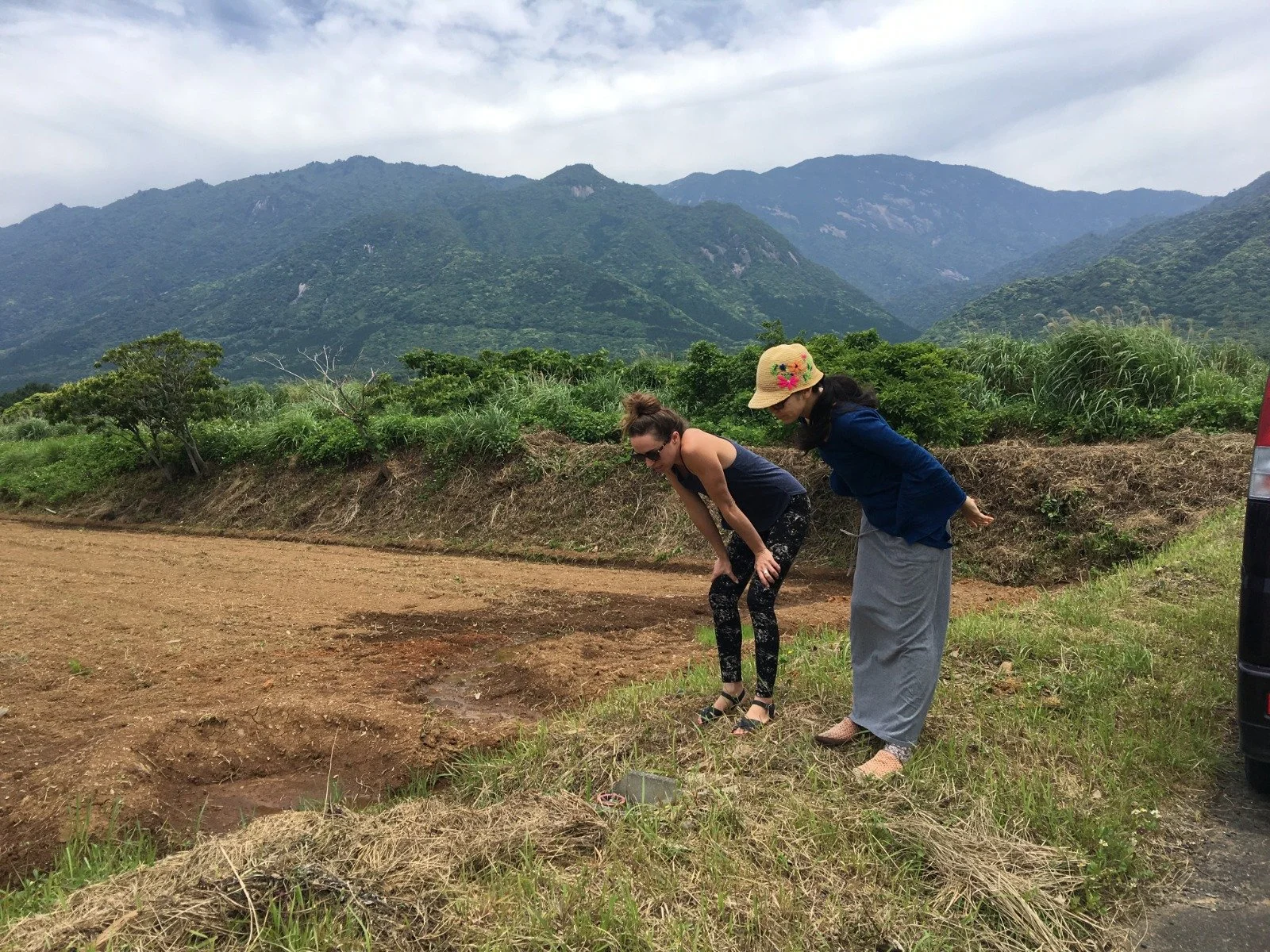
The Katos live on the south of the island, popular with other ‘blow-ins’ from the mainland, all looking to live a more simplistic, sustainable lifestyle. We first visit the Kato’s organic tanbo (rice field), a small plot of farming land donated by local elders who are happy to see young parents interested in traditional methods of rice cultivation.
“Many of their kids have moved to the cities in Kagoshima, or even Tokyo, more interested in the pace of modern society than in traditional farming,” explains Tomo. “It’s hard work. We choose to farm our rice without pesticides or chemicals, so in the first few years crops are slim, but as the years pass the crops grow taller, stronger.”
There is surf in Yakushima but the waves only really break well enough to ride a few times a year due to the deep water troughs that surround the island. Tomo and Aki were thus forced to redirect their passion for surfing to other outdoor pursuits; Tomo has found love for yoga and meditation, teaching beginners’ classes once a week to the locals by donation, but the family’s primary focus is their natural guiding company, Greenmount Travel Japan.
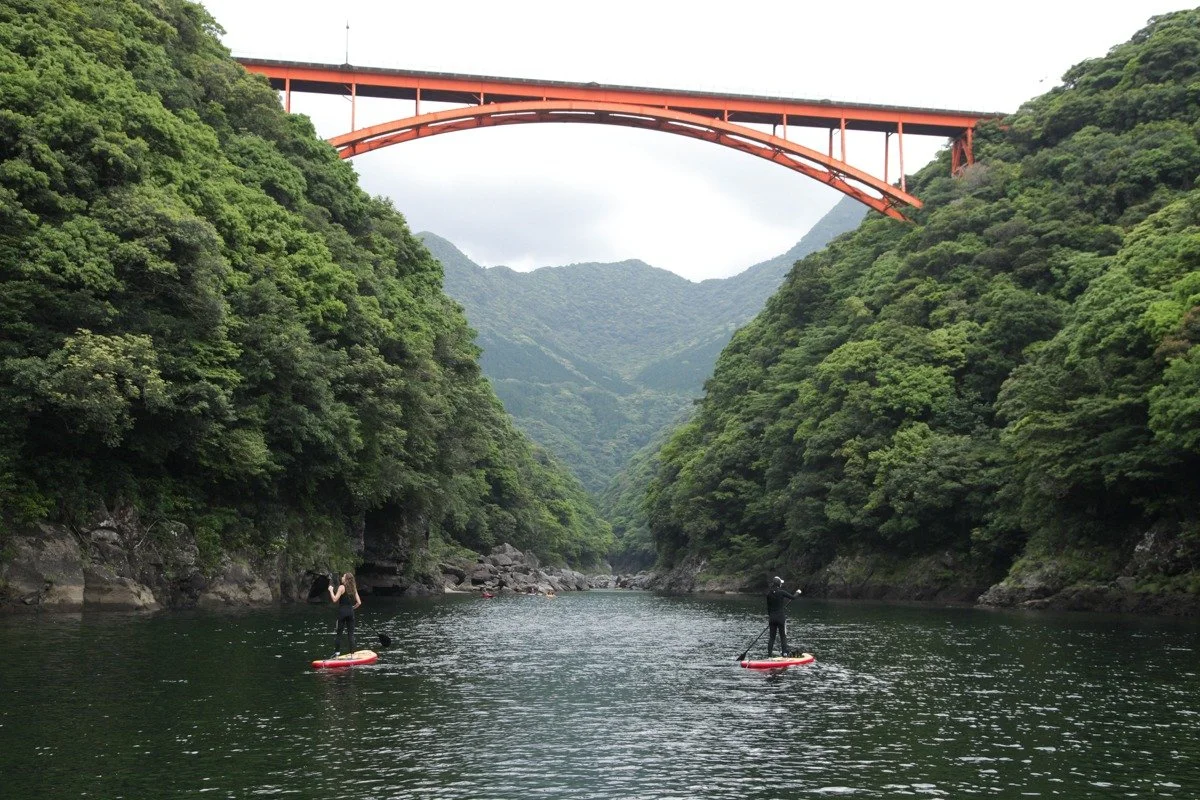
Aki, once a Tokyo businessman, is now a natural-born adventurer, spending more time sleeping outdoors in the mountains each week than at home, guiding his share of the island’s annual quota of 300,000 tourists. Visitors to Yakushima are predominantly Asian, with many Japanese travelling south for short two- to three-day visits to escape city life and reconnect with nature. Greenmount also runs SUP (stand-up paddle) tours up the Anbo River, of which I am to enjoy during my stay.
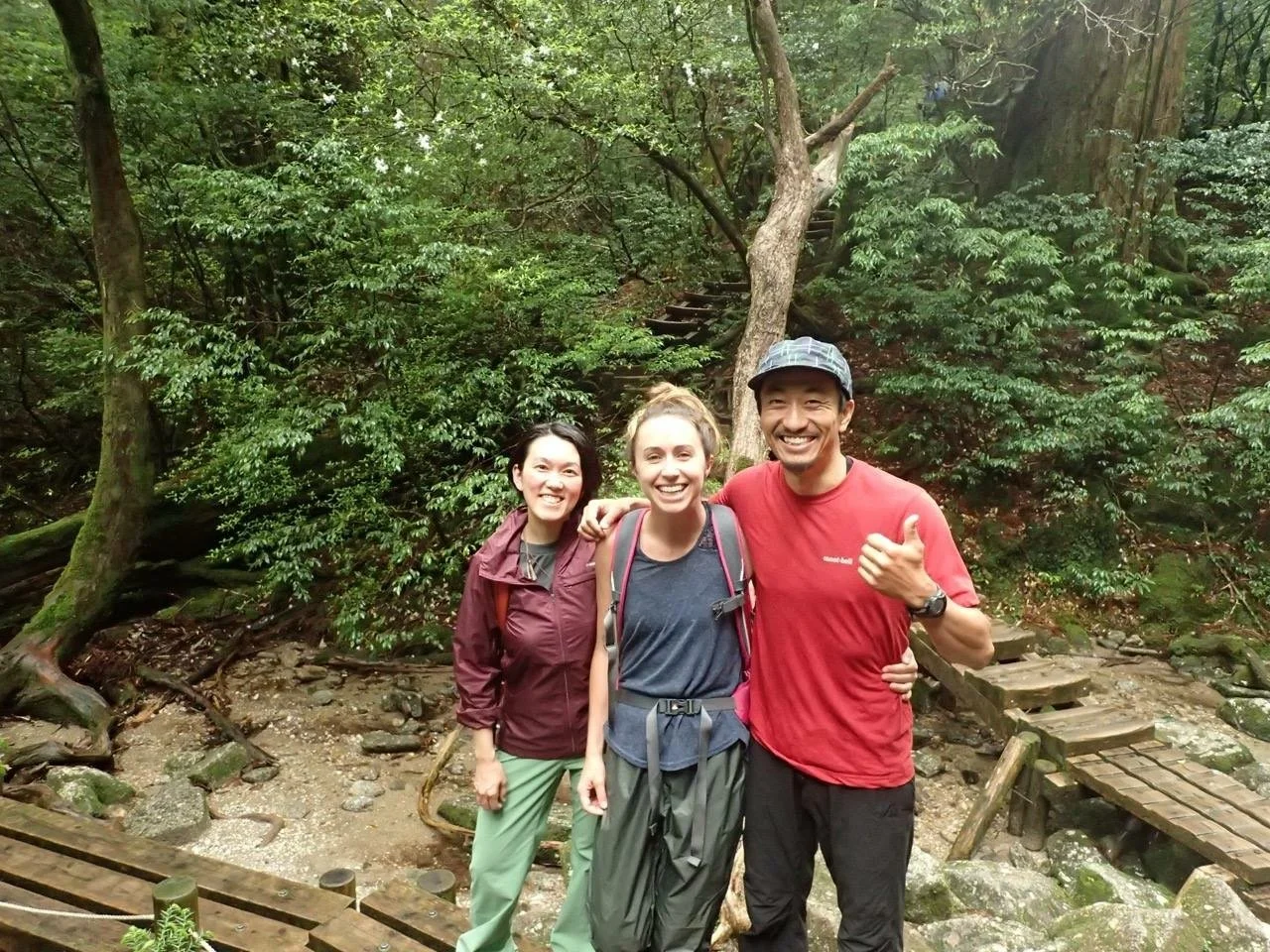
While Yakushima was only designated a UNESCO World Heritage Site in 1993, the island has attracted artists, naturalists, and outdoor lovers in solid numbers for over a century. Renowned Japanese animator Hayao Miyazaki is said to have spent multiple summers in Yakushima renting a pension on the Anbo River, sourcing inspiration from the forests for his cult classic Princess Mononoke. Back in 1914, English naturalist Ernest Henry Wilson first visited the island to see for himself the “fine forests of wild Cryptomeria” and a tree stump cave has even been named in his honour: Wilson’s Stump.
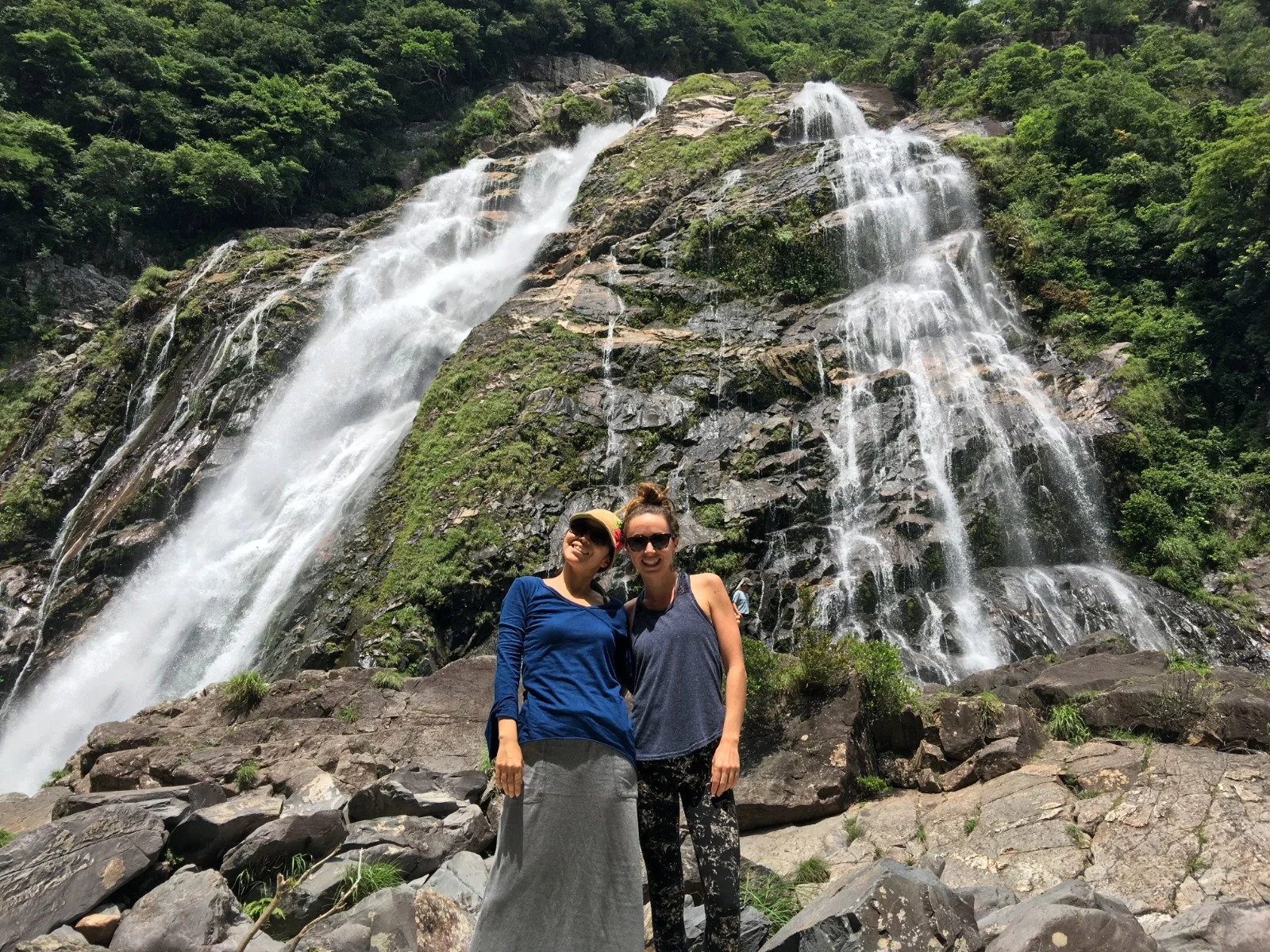
My first day winds down with a visit to the towering Ookonotaki waterfall, a powerful recharge spot where Tomo and I sit in quiet contemplation, tapping into the natural energy source emitting from the thundering falls. As we leave, we stop by a natural water spring bursting out of a hole in a rock face aside the road so I can fill my water bottle with pristine mountain water of which Yakushima has an oversupply.
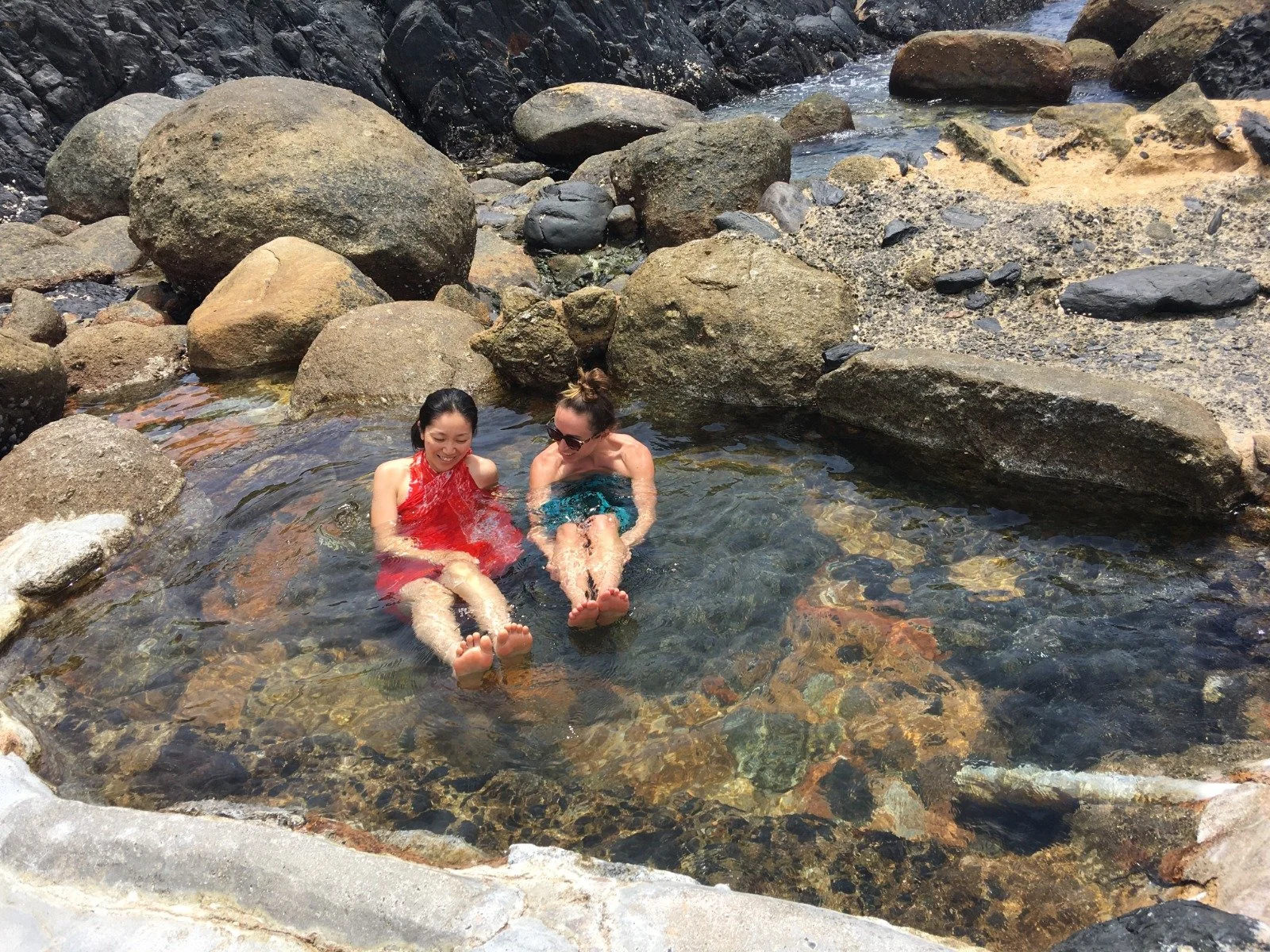
Sharing my love for Japanese onsen (hot springs), Aki drives us back to the coast as Tomo confirms the tide will be just right for the Hirauchi Kaichu Onsen, natural volcanic pools poised right on the ocean’s edge. Swimwear is prohibited in Japanese hot springs; however, due to the number of tourists who visit this area, the local women have succumbed to wrapping themselves in cloth or sarong to minimise the gawking foreigners. The hot pools are a welcome to my fatigued traveller’s body; light rain falls from the sky, a cool relief to balance the hot volcanic bubbles.
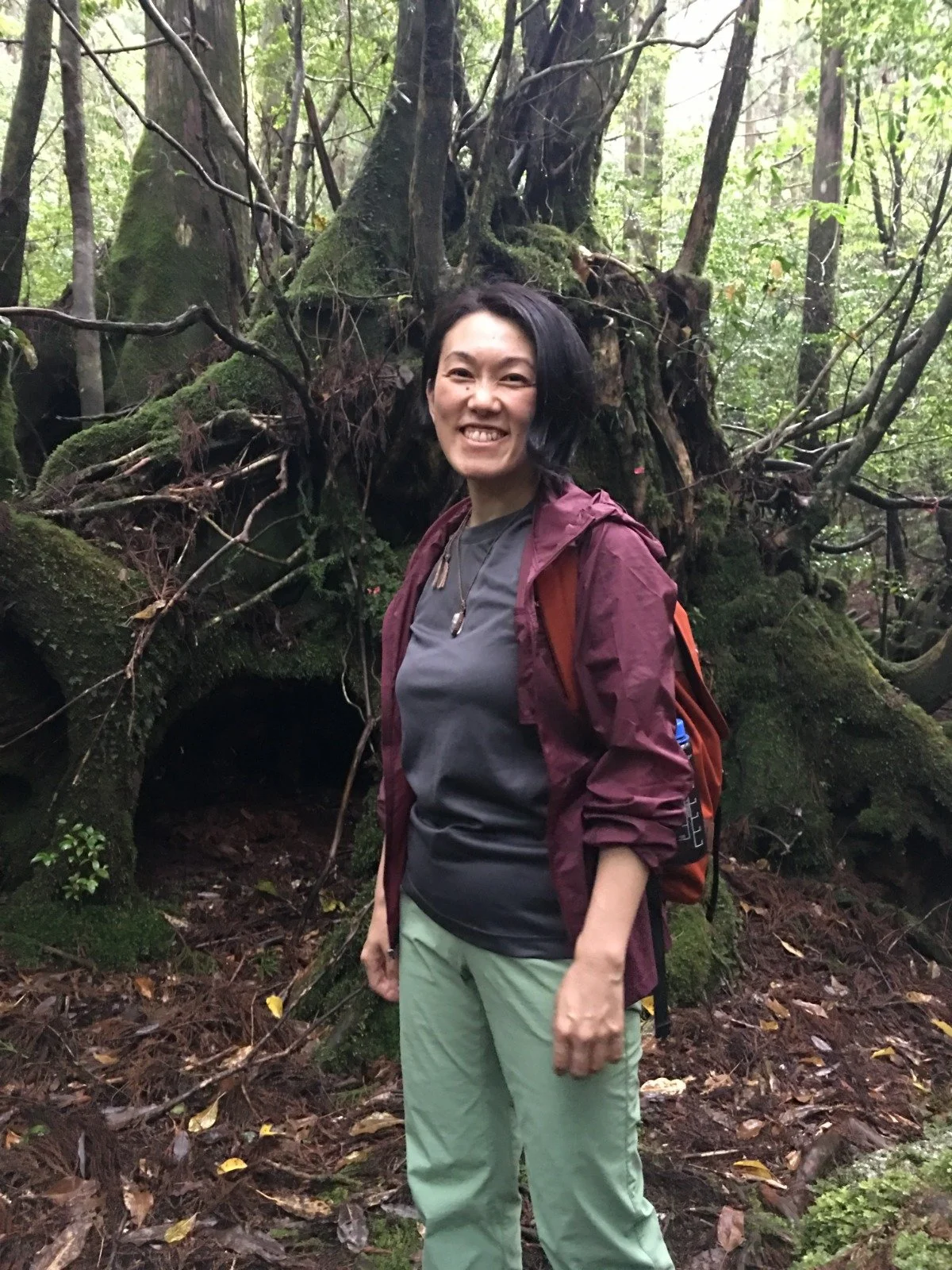
A few days into my trip and another old friend appears. Kumiko was a major influence in my initial move to Japan. Kumi, whom I had grown up surfing and snowboarding with, was struck down with a neurological malfunction of the brain that left her unable to walk for several years and she was confined to a wheelchair and told by doctors she would never walk again. Defying all odds, Kumi healed naturally with the help of sheer willpower and a natural therapist, and had trekked Machu Picchu by foot before stepping off the ferry to meet me in Yakushima.
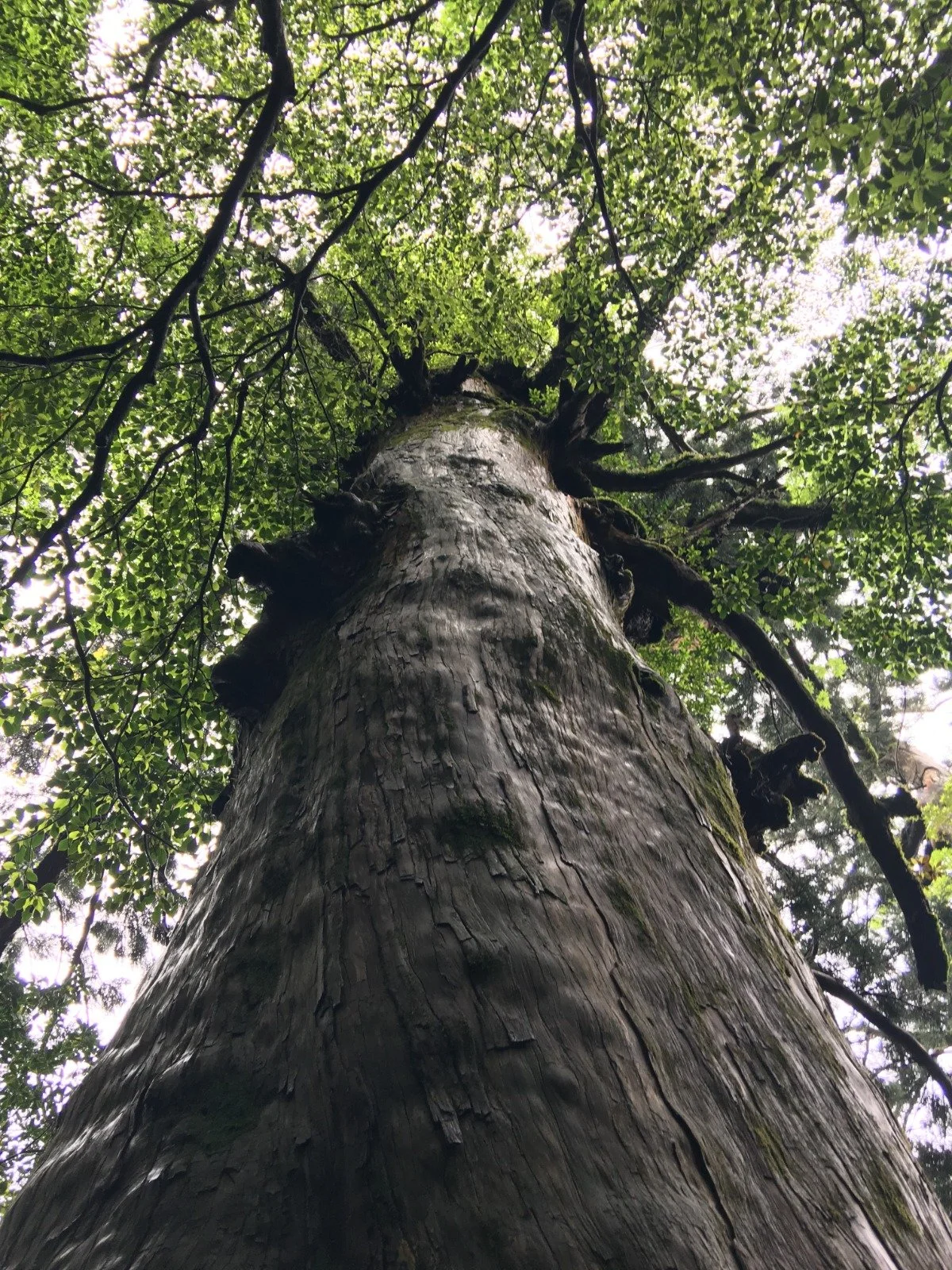
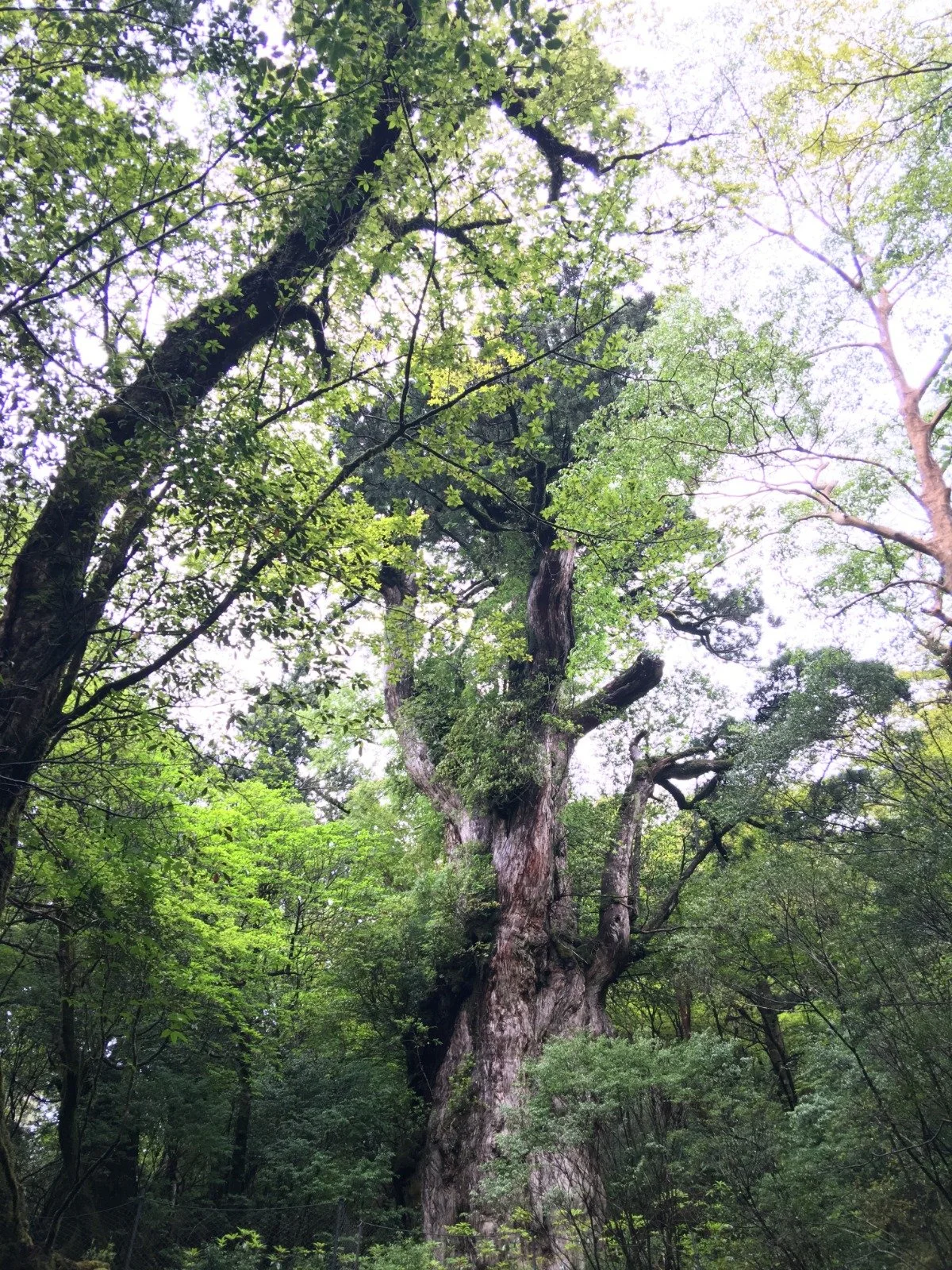
At daybreak, we set off on our 10- hour hike to Jomon Sugi, one of the island’s largest cedar trees, estimated to be between 2,170 and 7,200 years old. The forest is damp from fresh rain, and the beautifully potent smell of fresh cedar fills my nostrils. It’s well known that extracted cedar oil has amazing health properties, but being wrapped in a forest of thousand-year-old cedar trees is on a whole other level of healing; you’re vibrating on another dimension.
The trek onward is neither easy nor overly hard, and we are at the observation deck built to protect Jomon Sugi from tourists by mid morning. The tree itself is remarkably giant, but the deck gives the experience more modernisation than expected, and we opt to eat our bento (packed lunch box) back down the path a little, at the trunk of another breathtaking tree we’d been enchanted by on the walk up. The final hour of walking along the soaked wooden sleepers of a now rarely used small railway track attacks my flaky hips, and by the time we reach the descending bus, I’m spent.
Back at Tomo’s, we pick up her youngest son, Hideki, now five years old, and he directs us to the quaint local bathhouse Onoaida Onsen. For us, the fee is pocket change of a couple of hundred yen (approximately $2), and we take a basket Tomo has packed with towels, shampoo, soap, and enter the steaming women’s half of the bathhouse. The unfiltered natural spring water is piping hot at around 50 degrees (Celsius), so we start by crouching over the bath’s edge, gently splashing the scorching water over first our legs, then upper body, and finally face, scrubbing the day’s walk off with handmade soap before taking the plunge into the bath.
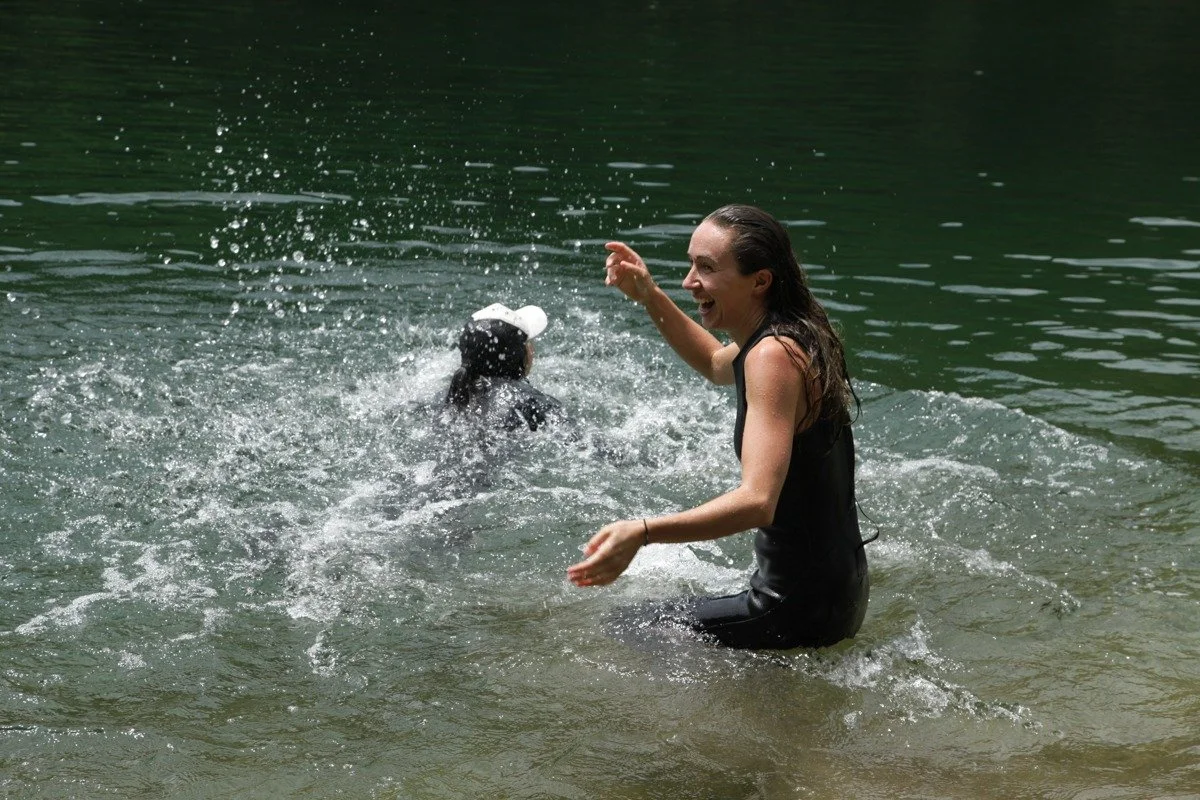
I’ve been to some spectacular hot springs all over Japan in the past decade, but Onoaida offers such traditional charm that I relax easily into the sweltering heat. Like much of Yakushima, this feels like home. Kumi leaves the next day, but I stay on the island another week, lapping up life at the locals’ pace. Every day is an adventure, with too many to write about. I join Tomo for a day of SUP yoga up the crystalline waters of the Anbo River, attend some local yoga and raw food classes, eat the most divine island and mountain vegetable meals, and one morning, Tomo and I even make the hour drive for a ‘grovel’ surf. It’s our first surf together for over five years, and while the conditions leave much to be desired, the scenery is spectacular. But it's the locals who really leave me smiling, as their kindness in the water is second to none. Despite how rarely they get to slide upon their favourite liquid playgrounds, they share waves amongst each other and with me, chit-chatting and laughing in between each set.
When my time comes to finally return to the mainland, this time by jet ferry, I am filled with emotion, and not sure when I’ll see my best friends again.
As I board the plane bound for Tokyo, where I am due to visit the village in Chiba I once left behind, I feel immense happiness for my friends who have turned the depths of disaster into new beginnings, swapping materialism for nature, trading a self-serving existence to serving Mother Nature.
On the plane, I pull out a book written by Ernest Henry Wilson, titled A Centenary Anniversary of Yakushima World Heritage. I flip to a random page and read: “When you destroy the forests you upset the balance of nature. The present generation must remember that it only holds the forests in trust for future generations.” Such is true of both the forests and the ocean, a song Japan knows only too well, and hopefully its government, and the people at large, can learn from their collective past mistakes.
*This article was originally published in Australian Natural Health Magazine in 2016. Download the original HERE (PDF).
Further Resources
Green Mount Japan, is Aki and Tomo’s outdoor guiding company. Tomo speaks English and they both recently completed building accommodation on their property, nestled amongst lush nature.