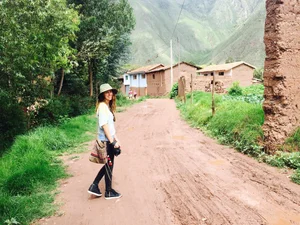
When images of activists defacing Stonehenge filled my social media feeds, I felt immense sadness. A few years ago, I encountered Lynne Kelly’s work, The Memory Code: The Traditional Aboriginal Memory Technique That Unlocks the Secrets of Stonehenge, Easter Island and Ancient Monuments the World Over. This book explores how ancestral knowledge was passed down through generations with the assistance of memory places like Stonehenge. Among this knowledge were codes of conduct for humans to participate as nature, a wisdom many industrialized cultures have today forgotten. The irony was not lost on me: activists defacing a monument that could help today’s citizens retrieve the very ancestral knowledge needed to live regeneratively. From this perspective, the activists have forgotten this crucial wisdom as much as the oil giants they are protesting against. What will it take to learn how to become indigenous to place today?

Stonehenge.
In the same week, hope also crept into my media feeds: the exploration of Regenerative Development and Design (RDD) as a meta-discipline to elevate governance, innovation, and planetary health (Gorisen et al., 2024). RDD offers a transformative approach that transcends sustainability, aiming for thrivability grounded in a deep understanding of living systems - where humans participate as nature negentropically (entropy-reversing), thereby fostering the inherent capability to grow into new levels of order, complexity, and vitality. In this, “regenerative development is about seizing the potential, born of crisis, for transforming our role as designers, planners, builders, and citizens”.
This approach is comprehensively explored in the pivotal new study Regenerative Development and Design: Its origins, essence, practice and potential as a meta-discipline to elevate governance, innovation and planetary health, by Leen Gorissen, Karla Bonaldi, Piet Haerens, and Lénia Rato, commissioned by the Belgian Federal Public Service for Health, Food Chain Safety, and Environment.
Understanding Regenerative Development and Design (RDD)
Regenerative development and design (RDD) is a multidisciplinary meta-discipline “anchored in living systems understanding, which forms the basis for a distinctive thinking technology that can be used to develop, maintain, and promote value adding processes designed to benefit both people and their environments.”
RDD enables humans to participate in living systems - whether they be communities, ecosystems, or organizations - that have the capacity to evolve toward increasing states of health and vitality. Integrating modern and ancient science and practice with components of sustainability - ecological, social, cultural, spiritual, and geophysical dimensions - RDD simultaneously “addresses the root causes of unsustainability: our ways of thinking and views about how the world works”.
The study emphasizes that “regenerative development is not about sustaining what is or restoring what was. Rather, it is about creating thriving living systems - social-ecological systems such as places, organizations, communities, and ecosystems - that have the capacity to evolve toward increasing states of health, vitality, and abundance over time.”
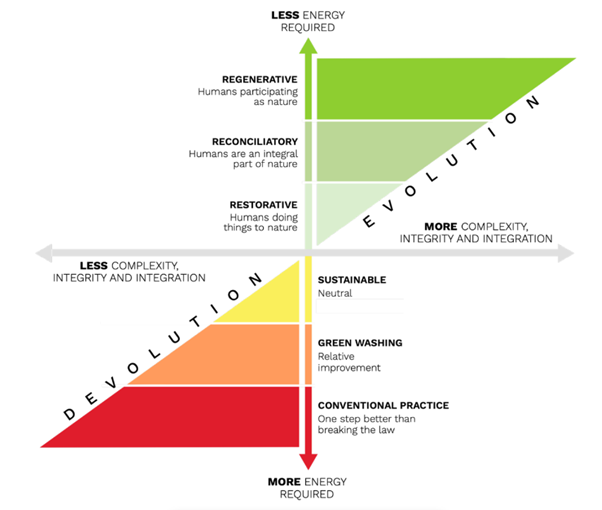
Illustration by djungle.be based on the original diagram of Regenesis (2012).
It illustrates the difference between evolution which leads to more order, integration and ableness and devolution which leads to more disorder, disintegration and less ableness.
Source: https://www.health.belgium.be/en/news/regenerative-development-and-design
The Need for a Paradigm Shift
To truly embrace regenerative development, we must radically transform our mindsets. The conventional approach to problem-solving - focusing on symptoms rather than underlying causes - must be replaced with a holistic perspective that views humans and economies as intrinsic parts of nature.
David Bohm, a significant figure in theoretical physics, posits: “If we don't do anything about thought, we won't get anywhere.” This sentiment is echoed in the study, which highlights that “if we are not conscious of how we are thinking, of the sources of our thoughts and beliefs, we are trapped in the past, servants to old, outdated paradigms.”
Shifting our baseline thinking is critical to engaging with the array of social and ecological issues our societies face today. The study shares insights from Soga and Gatson (2018), who write that in the absence of past information or experience with historical conditions, each generation becomes accustomed with the conditions in which they are raised.
Strikingly, I notice this with my own children, and it sparks me to think of the crucial need for creative practice - especially stories - that trigger a remembering of our own ancestral knowledge and how humans can thrive AS nature on a flourishing Earth.
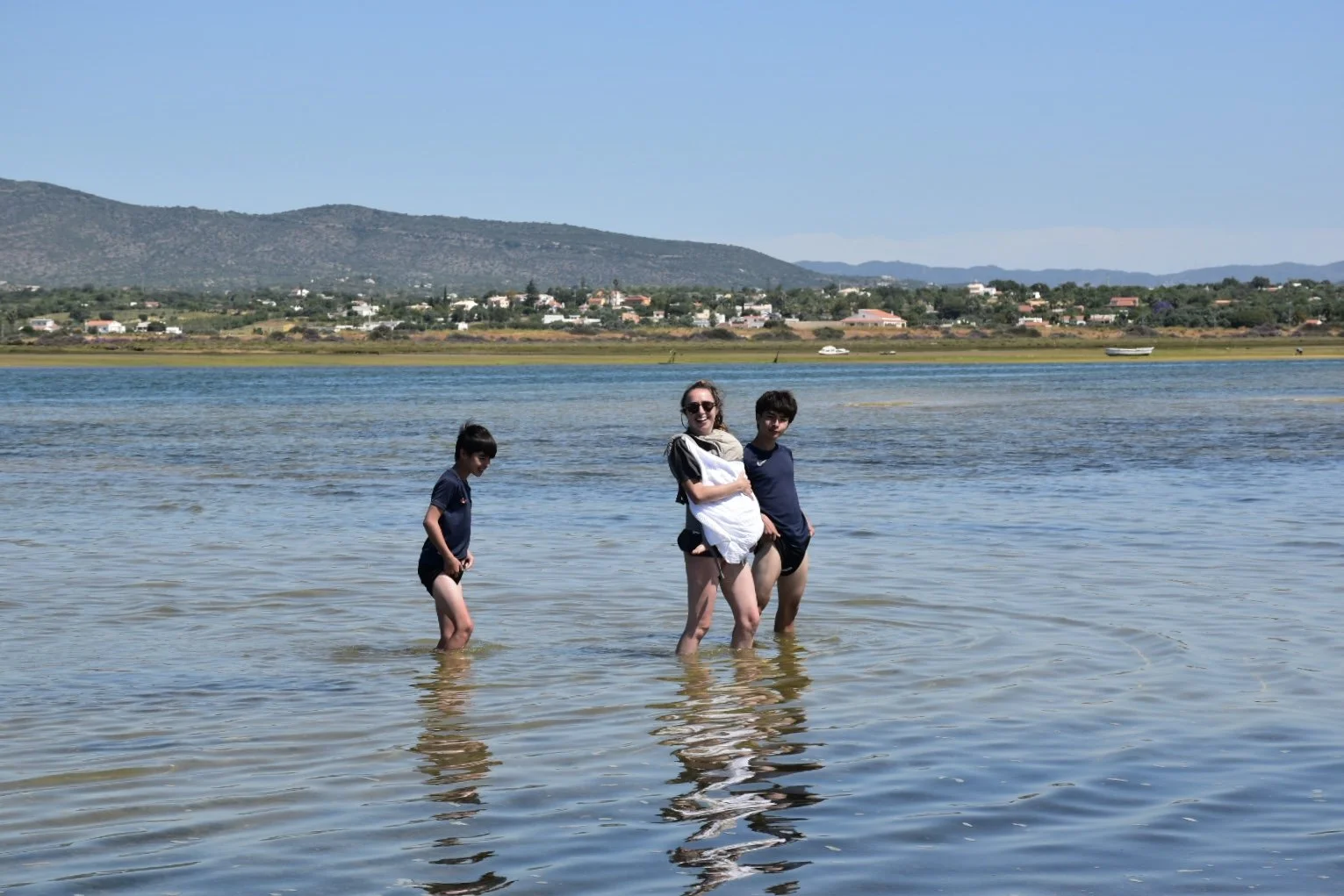
Taking a walk with my children in the Algarve, Portugal. A region abundant with aquatic life, what are the stories of abundance from eras past?
The need for a paradigm shift thus presents great opportunities for artists, creative practitioners, storytellers and designers. Indeed, our Floating Stories Lab initiative was born out of contemplating how deeply immersive place-based experiences can radically shift our perspectives, influencing our creative capacity and enabling regenerative work to emerge.
“Regenerative development is not a natural practice for most people in the western world. We are steeped in a mechanistic worldview, and our default beliefs, thinking mechanisms, and actions emerge from there. Regenerative development ultimately grows from individuals who consciously commit to changing their own worldviews and ways of being in the world…Learning how to be a regenerative development practitioner or regenerative inhabitant of a living system is not easy. It is as much an art as it is a science…It will take a new kind of practioner who possesses new skills, mindsets, and aspirations and constantly nurtures these” (Gibbons et al., 2018).
Principles of Regenerative Development and Design
The study outlines several key principles and characteristics of regenerative projects and processes:
Design for Evolution: Every living system has the inherent possibility to move to new levels of order and complexity. RDD focuses on enhancing this evolutionary capability, aligning human activities with the natural processes of growth and development.
Partner with Place: Understanding and working within the unique context of each place is fundamental. This involves recognizing the distinct ecological, cultural, and social dimensions of a location and leveraging them for regenerative outcomes.
Living Systems Thinking: This approach builds on the principles of living systems science, emphasizing the interconnectedness and interdependence of all life forms. It requires seeing the world in terms of relationships and processes rather than isolated entities.
Potential Over Problems: Regenerative development starts from potential rather than problems. By focusing on what could be rather than what is wrong, it opens up a range of possibilities for creating healthier, more vibrant systems.
Integrating Modern and Ancient Wisdom
One of the unique aspects of RDD is its integration of modern science with ancient wisdom, and the acknowledgement that regenerative paradigms are a worldview of Indigenous peoples. The study draws on insights from biology, quantum physics, systems theory, complexity science, and developmental psychology, as well as Indigenous knowledge and Eastern spiritual traditions. This integrated approach provides a comprehensive framework for understanding and working with the complexities of living systems.
The study notes, “The concepts that inform regenerative thinking have long-established philosophical underpinnings, including from Indigenous, Eastern, and Western thought, and are still embodied in the practices of certain Indigenous cultures around the world."
“Cultivating an understanding of traditional Indigenous wisdom may help to awake the ancestral knowledge that modern societies will need if they are to transition beyond degenerative ways of living.”
Of note is the emphasis on the necessary inner work required to enable regenerative practice. The study cites Professor of Aboriginal Education Jean-Paul Restoule and colleagues (2010) observation:
“Indigenous researchers are well aware that who we are matters immensely to how we approach our research, as well as what we may see when looking at a research question. One way in which Indigenous research is distinct from other research approaches is that, in locating self, we identify ourselves not only by our social markers, such as gender, but we also locate ourselves in relation to spirit.”
The study also acknowledges the important work of Robin Wall Kimmerer in sharing the guidelines for Honorable Harvest that have been passed down through generations amongst Potawatomi Nation people. Rather than re-quote her guidelines in text, I share her popular TED X talk below.
Real-World Applications and Impacts
RDD is (and must be understood as) much more than a theoretical framework; it involves practical applications across various fields. Examples include regenerative agriculture, ecological land-use planning, and community development. These initiatives demonstrate how RDD can lead to tangible improvements in environmental health, social well-being, and economic resilience.
The study highlights several successful projects, such as the use of permaculture principles in urban planning and the implementation of regenerative practices in corporate settings. These examples show that regenerative development can create systems that are not only sustainable but also capable of continuous growth and improvement.
Our Floating Stories Lab studio seeks to expand upon qualitative research of successful real-world applications and impacts of RDD, with a particular focus on systems thinking. We acknowledge that individual case studies cannot be used simply as blueprints to exploit and scale; the uniqueness and diversity of each living system much be respected, and as such, RDD projects should be place-based and centered in co-creationships.
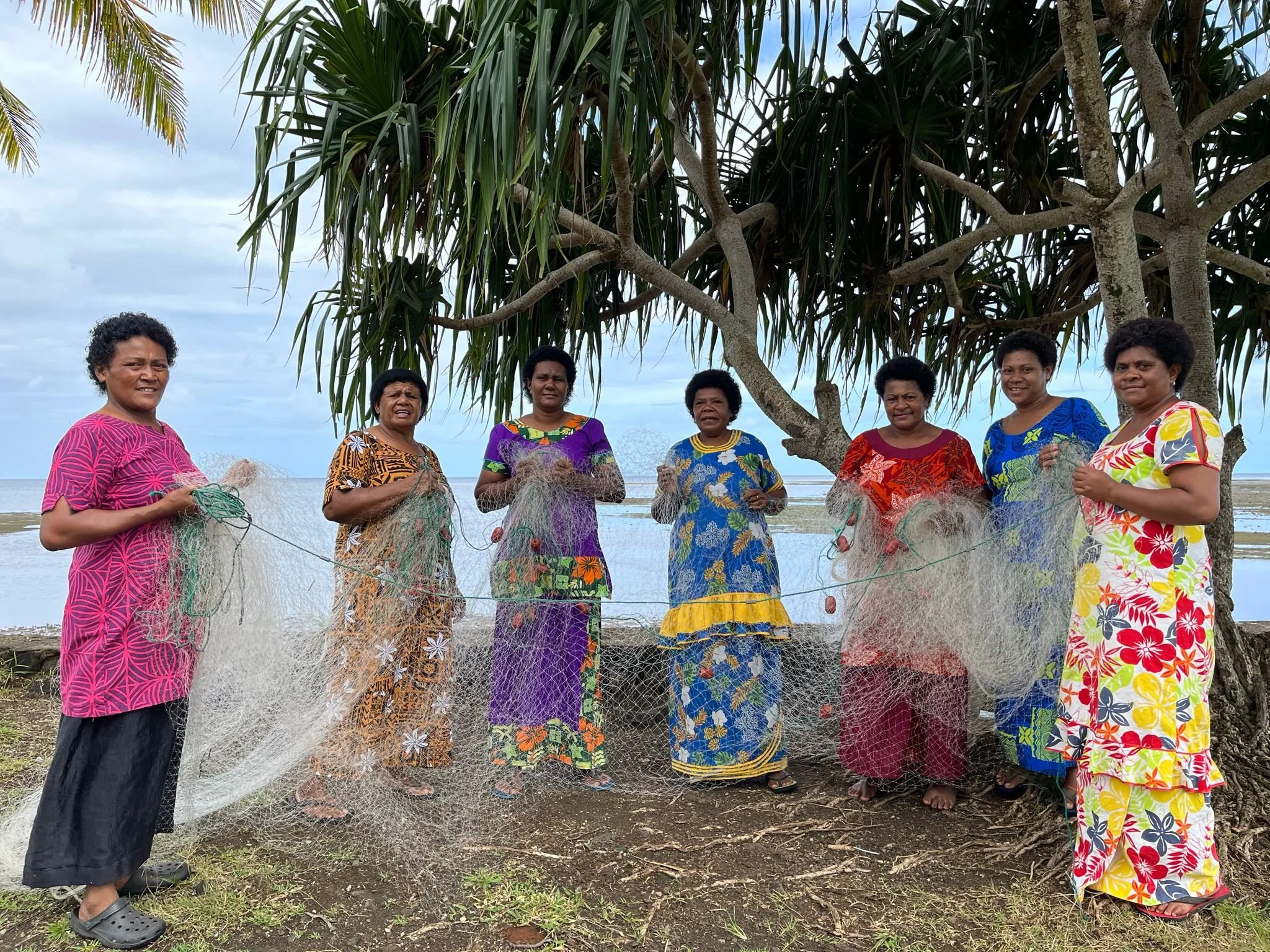
Gauans (people of Gau Island) are dedicated to caring for their lush Gau Island. They created the Lomani Gau project over a decade ago - coordinated community-led conservation, sustainable development and regenerative management efforts - to strengthen their custodianship responsibilities to the land and its surrounding marine environment, which they hold in trust for future generations.
Shifting Practices in the Boating Industry
Unpacking this study further within our Regenerative Tides initiative, we believe the boating ecosystem stands to benefit significantly from adopting RDD principles. Fiberglass boats, while popular for their durability and performance, pose significant environmental challenges due to their non-biodegradable nature and the pollution they create during production, use, and disposal.
By making a conscious and transformative shift towards regenerative development, boat builders and consumers alike can consider how we can collectively contribute to a healthy ecology, society and economy. This includes the development and use of biodegradable materials, the implementation of circular economy principles to ensure that boats are designed for disassembly and recycling, and the adoption of production processes that minimize environmental impact.

Our journey of self-building a Wharram wooden catamaran will see us exploring alternatives to glass reinforced plastic (GRP, better known as fiberglass), informed by recent scientific findings on the negative environmental impact of this material (Ciocan et al., 2020). Wherever possible, we seek to use locally sourced and bio materials, prioritize renewable wood species, and will be documenting our process of research and discovery throughout the boat build.
Moreover, the industry can draw inspiration from the “kinship mind” concept (Yunkaporta, 2019), fostering a deeper connection with the aquatic ecosystems we depend upon to thrive. This mindset encourages manufacturers, users, and regulators to view their actions as part of a larger ecological narrative, promoting stewardship and long-term sustainability.
A Call to Action
The transition to regenerative development requires a collective effort to rethink our relationship with the natural world and redefine our role within it. This shift is not just about adopting new practices but about fundamentally changing how we perceive and interact with living systems.
As the study concludes, "Real change will only begin when we realize that we are the Earth regenerating herself." By embracing regenerative development and design, we can become active participants in creating a thriving, resilient future for all life on Earth.
Regenerative development offers a powerful framework for addressing the complex challenges of our time. It calls for a radical transformation in our thinking, emphasizing the need to align human activities with the principles of living systems. By doing so, we can move beyond sustainability and towards truly regenerative futures.