When we began our citizen science initiative Regenerative Tides: Sailing for Solutions (ReTISS), we set out to understand:
What happens to boats when their sailing life ends — and who is paying attention?
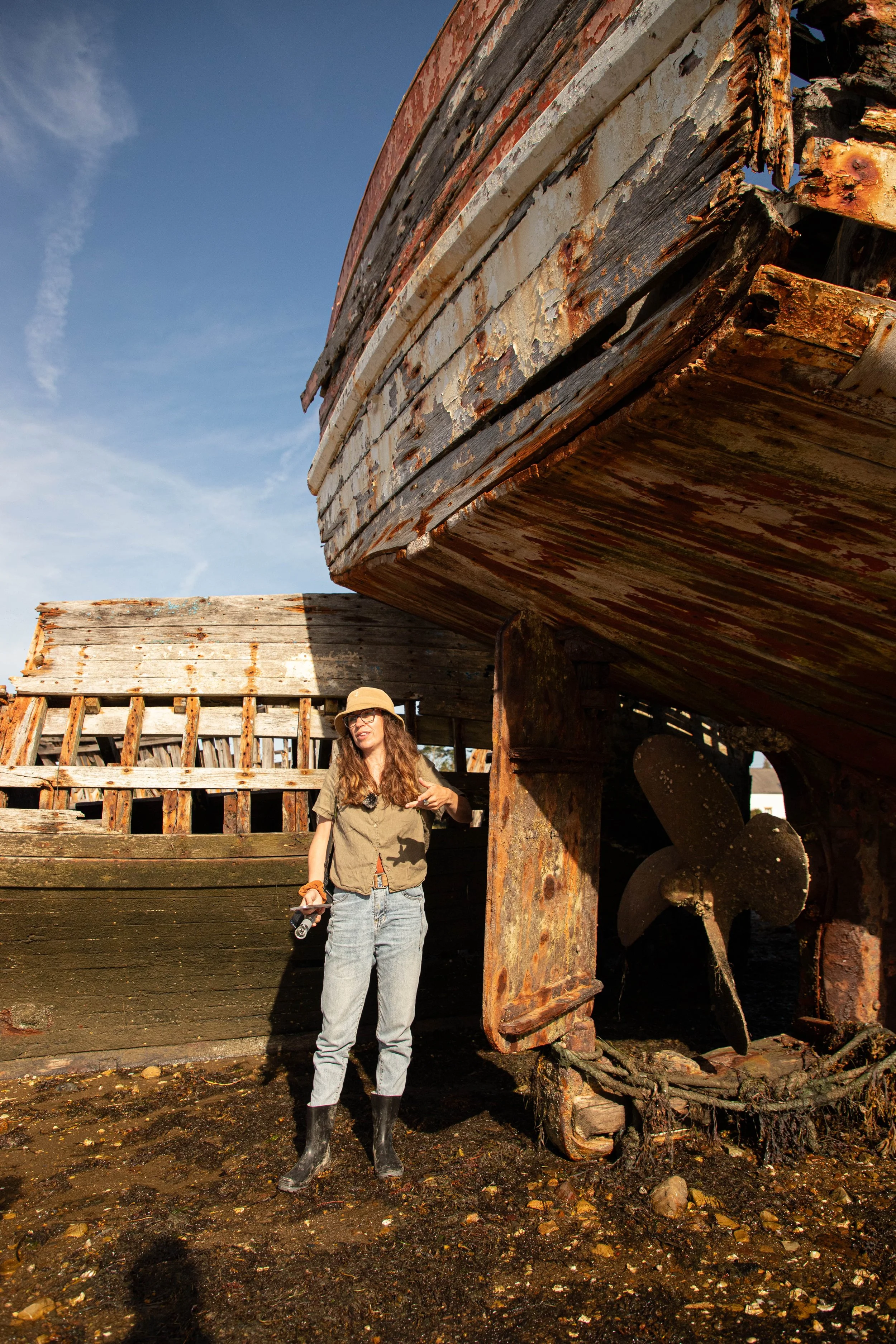
Angie Richard leads the ReTISS initiative. Credit: Marjolaine Abalea.
Today, we are proud to share that the EU Horizon-funded IMPETUS Accelerator phase of ReTISS has officially concluded, and the results have exceeded every expectation.
A Citizen Science Model That Works
Over seven months, ReTISS brought together 32 citizen scientists — including women, students, immigrants, international creatives, sailors, boatbuilders, and local residents — to document abandoned and end-of-life fiberglass boats across coastal environments.
Together, participants generated:
77 georeferenced observations across France, the UK, and Portugal
A publicly accessible interactive mapping platform
Five stakeholder events reaching at least 370 participants
42 communication outputs
133,918 online views across platforms
But numbers only tell part of the story. ReTISS never just about data collection; the bigger picture was about building a living ecosystem of trust and shared responsibility — connecting citizens, scientists, artists, educators, and public authorities around a marine pollution issue that has long remained invisible.
Making the Invisible Visible
Fiberglass boats do not simply disappear when abandoned. As they degrade, they release microfiberglass particles into coastal ecosystems. These particles enter food webs, including shellfish, yet the issue remains largely under-monitored and under-documented.
ReTISS addresses a critical gap: the absence of publicly accessible, site-specific data.
By combining:
Structured mapping protocols
Open GIS infrastructure
School-based fieldwork and microscopy workshops
Art × science residencies
Public storytelling
…we have demonstrated during our pilot phase that high-quality environmental evidence can be generated collaboratively, without institutional gatekeeping.
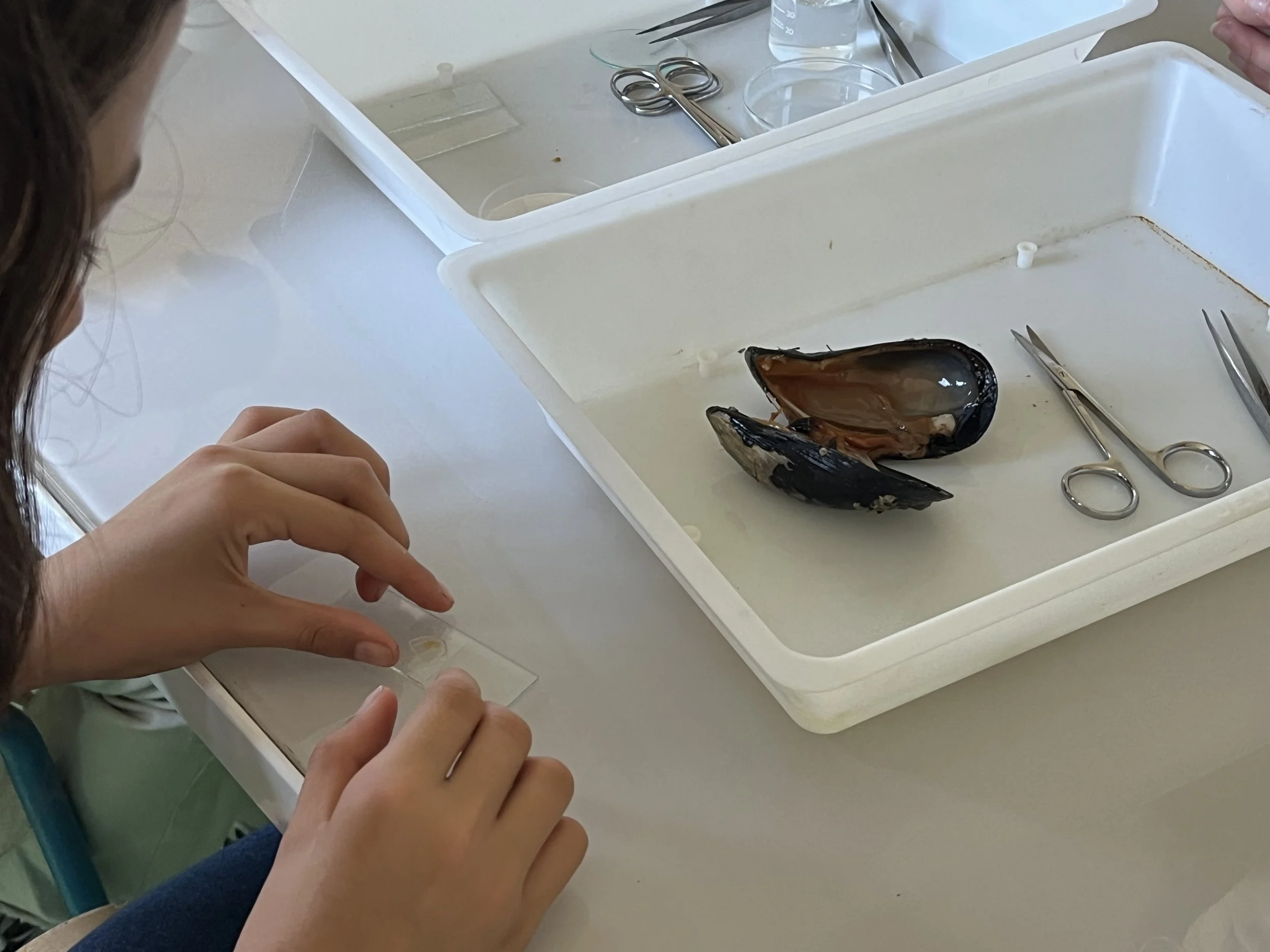
Middle school students participating in ReTISS: https://www.floatingstorieslab.org/all-posts/microplastic-and-fiberglass-pollution-research-in-gill-samples-of-oysters-and-mussels-in-the-goyen-river-estuary-brittany-france
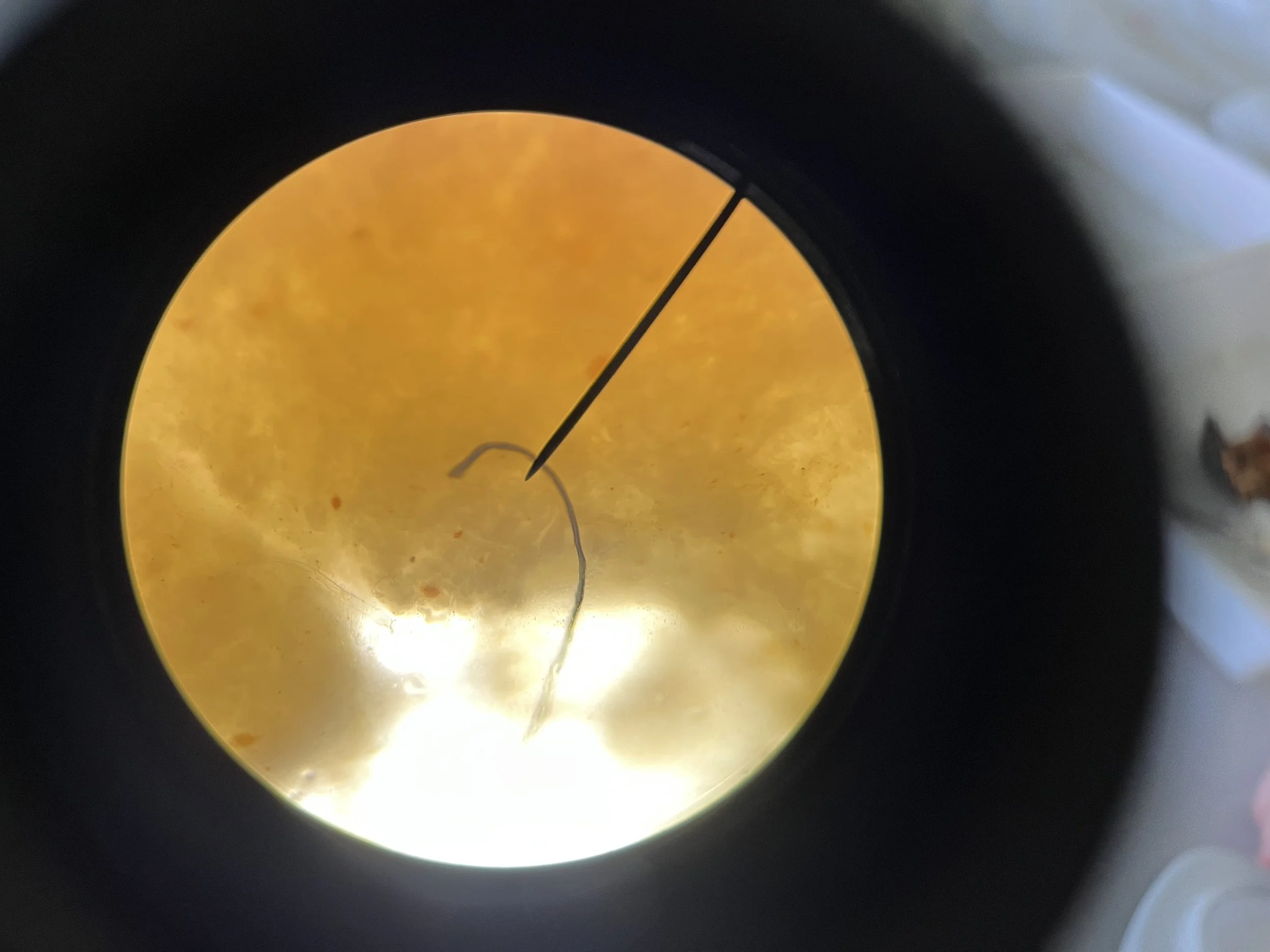
Microplastics and fiberglass shards were discovered in the gills of oysters and mussels analyzed by college students. Organisms were selected from the Goyen River, in front of the boat cemetery. Credit: Floating Stories Lab.
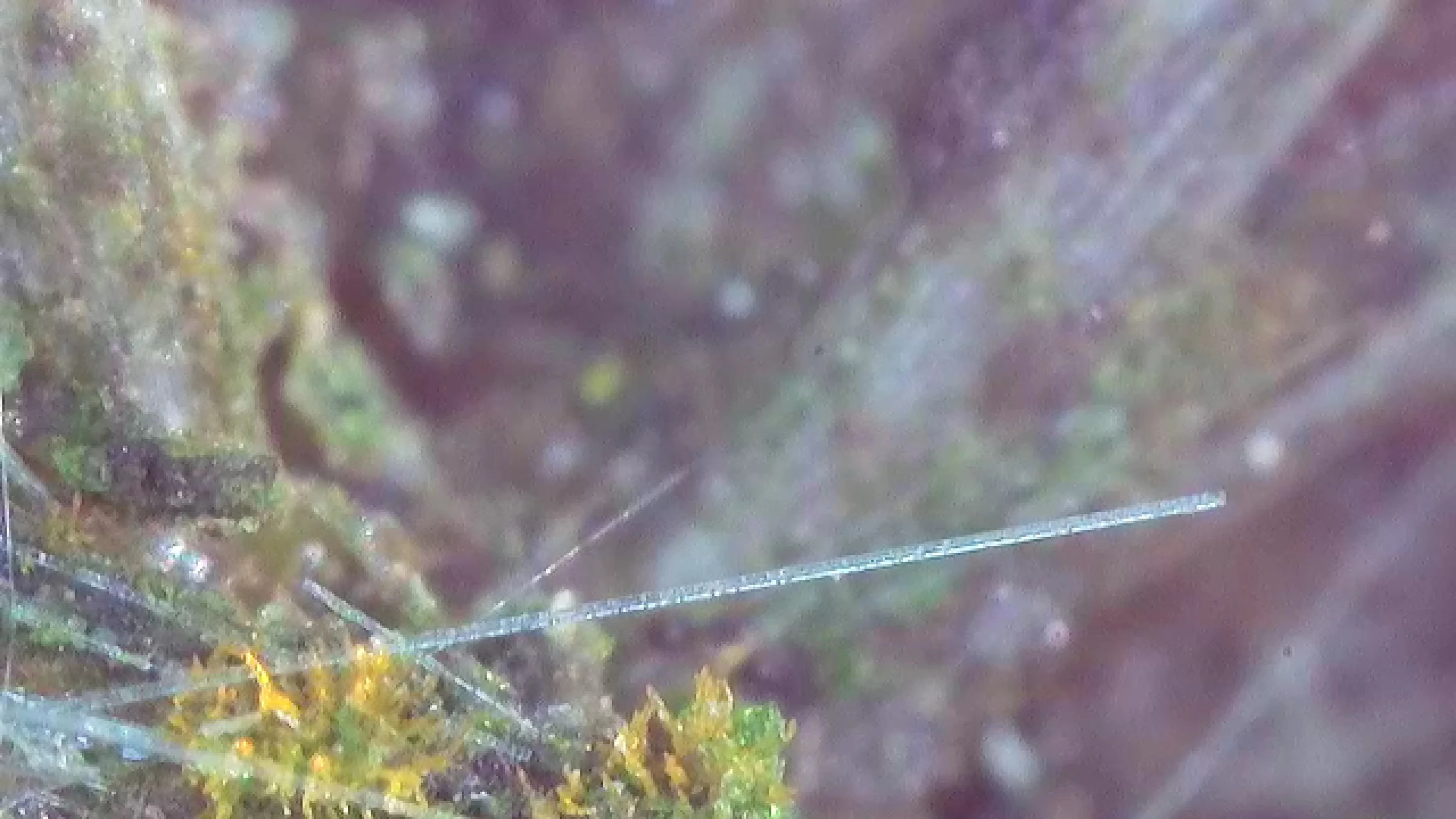
Fiberglass exposed to the surrounding ecosystem on a cracked hull of an abandoned boat, viewed via hand-held Bluetooth microscopes. Credit: Floating Stories Lab.
Middle school students analysed mussel gills under microscopes.
Artists embedded themselves in fieldwork.
Policymakers attended workshops to discuss implications.
Creative outputs translated technical observations into accessible narratives.
Citizen science became not just a method but a governance practice.
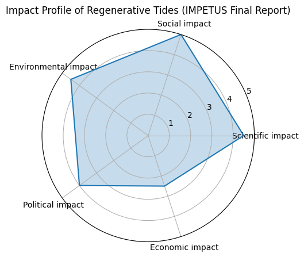
Recognition from IMPETUS
The IMPETUS reviewers described ReTISS as:
“An exceptional project that has achieved remarkable results, creating strong connections with public administration and demonstrating effective policy advocacy… serving as a strong model for initiatives aiming to create lasting impact through collaboration with both citizens and institutions.”
This feedback matters to us, because what we were testing was not only a mapping tool, but a model:
Can communities generate credible environmental evidence?
Can creative practice strengthen scientific literacy?
Can citizen-generated data enter policy conversations?
The answer is yes.
What We’ve Built
During this pilot phase, ReTISS established:
A functional, open-access citizen science infrastructure
Cross-border collaboration between France and the UK
School-based environmental research embedded in curriculum
A replicable framework linking observation → interpretation → communication → advocacy
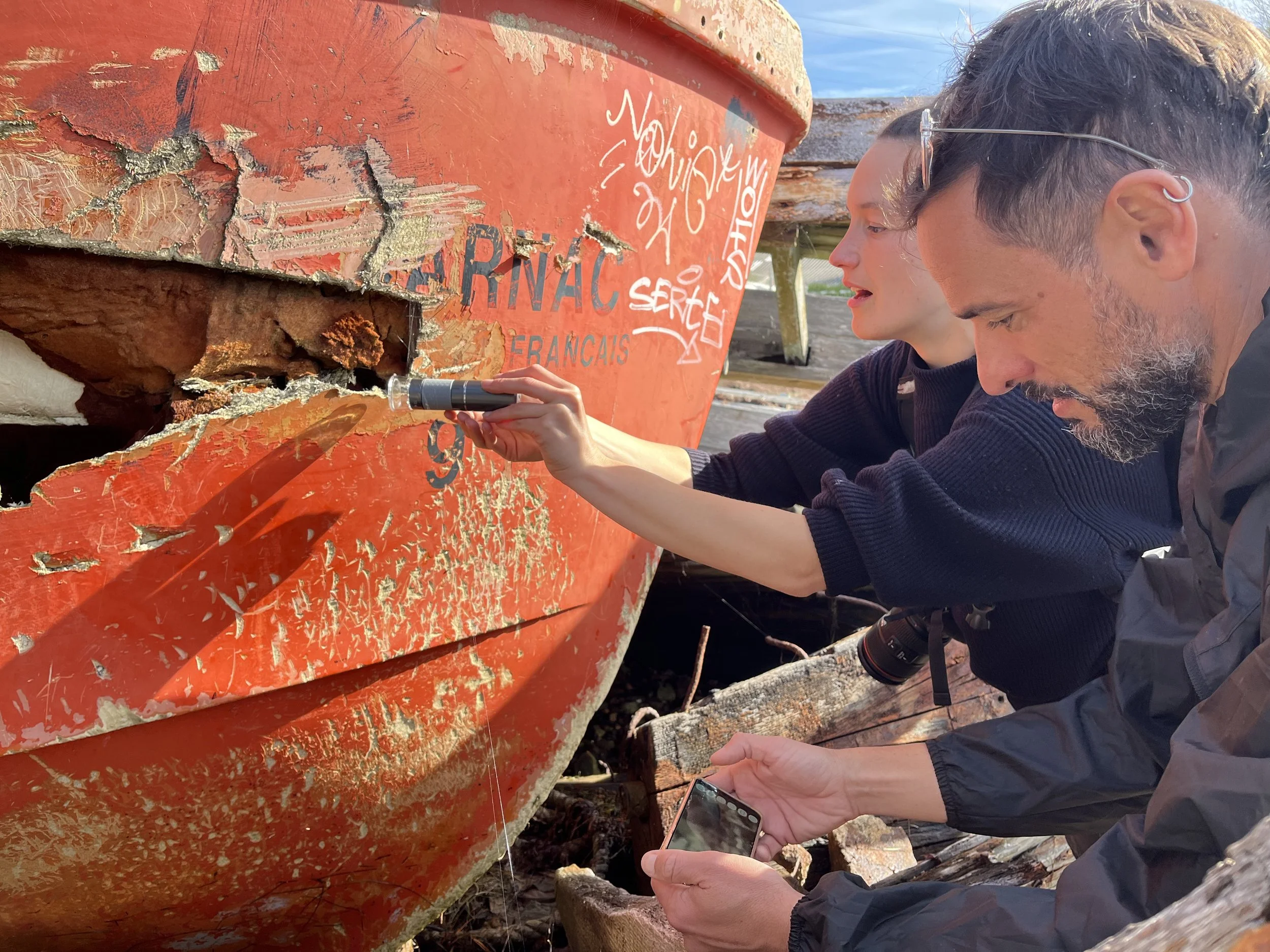
Marjolaine and Felipe, creative residency participants, examining an abandoned fiberglass boat hull at the Rostellec boat cemetery, Crozon, Brittany.
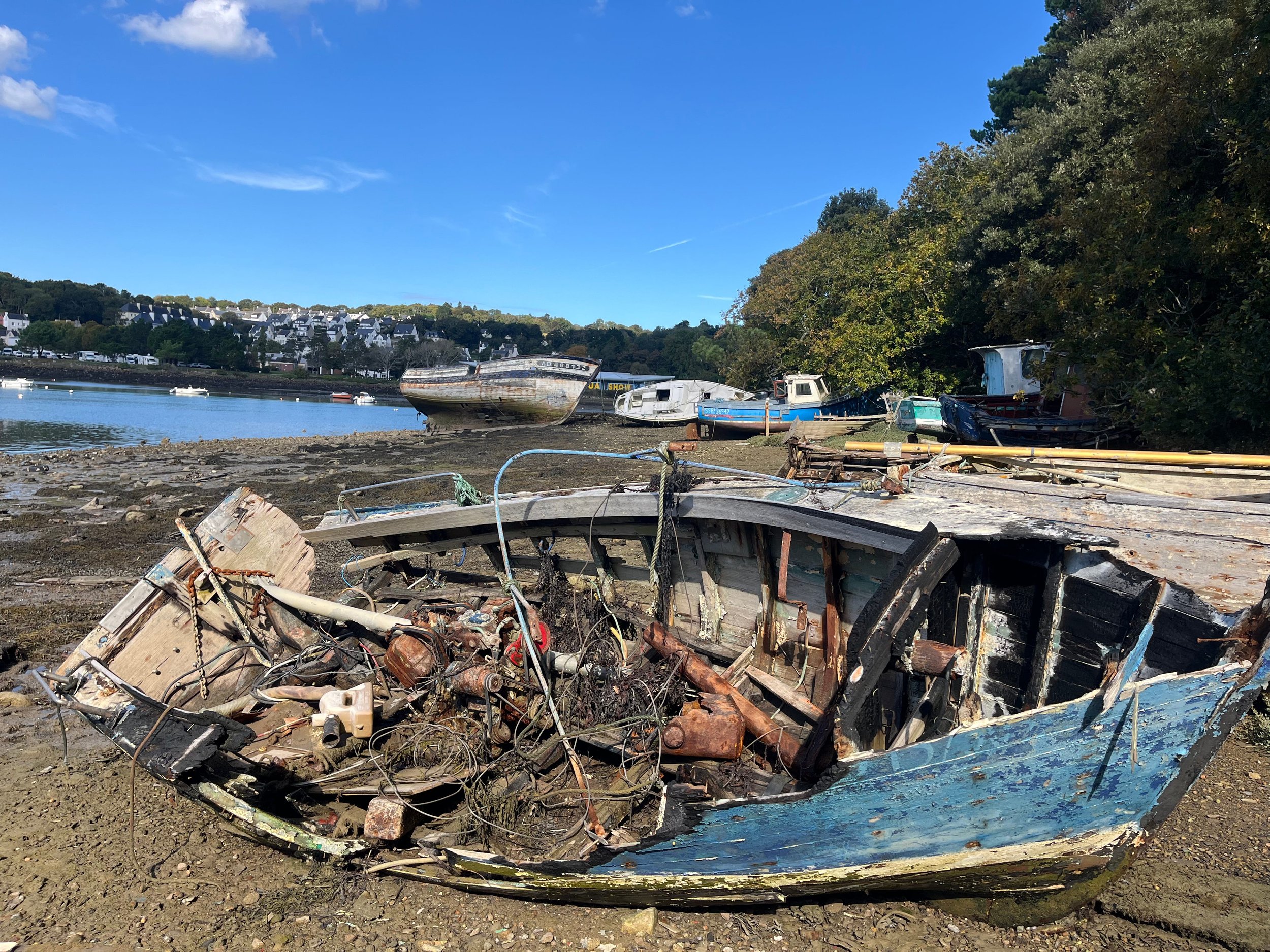
A rotting boat in the Goyen River, Plouhinec/Audierne, Brittany.
This was a kickstarting phase. As such, no remediation has yet taken place. No policy has yet shifted. But, importantly, the groundwork has been laid. That foundation is now strong, and we have only just got started.
What Comes Next
The end of IMPETUS does not mark the end of ReTISS.
In 2026, we will:
Scale boat mapping across Brittany and the UK
Host Franco-UK scientific field collaboration in Brittany
Develop international community stakeholder workshops
Host subsequent citizen science creative residencies
Apply for expansion funding to explore acoustic monitoring of the Goyen River
Continue building our wooden exploration sailing platform as a public-interest tool
ReTISS began as a pilot and now stands as a platform. And most importantly, it stands as a community.
To everyone who mapped, observed, questioned, filmed, analysed, attended, and supported: thank you.
The tide is regenerative because it is shared.