
In our family’s quest with our businesses Anicca Media and Voyage Virage, and our shared cornerstone project, the Floating Stories Lab, we are charting a course that diverges from today's entrepreneurial norms, drawing deeply from the rich legacy of family businesses. I touched upon this in our recent Substack newsletter:
“Our approach may diverge from today's entrepreneurial norms, but it's deeply rooted in the rich legacy of family businesses. From the ancient civilizations of Rome, Greece, and Egypt, where families worked together in agriculture and trade, to the broad spectrum of 'family business' in indigenous communities, these practices have been pivotal in sustaining cultures and harmonious relationships with nature. Our venture is a nod to these enduring family-centric models, reimagined for regenerative futures.”
The Role of Family Businesses in Ancient European Societies

Angie’s grandfather, Rod Bedford Snr, and his handcrafted surfboards made in the family business owned with his brothers, JayBee Boats.
The concept of family businesses can be traced back to ancient civilizations. In societies like Ancient Rome, Greece, and Egypt, family units often worked together in agriculture, handicrafts, and trade. During the Middle Ages, family businesses were common in Europe. Guilds, which were associations of artisans and merchants, often involved family members working together in the same trade. Many of these businesses were passed down from generation to generation. Though rigid and expensive tax systems seem to discourage family business structures today here in France (whilst giving mega corporate giants and the richest members of society gross tax breaks), multi-generational family businesses do continue; Remy’s cousin is a third generation building artisan carrying on his grandfather and father’s legacies under the family business banner. My cousin, a third generation surfboard shaper, follows in the footsteps of his father and our grandfather, who was one of the first to craft surfboards in South Australia.
Indigenous Family Businesses: A Communal Approach

Bulou Katarina, female Chief on Narikoso Island, Fiji. Photo: Angie Richard. Watch ‘Sea of Islands’ UN VR documentary and learn about how communities are responding to climate change impacts.
In-tact indigenous communities worldwide often embody broader and more communal interpretations of family businesses. Economic activities like farming, fishing, and crafting are collective efforts, involving the entire community or different community segments working collaboratively. When visiting Fiji’s Narikoso island, I learned from female Chief Bulou Katarina how community needs are placed first above individual family units in their village, enabling community longevity. These practices, though under threat in many parts of the world including Narikoso, are deeply integrated with respect for nature and demonstrate a symbiotic relationship between human ‘being’ and the environment. Work, resource management – including finances – and other roles and responsibilities are shared among community members, differing from culture to culture, but in general community-centric economic models are grounded in shared values of kinship - between family units, the wider community, and nature.
In fact, many indigenous cultures don’t have a distinctive word for ‘nature’; they view their non-human neighbors as family and members of the wider community. Examples of such communal and regenerative practices are also evident in projects like 'Lomani Gau' on Gau Island, and the insights shared by Naomi from Samburu, Kenya, in her regular blog spot ‘Letters From Naomi’.
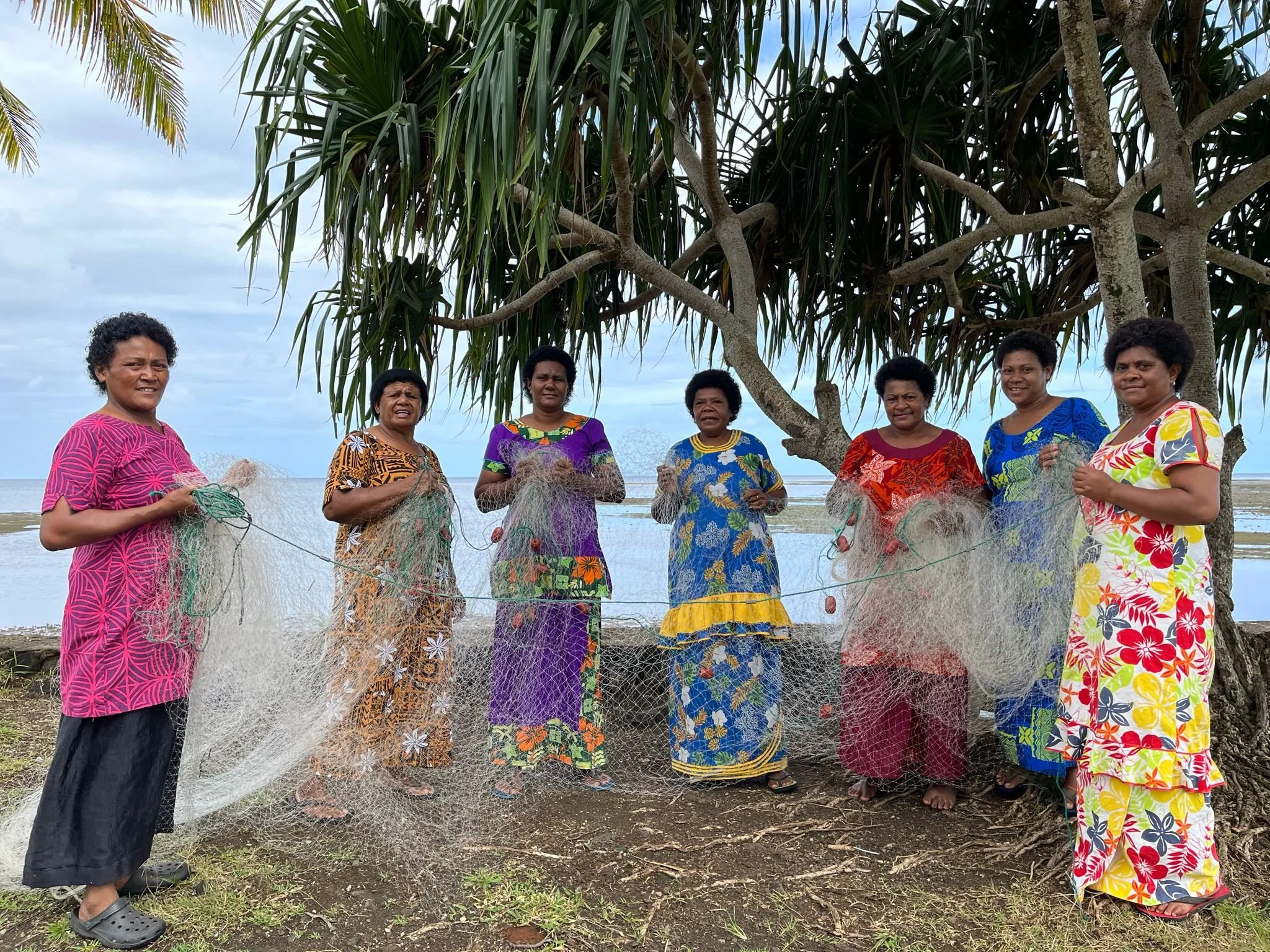
Local villagers preparing fishing nets on Gau Island, Fiji. Learn about the Gauans work collectively as multiple communities across the island to promote sustainable development and regenerative living: Lomani Gau. Photo: Angie Richard.
Lessons for Modern Regenerative Business
The shift towards regenerative business models requires a profound transformation, as highlighted in Jason Hickel's work on degrowth. It's about transitioning from a focus on exponential growth and consumption - which depletes the planet’s natural resources and negatively impacts human and nature wellbeing - to fostering environmental stewardship, or ‘centering planetary health’, and societal wellbeing. This shift, while daunting for some, opens pathways for equitable wealth distribution and humans to actively contribute to regenerating the planet, crucial to our own species’ survival.
In recent work researching and crafting a comprehensive regenerative business framework for a partner organisation in the immersive tech industry, I wrote a chapter outlining how regenerative values must be integrated into company culture and visionary leadership:
“Leadership must be reimagined to embody the principles of regeneration. The company’s leaders should be custodians for change, fostering a culture that values co-creative partnerships with nature and places planetary health, societal justice, and fairness at the forefront of business activities. They guide teams to think beyond conventional business practices and embrace strategies that repair, renew, and rejuvenate our natural and social environments.”
Small, family and community business structures can enable this shift to business practices that truly contribute to better futures.
Floating Stories Lab: Embodying Historical Wisdom and Natural Intelligence in Modern Business Practices
In establishing the Floating Stories Lab, our family has chosen to embrace historical wisdom and natural intelligence, to create a contemporary, regenerative family business model. Our approach, living, working and traveling aboard a sailboat, minimizes our environmental footprint and consumption. We aim to create community through citizen science, storytelling, and knowledge exchange, whilst also involving our children in a manner that respects their perspectives and futures – we are co-creators here, and equal students.
The legacy of family businesses, from ancient civiizations to indigenous communities, provides a learning opportunities for us in crafting modern regenerative businesses. In our journey with the Floating Stories Lab, we are weaving what we believe are default (read: nature’s blueprint, learn more in Leen Gorissen’s work) regenerative principles for planetary health and societal wellbeing into our family business model, demonstrating that it is possible to operate beyond sustainability as well as communally in today's world into the future. We invite you to join us in this transformative venture, rethinking what it means to do business and paving the way for a sustainable and interconnected future.
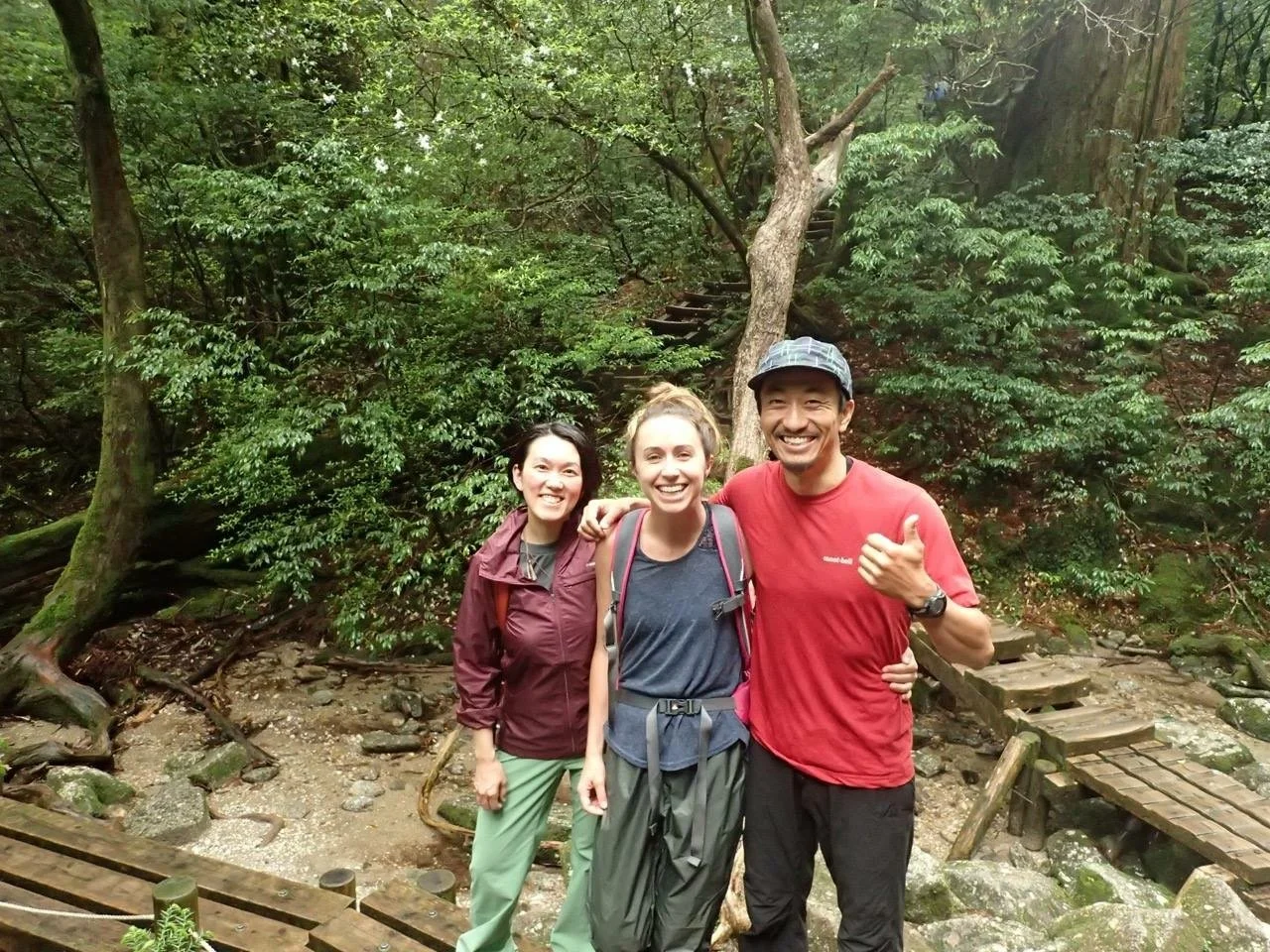
Akifumi Kato, pictured far right, and his family left the main island of Japan following the 2011 disaster, to resettle on the UNESCO Heritage Listed Island Yakushima and create a gentle family outdoor adventure business Greenmount Japan. Read about Angie’s time visiting her friends on Yakushima, and exploring the nature their business practices proactively support.
Want to share your regenerative business, organisation or project with the world? We are creating an open-source database of global regeneration resources and welcome all submissions.
Elevate our project, support regenerative family business and be a part of positive change!
Here's how you can support the floating stories lab:
Power the Journey: Contribute to our project and help keep the sails unfurled! Support us via PayPal.
Join the Inner Circle: Dive deeper into our stories and receive exclusive content by subscribing to our Substack community.
Sail with Us: Become a Patreon and enjoy special perks while supporting our regenerative voyages.
Crew Up for Change: Explore partnership and sponsorship opportunities. Join us in creating a more sustainable and hopeful future.
Your involvement propels our journey, creating ripples of impact. Embark on this exciting voyage with us!